Being part of this team has been an incredibly meaningful experience. I’m proud to have contributed to a platform that brought the culture, vibes, and a new style of broadcasting to Chicago’s airwaves. Streetz wasn’t just a radio station, it was a media group for the streets, and a home for urban talent, both on-air, on or behind the scenes.
Although it’s sad to see our chapter in Chicago come to a close, I’m deeply grateful for the opportunity to do impactful, paid work in media, something that’s not always easy to come by in this industry. The relationships I built, the lessons I learned, and the confidence I gained are things I’ll carry forward with me.
I kicked ass coming through the door for Super Bowl Weekend, bringing in the most money in February and March working with Wilma’s BBQ, The AC Green Show, and Majani’s Food Emporium after my training, activating my superpowers 🦸🏽♀️.
Thank you to Core Radio Group & Streetz especially Trey The Choklit for the opportunity and support. I hope to work with them again in the future and continue building in other cities and capacities.
In today’s world, it’s not enough to blend in and play it safe. The secret to standing out isn’t in chasing trends or shouting louder than everyone else, it’s in being unapologetically authentic.
As a transformational branding consultant, I specialize in helping businesses and professionals unlock their unique voice and energy to create authentic initiatives, messages, and content that don’t feel like ads but still get results. It’s about crafting experiences that resonate deeply with your audience, building trust, and creating lasting connections.
Chris Do of The Futur with a a strategy that will transform your business this 2025!
Here’s what I believe:
💡 Authenticity automatically sets you apart. When you embrace who you truly are: your values, your purpose, your vision; you don’t need to force attention. Your uniqueness is your advantage.
💡 Strategy beats energy leaks. Stop scattering your efforts across trends that don’t align with your goals. Instead, channel your energy strategically to amplify your strengths, attract the right opportunities, and build sustainable momentum. (Note to self!)
💡 Purposeful messaging over flashy ads. Consumers can spot insincerity a mile away. I help my clients design branding initiatives that not only feel real but are real, not forced, aligning every word, visual, and action with the heart of their brand.
If you’re ready to break free from the noise, create authentic impact, and build a brand that speaks for itself, let’s connect. Together, we’ll transform your brand into a bold, strategic, and authentic reflection of your purpose.
In today’s fast-paced digital world, email remains one of the most essential tools for building connections, driving initiatives, and closing deals. Whether you’re a social entrepreneur pitching your latest venture, a college student reaching out to a professor, or a business owner collaborating with partners, mastering email etiquette is critical to making a strong and lasting impression.
As a communications generalist and account executive with experience in branding, marketing, and public relations, I know how vital it is to communicate effectively, especially when representing yourself or your organization. Below are actionable tips tailored to those looking to elevate their email communication.
Be Intentional with Your Subject Line
Your subject line is like the headline of a news article—it needs to grab attention while being clear and concise. • For Entrepreneurs: “Collaboration Opportunity: Enhancing Community Impact Together” • For Students: “Request for Feedback on Internship Proposal”
A strong subject line sets the tone for the email and helps the recipient prioritize your message.
Use a Friendly Yet Professional Greeting
Address your recipient by name whenever possible. Personalization shows effort and respect, especially when reaching out to someone new. Example: “Dear Dr. Johnson,” (formal) “Hi Alex,” (semi-formal) “Hello Team,” (group email)
Avoid generic greetings like “To Whom It May Concern,” which can feel impersonal.
Get to the Point Quickly
Whether you’re proposing a collaboration, asking for advice, or updating someone on a project, respect their time by getting straight to the point. • Before: “My name is Briyana Kelly, and I’m writing to introduce myself and share a little about my background and why I think we’d be a good fit to work together.” • After: “I’m Briyana Kelly, the founder of FEED THE HOOD NFP. I’m reaching out to discuss a potential collaboration on {Specific Project}. Let me know if you’d be available for a 15-minute call this week.”
Show Your Value
When reaching out to potential collaborators, mentors, or clients, briefly explain why you’re reaching out and what’s in it for them. • For Social Entrepreneurs: “Our nonprofit specializes in workforce development for marginalized communities, and I’d love to explore how we can partner with your organization to expand your impact.” • For College Students: “I admire your work in [specific area] and would appreciate the opportunity to learn from your experience through a brief informational interview.”
Be Polite and Mindful of Tone
Your tone can make or break your email. Strike a balance between professionalism and approachability. • Use polite phrases like: • “I would appreciate it if…” • “Would you mind sharing…” • “Thank you for your time and consideration.” • End with a positive closing, such as: • “Looking forward to hearing from you!” • “Thank you for your support!”
Proofread for Clarity and Grammar
A polished email reflects your attention to detail, which is especially important for entrepreneurs pitching ideas or students applying for opportunities. Before hitting send: • Check for typos or grammatical errors. • Ensure your tone aligns with the purpose of your email. • Confirm you’ve included the correct names, dates, and attachments.
Include a Clear Call-to-Action (CTA)
Your recipient should know exactly what you need from them and when.
Examples of CTAs:
• “Please let me know if you’re available for a meeting next week.” • “Kindly review the attached proposal and share your feedback by Friday.” • “I’d appreciate it if you could connect me with someone from your team who handles partnerships.”
Attach Files and Links Thoughtfully
If you’re including an attachment or link, mention it in the body of your email so the recipient knows what to look for. • Example: “I’ve attached our most recent annual report for your review. You’ll find details on our impact metrics on page 5.”
Always double-check that you’ve attached the correct file or included the right link before sending.
Use “Reply All” and CC Sparingly
If you’re part of a group email thread, only use “Reply All” when everyone truly needs to see your response. Avoid clogging inboxes with unnecessary replies.
End with a Professional Signature
Your email signature should be simple but informative, especially if you’re an entrepreneur or college student looking to establish credibility. • For Entrepreneurs: [Your Full Name] Founder, [Organization Name] [Phone Number] | [Email Address] | [Website] • For Students or Recent Graduates: [Your Full Name] [University Name], Class of [Year] [Email Address] | [LinkedIn Profile Link]
Timing is Everything
Send your emails during regular business hours to increase the likelihood of a timely response. If your recipient is in a different time zone, consider scheduling your email accordingly.
Why Email Etiquette Matters for Your Audience
For social entrepreneurs, college students, and emerging leaders, every email is an opportunity to build relationships, showcase professionalism, and leave a positive impression. Thoughtful, well-crafted emails not only demonstrate respect for the recipient’s time but also position you as someone worth engaging with whether you’re pitching a new idea, applying for an internship, or seeking mentorship.
By following these tips, you’ll enhance your communication skills and open doors to meaningful collaborations, funding opportunities, and career growth.
Would you like personalized examples or templates tailored to your industry? Let’s take your email communication to the next level!
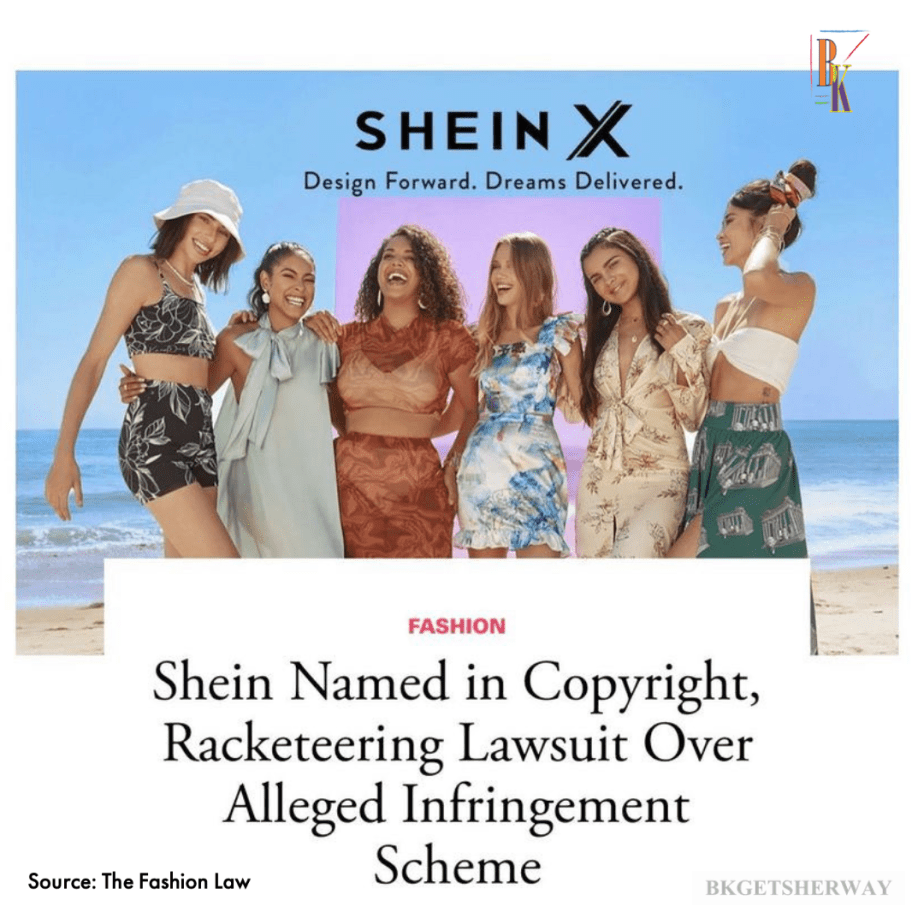
NEW YORK, July 13– A complaint has been filed, on July 11, by Krista Perry, Larissa Martinez, and Jay Baron against Shein Distribution Corporation and its collective business associates (Roadget Business Pte. Ltd, Zoetop Business Company, Limited, and et.al) for racketeering and corrupt business practices as an organization. David Erickson is an Interested Party in the suit. They have been accused of infringing on the designs and artwork of creators to produce, distribute, sell, and copy the works of the plaintiffs. They allege that it is part of the organization’s DNA and process to algorithmically use designs in their corrupt business practices on a large and systematic scale, according to The Fashion Law.
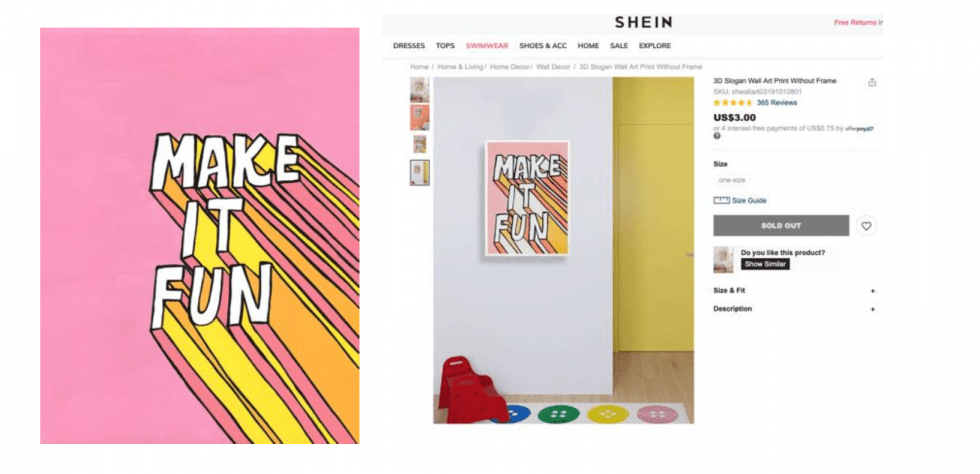
When Shein copies a small or independent designer, the most likely outcome (without brand protection specialists and specialized software on the lookout) is that the infringement will go unnoticed
Barron’s “Make It Fun” artwork (left) & a Shein print (right)Source: The Fashion Law
“Under those circumstances, Shein reaps all the benefits of stealing and featuring the design that its technology had identified as valuable enough to take: it makes sales and keeps it customers’ eyes glued to the Shein site and app for that much longer. And if customer demand justifies it, the item is reordered, and more are sold (now that the coast has been determined to be clear).”
Plaintiffs
Source: The Fashion Law
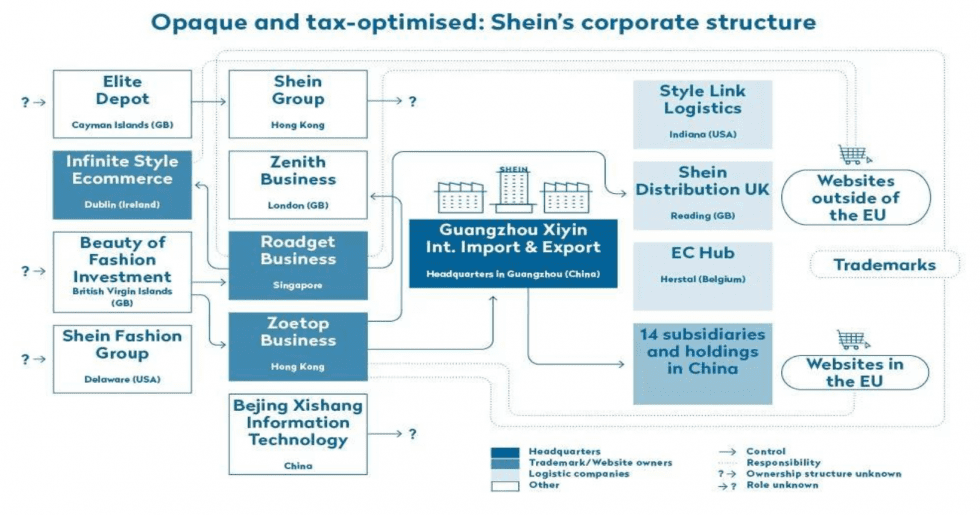
They also made a claim that the distribution organization is made up of a multiplicity of entities with an outwardly decentralized structure which helps them in avoiding liability for intellectual infringement by placing the blame on an independent company unrelated to them when in reality they are connected to Shein.
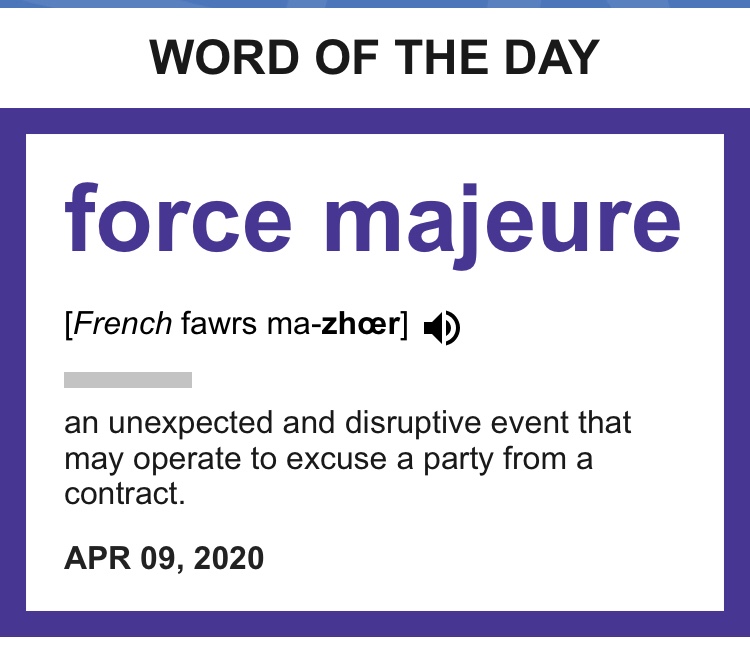
“An irresistible force or an unforeseen event beyond the control of a party, making it materially impossible to fulfill a contractual obligation.”
Bansal
Talks On Law
If you’re a business (company or entrepreneur), who’s finding it hard to do business during this time, you may be covered by this clause. This legal concept allows either party to limit their liability in an unforeseeable and extraordinary event. Coronavirus has forced major businesses that were “non essential” to close, leaving many out of work due to the act of god.
According to Fast Company ,”Fears of the virus also wouldn’t cut it, even under common law: In an English case from 1922, which set precedent, Hackney Borough Council v. Dore, the judge said, “The expression means some physical or material restraint and does not include a reasonable fear or apprehension of such a restraint.” So, a company may still be obligated to pay a venue for an event it’s unwilling to go ahead with; and a major sporting competition that cancels due to fears of outbreaks among fans may still have an responsibility to media buyers and corporate sponsors. In these instances, force majeure simply may not cut it.”
the event must be beyond the reasonable control of the affected party;
the affected party’s ability to perform its obligations under the contract must have been prevented, impeded or hindered by the event; and
the affected party must have taken all reasonable steps to seek to avoid or mitigate the event or its consequences.
Bansal, A. (2015, October 7). Force Majeure and the Law. Retrieved from https://lawzmag.com/2015/10/07/force-majeure-and-the-law/
COVID-19: Force Majeure Event? (2020, March 12). Retrieved from https://www.shearman.com/perspectives/2020/03/covid-19--force-majeure-event
Visram, T. (2020, March 30). What is 'force majeure'? The legal term you'll be hearing a lot during the coronavirus crisis. Retrieved from https://www.fastcompany.com/90482640/what-is-force-majeure-the-legal-term-youll-be-hearing-a-lot-during-the-coronavirus-crisis



 Communications Generalist | Cultural Strategist | Data & Business Analyst