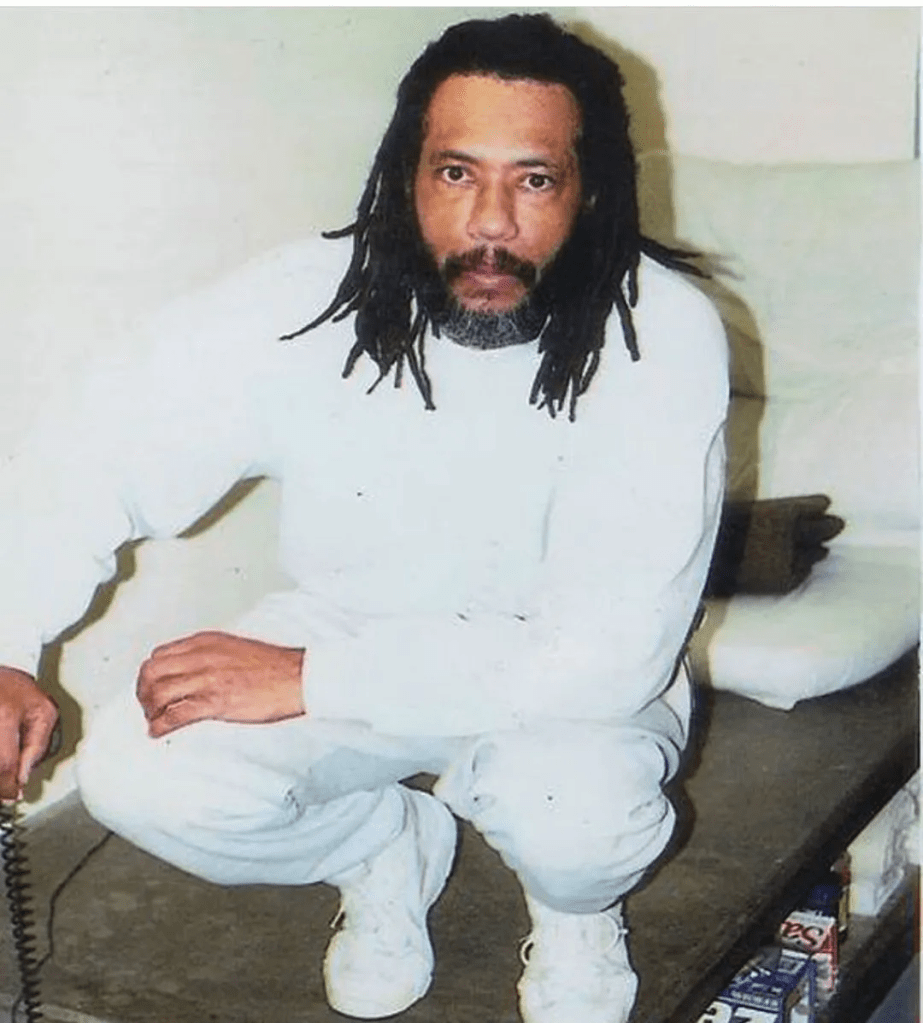
The short answer? No. But hedid commuteLarry Hoover’s federal life sentence, which is a big deal, but not the same as a full pardon.
On May 28, 2025, President Donald Trump used his executive powers to commute the federal sentence of Larry Hoover, the co-founder of Chicago’s Gangster Disciples (GDs). That means his federal time was reduced, but his state sentence in Illinois remains in full effect.
🚫 A pardon erases a conviction. ✅ A commutation shortens the sentence but leaves the conviction intact.
👉🏽 Hoover is still incarcerated, just no longer serving time under his federal sentence.
⚖️ Federal vs. State: Why Hoover Isn’t Free Yet
While the federal government no longer requires Hoover to serve life in a supermax prison, the State of Illinois still holds a separate life sentence against him. That stems from a 1973 murder conviction.
Credit: Larry Hoover Jr./Instagram
So even though Trump intervened federally, Hoover remains in prison under state custody.
Larry Hoover’s name carries legacy and controversy in Chicago. For decades, he’s been labeled a criminal mastermind. But in recent years, there’s been a push by his legal team and public figures to recognize the transformative work he’s done behind bars, including efforts to promote peace and redirect youth from gang life.
Even Kanye West and Drake brought global attention to Hoover’s case during their 2021 Free Larry Hoover Benefit Concert, adding cultural weight to the conversation about his potential release.
Let’s be real: Trump’s use of presidential clemency powers has always been controversial. Many of his commutations and pardons have benefited high profile or politically connected individuals. Which is still publicity for him and his administration. Still, for communities dealing with over policing and mass incarceration, among other violations of civil and human rights, any shift in how justice is served becomes a moment of reflection and dialogue. So I claim this as a win for us in the hood.
This decision is layered. Larry Hoover’s sentence was reduced because of his pardon of federal charges but he’s not free. Still, it opens the door to wider conversations about:
Sentencing reform
Community rehabilitation
The politics of who gets clemency
And the ongoing impact of legacy gang leaders in modern movements
Whether you’re from Englewood, the West Side, Auburn-Gresham like me or just someone trying to understand what’s real vs. what’s headlines; stay sharp, stay informed, and keep asking deeper questions because as a solid and native representation of urban culture, in the words of the Honorable Fred Hampton, Leader of the Illinois Chapter of the Black Panthers and a Chicago Native:
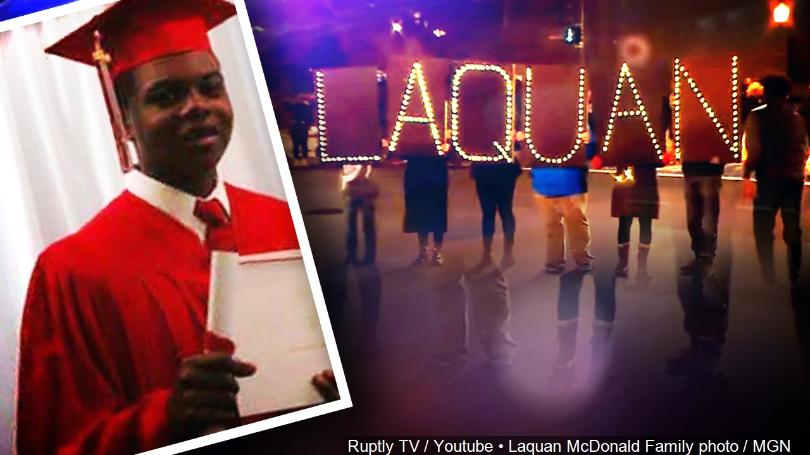
For 3 years, I watched my peers fight for justice throughout the city and they have finally been served what they asked for: A CONVICTED MURDER.
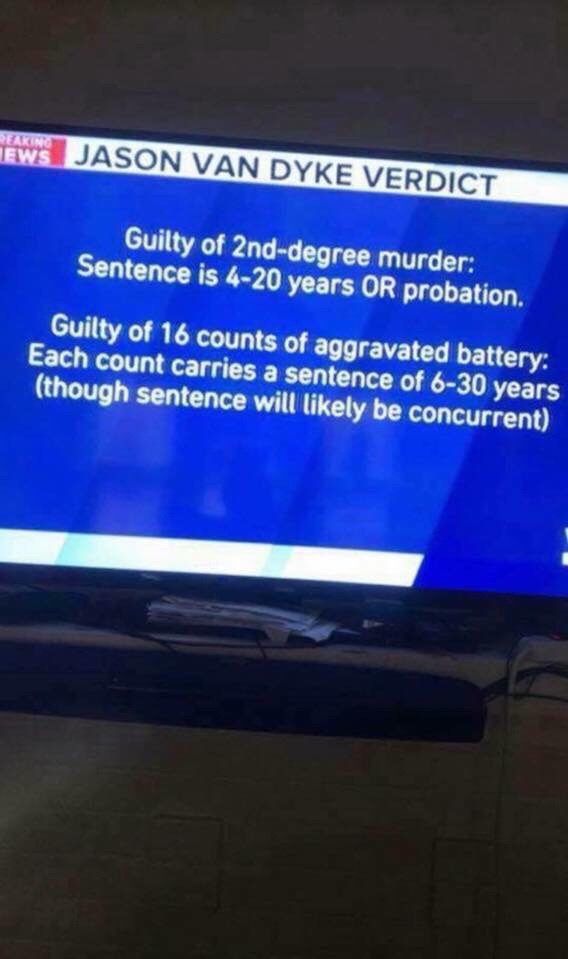
On Friday, the ex-Officer, Van Dyke was found guilty of second degree murder and 16 Counts of aggravated battery with a firearm; for every bullet he fired into Laquan’s Estate (body), as adduced by the judge. He was found not guilty on official misconduct of office. Dyke’s bond was revoked and sentencing has been scheduled for October 31.
Three officers have been charged with conspiracy, obstruction of justice, and official misconduct: Officer Thomas Gaffney, former Detective David March, and ex-officer Joseph Walsh (Van Dyke’s partner). Prosecutors alleged that the three lied in reports about 17-year old, Laquan McDonald, being a threat October 20, 2014.
This is a victory not only for the city of Chicago but for Black America. I learned a lot from my peers and their journey in fighting for justice for Laquan. I learned that we don’t have to agree on everything but what we do agree on is we want change for ourselves and community; we can accomplish a great deal when we stand up for what we believe in and that we are here to make change.
What they have done for the city is remarkable: Mayor won’t be running for second election, superintendent was fired, and local prosecutor lost her bid for reelection, as reported by NY TImes. They are working on upcoming elections, Black Caucus and the morally corrupt alderman(s).
Looking Forward to Sentencing, logically.
I am happy for the verdict and my peers, but “we” must be logical about how he was convicted and not emotional about the ordeal. I performed some research on criminal laws and doctrines related to the case. I also critically examined the communication disseminated by media.
I am not a lawyer nor a judge. I am an independent journalist and scholar, my duty and responsibility is to examine cases critically with logic and supporting facts.
Breaking it down, charge by charge.
According to the Illinois State Laws, second degree murder carries the sentencing between four (4) to twenty (20) years and is charged as a Class 1 felony. “Depending on the leniency of the judge and the circumstances of the crime, a four-year probation term instead of prison may be an option. The maximum fine is $25,000 plus a surcharge of $3,125. Upon release from prison, there is a mandatory two year parole period.”
In regards to the aggravated assault and battery, according to the Illinois General Assembly, if committed with a dangerous instrument, it is defined in subdivision as a Class X felony which a person can be sentenced to imprisonment a minimum of 6 years to a max of 45 years.
Excerpt from Illinois General Assembly
Aggravated battery as defined in subdivision (e)(1) is a Class X felony.
Aggravated battery as defined in subdivision (a)(2) is a Class X felony for which a person shall be sentenced to a term of imprisonment of a minimum of 6 years and a maximum of 45 years.
Aggravated battery as defined in subdivision (e)(5) is a Class X felony for which a person shall be sentenced to a term of imprisonment of a minimum of 12 years and a maximum of 45 years.
Aggravated battery as defined in subdivision (e)(2), (e)(3), or (e)(4) is a Class X felony for which a person shall be sentenced to a term of imprisonment of a minimum of 15 years and a maximum of 60 years.
Aggravated battery as defined in subdivision (e)(6), (e)(7), or (e)(8) is a Class X felony for which a person shall be sentenced to a term of imprisonment of a minimum of 20 years and a maximum of 60 years.
Aggravated battery as defined in subdivision (b)(1) is a Class X felony, except that:
(1) if the person committed the offense while armed
with a firearm, 15 years shall be added to the term of imprisonment imposed by the court;
(2) if, during the commission of the offense, the
person personally discharged a firearm, 20 years shall be added to the term of imprisonment imposed by the court;
(3) if, during the commission of the offense, the
person personally discharged a firearm that proximately caused great bodily harm, permanent disability, permanent disfigurement, or death to another person, 25 years or up to a term of natural life shall be added to the term of imprisonment imposed by the court.
Illinois One Act, One Crime Doctrine
Former Will County Prosector, Jack Zaremba’s Law Office states “a criminal defendant can only be convicted of one crime that corresponds to a particular action, even if that action could constitute more than one offense.”
Which means that he will be sentenced for both charges; possibly serving the minimum imprisonment time or probation; the 16 counts of aggravated battery not holding much weight, can be combined and considered one act for sentencing. Let’s not forget this is a first offense for him and that we must consider if the judge will be lenient or not.
His time will more than likely not be consecutive but concurrent.
My goal for this story is to share the legacy of 5 amazing women in the Africa Diaspora that you may or may not know. In my spirit, I felt that these ladies needed to be heard and remembered for their works. In many cases we always remember those who are well known and we seem to forget about those who did the work but aren’t credited enough. Here are my five women you should know:
Vivian G. Harhs’s picture courtesy of the Chicago Public Library.
Vivian G. Harsh
Born Vivian Gordon Harsh in Chicago on May 27, 1890; she was the first African American librarian in the Chicago Public School system, the first Black professional librarian in Chicago, and a significant contributor to Chicago’s Black Renaissance. Vivian began her 60-year-librarian-career in 1909 as a Junior Clerk at the Chicago Public Library, she received her B.A. from Simmons College in Boston, and she took advanced courses at the University of Chicago Graduate School of Library Science. While working with Carter G. Woodson she recognized the need for librarian services on the South Side of Chicago, in the heart of the African American community. Vivian G. Harsh Research Collection of Afro-American History and Literature is housed at Carter G. Woodson Library. She is remembered as “The historian who never wrote”.
Hazel M. Johnson’s picture courtesy of Surviving to Thriving Summit Dot Org
Hazel Johnson
Hazel Johnson is known as the “Mother of Environmental Justice Movement”, and a resident of Atlgeld Gardens Public Housing. She founded “People for Community Recovery” in 1979, 10-years after her husband died of lung cancer in 1969, which was the cause for her four decades of activism. She documented illnesses and physical ailments that frequently punished her neighbors. She linked them to polluted air, water, and contaminated soil. She also played a role in Barack Obama’s starting career in public service. The Gardens is where he got his start in politics as a Community Organizer in the 1980s. As reported by The Washington Post, Cheryl Johnson, Hazel’s daughter, “was a nursing student when Obama arrived, and she remembers watching him and her mother strategizing many nights at her kitchen table. They made an odd pair, she said: “He was in his 20s. She was in her 40s. But they learned off each other.”” She received a gold medal from George Bush and was recognized by Bill Clinton for her environmental work in Chicago.
Amanda Berry Lewis’s picture courtesy of William Hull.
Amanda Berry Lewis
Amanda Berry Lewis was born into slavery January 23, 1837 in Long Green, Maryland. Her father worked to buy her family’s freedom. She was a Methodist Holiness Evangelist and Missionary, who traveled to Great Britain, India, and Africa to share her gifts. After her services overseas, she returned to the states where she founded the Amanda Smith Orphanage and Industrial Home for Abandoned and Destitute Colored Children in Harvey, Illinois in 1899. She couldn’t support the school sufficiently, so she left and moved to Florida which became her final resting place.
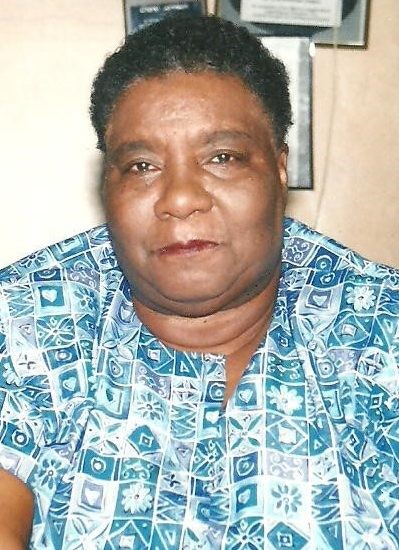
Dr. Maria K. Mootry’s picture courtesy of her son, Johnathan P. Ikerionwu of Springfield.
Dr. Maria K. Mootry
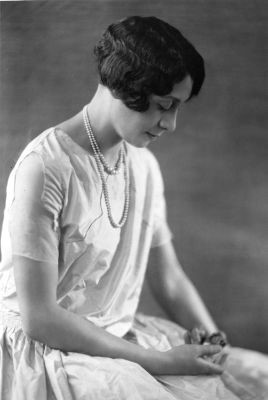
Maria Mootry was born January 3, 1944 in Nashville, Tennessee. She graduated from Farragut High School in Chicago, Illinois at 16-years-old. She went on to receive her BA from Roosevelt University, Masters at the University of Wisconsin, and Doctorate from Northwestern University in Evanston, Illinois. She performed research in bioethics regarding race. She was a Professor of English and an unknown leader in African American history who was an Co-Editor of Gwendolyn Brooks “A Life Distilled”. Mootry taught at Southern Illinois of Carbondale, Grinnell College, and University of Illinois at Springfield. In 1980, she co-Founded the Poetry Factory in Carbondale, Illinois which encouraged others to write and publish. Much of her work isn’t known but its been floating around making a difference. You can visit Dr. Maria K. Mootry’s works at Carter G. Woodson Library, Maria Mootry Papers, and her website www.MariaMootry.com .
Mother Mary Lena Lewis Tate’s picture courtesy of Church of the Living God, the Pillar, and Ground of Truth, Inc.
Mother Mary Lena Lewis Tate
Mother Mary Lewis Tate was the first known woman to organize an internationally recognized church and to elevate to Bishop ranking. She was born Mary Lena Street January 5, 1871 in Vanleer, Tennessee. She spent most of her life in the rural south where she had little opportunity to be educated. She established the Church of the Living God, the Pillar, and Ground of Truth, Inc. in 1903. Tate’s Apostle service extended far beyond religion into the heart of the people and the system of inalienable rights and freedoms. St. Mary Lena Lewis Tate prevailed through the struggle of education, transportation, and communication to carry out her duties. She traveled by walking while using barges, steamships, mule-drawn wagons, broken-down automobiles, and Jim Crow trains. She compassionately surpassed the many barriers of social and religious bias.
Cool Fact:
Dr. Maria K. Mootry is the descendant of Mother Mary Lena Lewis Tate. Dr. Mootry is her great granddaughter.




 Communications Generalist | Cultural Strategist | Data & Business Analyst