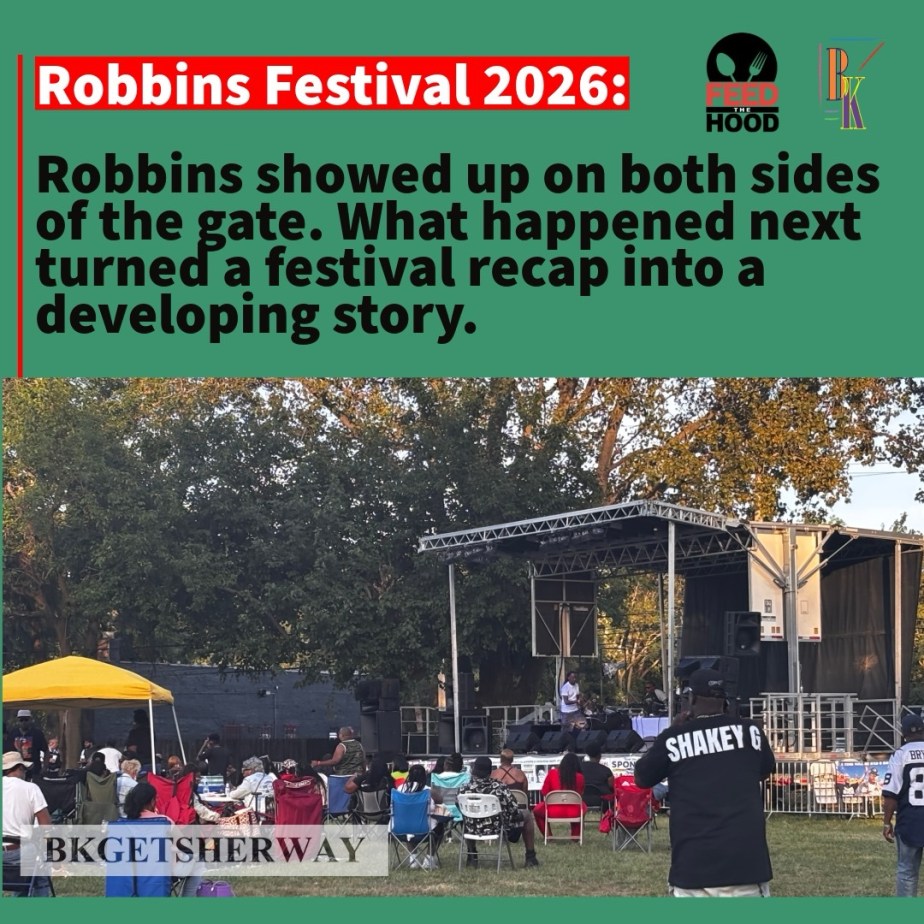
Robbins Festival Brought the Community Out, But Did It Bring the Community In?

DEVELOPING STORY | Sept. 7, 2026

I went to Robbins to support 137 Mike Mike. I left wondering why so much of the community appeared to be celebrating outside the gates of its own festival.

I came to support. Not post-and-go support, the real kind. Getting dressed, getting in the car, paying admission, and being physically present. That’s how I show up for people who are building something.

So on September 6th, 2026, I traveled to Robbins with a press associate to catch 137 Mike Mike perform at the Village’s Annual Festival & Parade Weekend.

But what I observed that afternoon raised questions I couldn’t leave alone.

Why Does the Community’s Festival and Parade Cost the Community $20?

The 2026 Village of Robbins Annual Festival & Parade Weekend ran September 4-6. The three-day event featured national, Chicago-area, and local entertainment, DJs, vendors, family activities, and the annual parade. Adult general admission was $20 per day. Children 17 and under could attend for free with a ticketed adult.

Let me be clear: charging for a festival isn’t inherently wrong. Stages, sound, security, sanitation, and artist fees all cost money. But this wasn’t marketed as a privately promoted concert that happened to take place in Robbins. It was promoted as the Village of Robbins Annual Festival & Parade Weekend. That distinction matters.

I searched the publicly available ticketing information and found no advertised free or discounted admission category specifically for Robbins residents.

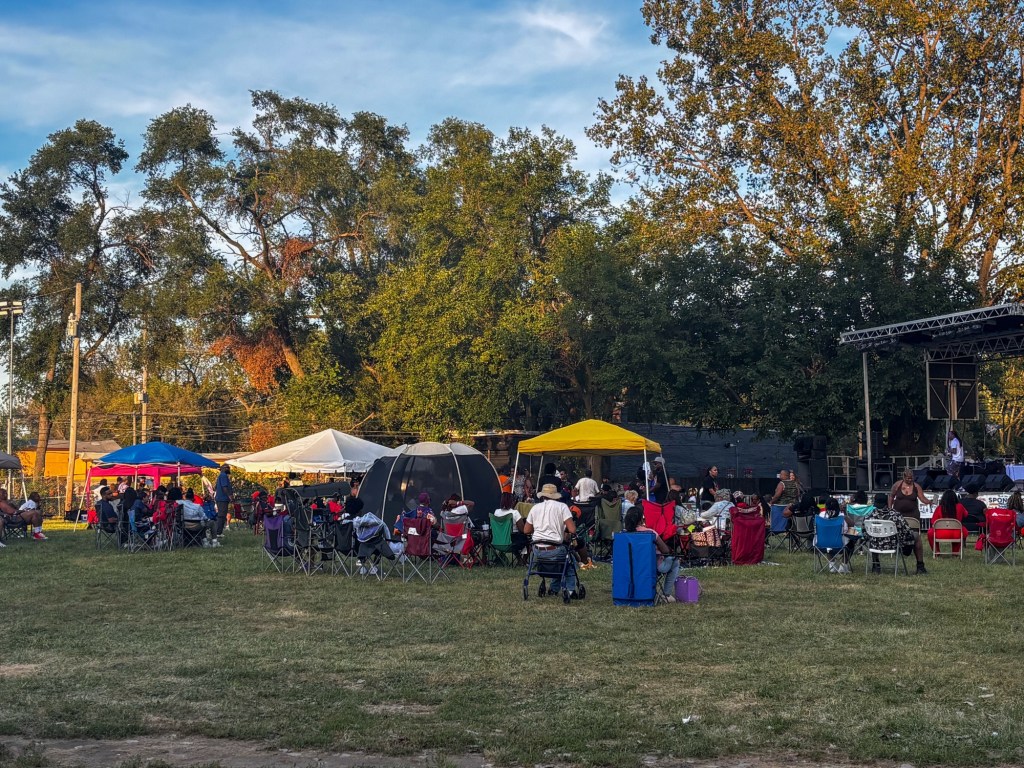
Instead, I found two simultaneous festivals. One was inside the gate: ticketed, organized, vendors, official. The other was outside, with residents, vendors, and neighbors creating their own experience in the spaces around the grounds. The $20 admission and the gate itself physically separated the two.

A festival designed to bring a community together had, from my vantage point, produced a divided crowd.

I don’t know how many people outside chose not to enter because of the price. I don’t know how many had already attended on another day, or simply preferred being outside. Those distinctions require responsible reporting to verify. What I can report is what I personally witnessed: Robbins was active on both sides of the gate. That raises a legitimate question about whether the festival’s financial and physical structure helped create one community celebration or divided an existing one.

The economic-development question surrounding the festival exists against a broader challenge for Robbins. According to the Chicago Metropolitan Agency for Planning’s June 2026 Community Data Snapshot, businesses in Robbins generated about $15.9 million in total retail sales in 2025, or $3,484 per resident. By comparison, retail sales per capita were $23,200 across Cook County. Robbins also has only 13.6 acres classified as commercial land, representing 1.5% of the Village’s total land area.

Then There Were the $15 Wings

We have to talk about the chicken. As many of my subscribers and close friends know, I love Harold’s Chicken.

Harold’s Chicken was vending outside the festival grounds. Four wings for $15 ($12 plus fees and taxes when paying by card). Lemonade was $10 and took nearly 40 minutes to arrive.

Festival pricing is never a surprise in Chicago. But when you’re not even inside the festival and you’re paying more than most residents would spend on a full meal, that’s its own statement about who these economics are actually serving.

The Deeper Question: Where Did the Money Come From?

The question isn’t simply why they charged. The deeper question is:

How was this festival financed, and what did Robbins residents receive from the investment?

This is where the story moves from commentary into reporting. The Village of Robbins organized and promoted the annual festival. But that fact alone doesn’t establish where every dollar came from. The event could have been financed through Village funds, sponsorships, grants, vendor fees, ticket revenue, or some combination of these.

Rather than speculate, Chicago Street Journal is seeking the records.

We are requesting information about the festival’s total budget, Village expenditures, sponsorship revenue, grants, vendor fees, ticket revenue, attendance, contracts, and the ultimate allocation of festival-generated revenue. We’re also asking why the $20 admission price was selected, and whether Robbins residents received, or were considered for, any special admission benefit.

Those answers matter. There is a meaningful difference between a festival primarily financed through private sponsorships and ticket sales and one substantially subsidized through public resources. If public money funded a significant portion of this event, then the question of who benefited and who didn’t becomes a public accountability question.

There are models worth considering. Residents could receive discounted admission. Sponsors could underwrite resident tickets. Daytime community programming could remain free while evening concerts are ticketed. The Village could offer residents wristbands. These aren’t demands; they’re examples of the kinds of structures that allow community access and event revenue to coexist.

Who Was On Stage

The 2026 Robbins Festival featured a full weekend of live entertainment. On the performance side: Keke Wyatt, Danny Boy, Shawnna, El Hitta, and Sean Mac all took the stage. The steppers scene was represented through Club Steppin’, adding a Chicago cultural staple to the weekend’s programming.

Holding down the DJ sets were DJ Pharris, DJ Sundance, DJ K Caesar, DJ Twenzino, and DJ SYIAH. Power 92 RAW Radio, hosted by Seandale, also had a presence at the festival, bringing the station’s audience into the weekend’s energy.

I Actually Came for 137 Mike Mike

None of this overshadows why I went to Robbins that day. I went to support 137 Mike Mike at the festival, alongside my press associate, Street Certified News.

And I’m glad I went. Community festivals do something larger-ticketed events often can’t: they give local artists a stage in front of the people they’re already building with. Nationally recognized performers sell tickets and draw attention, but local artists are often the ones creating culture in these communities every single day, especially when they’re from the community themselves, like 137 Mike Mike. They’re building audiences one person at a time, making music without major-label budgets, and turning local talent into something that lasts.

I’m currently speaking with 137 Mike Mike about his story, what the “137” represents, his relationship to Robbins and Chicago culture, his experience performing at the festival, and what he’s working toward next. That piece is coming.

What We’re Asking the Village

Chicago Street Journal is seeking answers from Village leadership about who produced the 2026 festival, how much it cost, what portion was supported by public resources, why adult admission was set at $20, whether residents received any admission benefit, how vendors were selected and charged, how much revenue the event generated, and where that revenue goes.

We are also seeking the underlying financial and administrative records through the Illinois Freedom of Information Act.

There may be perfectly reasonable answers. There may also be things worth changing before next year. Either way, Robbins residents deserve the information necessary to make that determination for themselves.

Mayor Darren Bryant has responded to CSJ’s inquiry and will be speaking with us on the record by phone. That’s why this story isn’t finished.

It’s developing. And we’ll follow the money and the answers wherever they lead.


Editor’s Note: This is a developing report based in part on the author’s firsthand observations at the Village of Robbins Annual Festival & Parade Weekend on Sept. 6, 2026. Chicago Street Journal is seeking comment from Village officials and public records concerning festival financing, operations, admission and revenue. Additional reporting, including comments from artist 137 Mike Mike and the Village of Robbins, will be incorporated as it becomes available.

Have information about the 2026 Robbins Festival? Chicago Street Journal welcomes documentation, photographs, receipts, vendor experiences and firsthand accounts from Robbins residents, attendees and participating businesses. Information submitted by sources will be independently evaluated before publication.
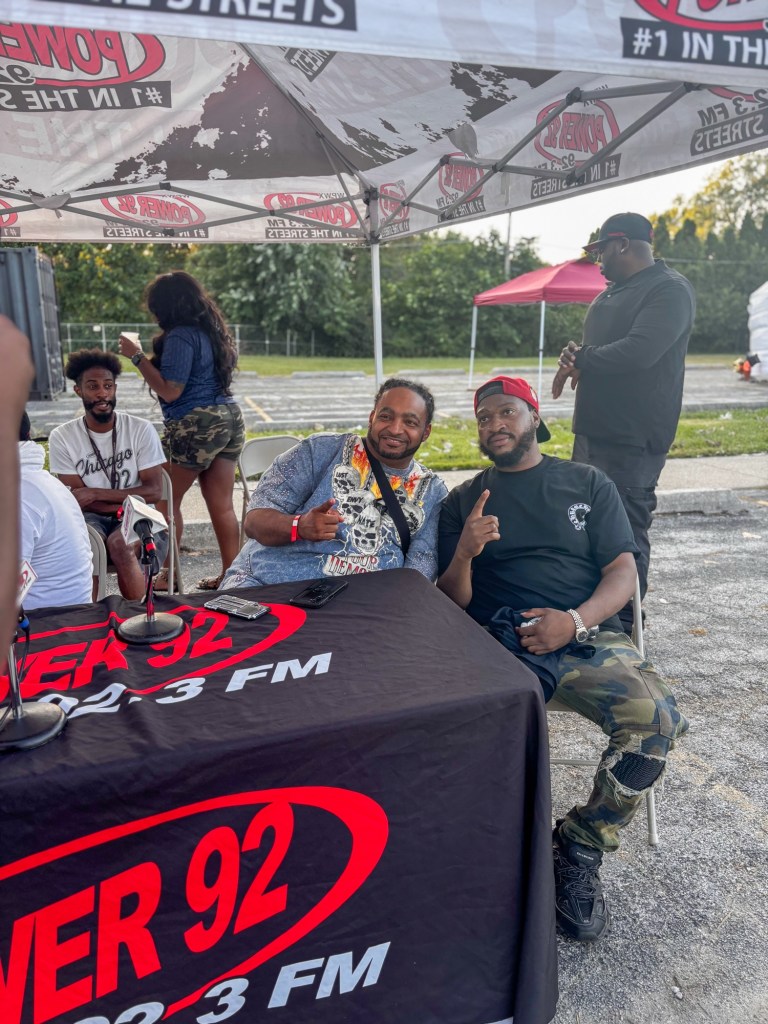
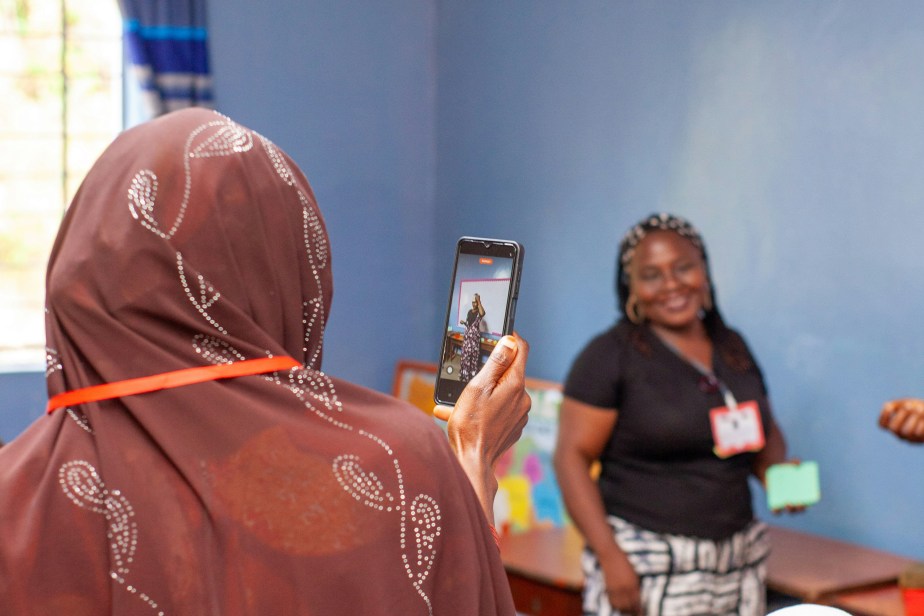
Seandale and a Guest at the Festival
Participants inside the gates of the Festival.

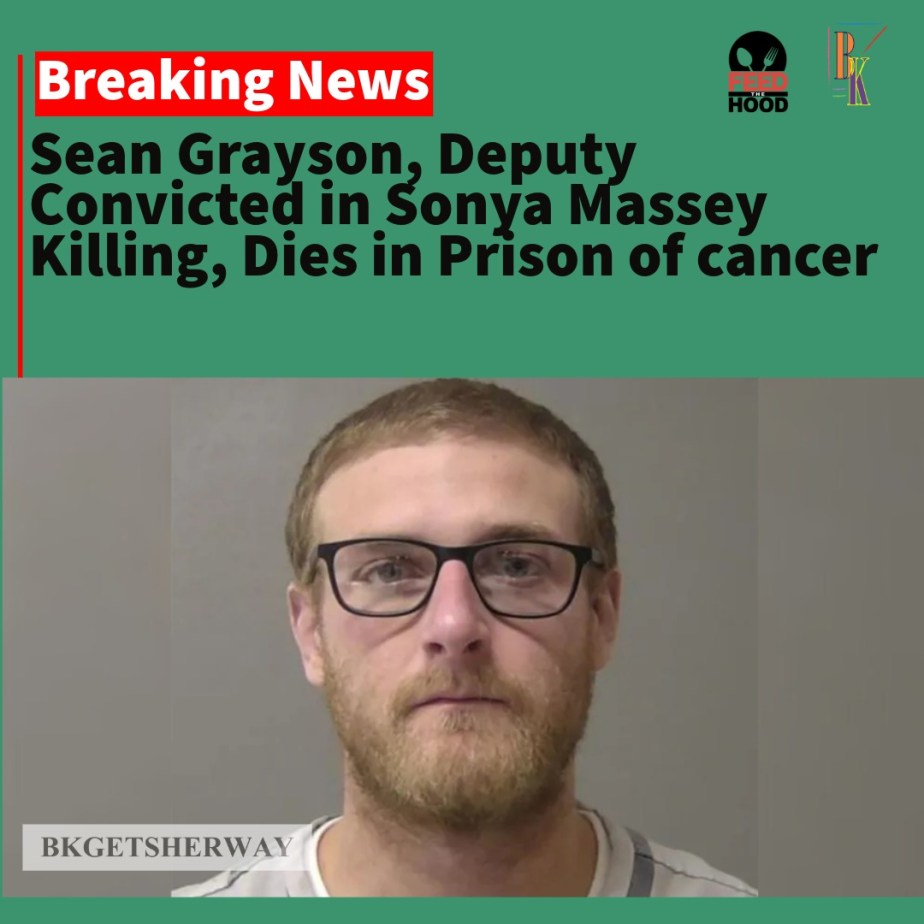
Deputy Convicted in Sonya Massey Killing Dies in Prison

SPRINGFIELD, Ill. — The former Illinois sheriff’s deputy convicted of killing Sonya Massey inside her own home has died while in state custody, his attorney confirmed Sunday, closing out the criminal case in a killing that reshaped policing rules across Illinois.

Sean Grayson, 32, died Aug. 23, attorney Daniel Fultz said, without providing further details. Grayson had stage 4 colon cancer that had spread to his liver and lungs, and he was serving a 20-year sentence for second-degree murder at the time of his death.

His death came about three weeks after the Illinois Prisoner Review Board unanimously rejected his request for early medical release, despite his argument that he was nearing total medical incapacitation.

Grayson shot and killed Massey, 36, inside her Springfield-area home on July 6, 2024, after she called 911 to report a possible prowler outside. Body camera video later showed Grayson and another deputy entering her home, where Massey went to the stove to remove a pot of boiling water. As she held it, she told Grayson she rebuked him “in the name of Jesus.” Grayson drew his weapon and threatened to shoot her in the face, then fired three times as she ducked behind her kitchen counter, apologizing. One round struck her in the face, and she died within hours.

The Sangamon County Sheriff’s Office fired Grayson once the footage came to light. He had moved through several small Illinois police departments before joining the county, some of which had flagged concerns about his judgment. A jury convicted him of second-degree murder in October 2025, down from the original first-degree murder charge, and a judge handed down the maximum 20-year sentence in January 2026, plus two years of mandatory supervised release.

The case triggered protests across the state and drew a civil rights investigation from the U.S. Department of Justice, which later reached an agreement with the sheriff’s office requiring new training and a mobile crisis-response unit for mental health calls. Illinois lawmakers also passed the Sonya Massey Act, which requires police departments to review an applicant’s full work history before hiring them.

In the weeks before Grayson’s death, Massey’s family testified against his release request, arguing his diagnosis didn’t erase the danger he’d shown he was capable of. Sangamon County’s top prosecutor made a similar case to the review board. After news of Grayson’s death broke, relatives said it allowed them to finally begin grieving, since the ongoing legal proceedings had left little room to do so. The family’s attorneys said Massey’s killing was unjustified and that Grayson’s death doesn’t change that loss. A state senator who backed the post-shooting reforms said the community’s continuing push for policy change has offered the family some comfort.

Grayson’s death closes the criminal case, but the reforms his actions triggered look likely to be the more lasting mark on Illinois policing, a legacy shaped less by what happened to him than by what his actions cost Sonya Massey’s family and community.


Sources:

Illinois to Require ‘Bell-to-Bell’ Cellphone Restrictions in Schools Starting 2027

SPRINGFIELD, Ill. – Illinois schools will soon be required to limit students’ cellphone use from the start of the school day until dismissal under legislation lawmakers sent to Gov. JB Pritzker’s desk this year.

Senate Bill 2427 directs every public school board and charter school to adopt a “wireless communication device” policy by the start of the 2027-28 school year. At minimum, the policy must bar students from using phones, tablets, laptops, gaming devices and smart watches throughout the school day, including instructional time, lunch and passing periods, according to bill records maintained by the Illinois General Assembly. High schools have some flexibility to allow device use during lunch or between classes; elementary and middle schools do not.

The measure passed the Senate 55-2 and the House 102-3 before lawmakers adjourned their spring session June 1. Pritzker, who proposed the policy during his State of the State address, is expected to sign it.

“Every parent and educator knows the damage that unchecked screen time and social media can do to our children and how disruptive they can be in school,” Pritzker said in a statement after the bill’s passage.

The law carves out several exceptions. Students may use devices during emergencies, when a licensed physician, physician assistant or nurse practitioner determines a device is medically necessary, to fulfill an individualized education program, or if needed to access learning materials as an English language learner. Schools are barred from enforcing the policy through fines, fees, suspensions, expulsions or by involving school resource officers or police.

State Sen. Cristina Castro, D-Elgin, the bill’s lead Senate sponsor, said the goal is to help students refocus on schoolwork. “Teachers and students should be able to collaborate effectively without distractions standing in the way,” Castro said, according to a news release cited by NBC Chicago. In an interview with NPR Illinois, Castro said several teachers in her district had urged her to pursue the legislation.

The policy mirrors bans already adopted locally by some Illinois districts, including Elgin School District U-46 and Hinsdale Township High School District 86, according to NBC Chicago. Illinois joins a large majority of states that have adopted some form of statewide restriction on phones in schools, according to Illinois Policy, a nonprofit research organization; Indiana is among neighboring states with a similar law.

Supporters point to research suggesting phone restrictions can help classroom focus. NBC Chicago reported the governor’s office cited Pew Research Center survey data showing roughly three in four high school teachers consider phone-related distraction a major problem. NPR Illinois cited Rutgers University research finding that students in classes permitting phone use scored worse on final exams than peers in phone-free classes.

Not everyone welcomed the change. The Chicago Teachers Union has argued the policy could cut off a way for students to reach family during emergencies, including immigration enforcement actions, and that managing devices already falls to teachers as part of daily classroom routines, Illinois Policy reported. Supporters counter that the bill’s emergency exception is intended to cover those situations.

Educators who already restrict phones say enforcement remains a work in progress. Ashley Kolovitz, director of digital learning and innovation at Lake Forest Academy, a private school not covered by the new law but with its own device policy, told NPR Illinois that students often reach for phones out of habit. “Sometimes, I have to stop and collect them at the start of class if it keeps happening,” Kolovitz said.

Under the law, the Illinois State Board of Education must publish a model wireless device policy for districts by Sept. 1, and school boards must review their policies at least every three years.

Sources:

  • Illinois General Assembly, Bill Status of SB2427 – ilga.gov
  • Capitol News Illinois, “Cell-phone ban, loosening foreign language requirements among education bills to pass” (June 2, 2026)
  • NPR Illinois, “School cellphone ban is designed to help students focus” (July 7, 2026)
  • NBC Chicago, “Illinois legislature approves school cellphone ban, governor says he’ll sign” (May 31, 2026)
  • Illinois Policy, “Pritzker gets his school cell phone ban bill despite CTU opposition” (June 18, 2026)
  • Featured Image Credit: Akinyemi Gbadamosi

Formerly Incarcerated Candidates Challenge Felon in Possession Laws

CHICAGO — Two Illinois political candidates are challenging federal and state laws that ban people with felony records from owning firearms, arguing the policies are unconstitutional and deny due process.

Andy Williams Jr. and Tyrone Muhammad filed suit in the U.S. District Court for the Northern District of Illinois, with an amended complaint submitted March 7, 2024. In a Sept. 11, 2025, press release, the candidates reaffirmed their stance that blanket firearm bans for people with felony convictions violate fundamental rights.

Official Press Release

The men say the laws treat all people with felony records as permanent threats to public safety, regardless of their rehabilitation or time since release.

Background

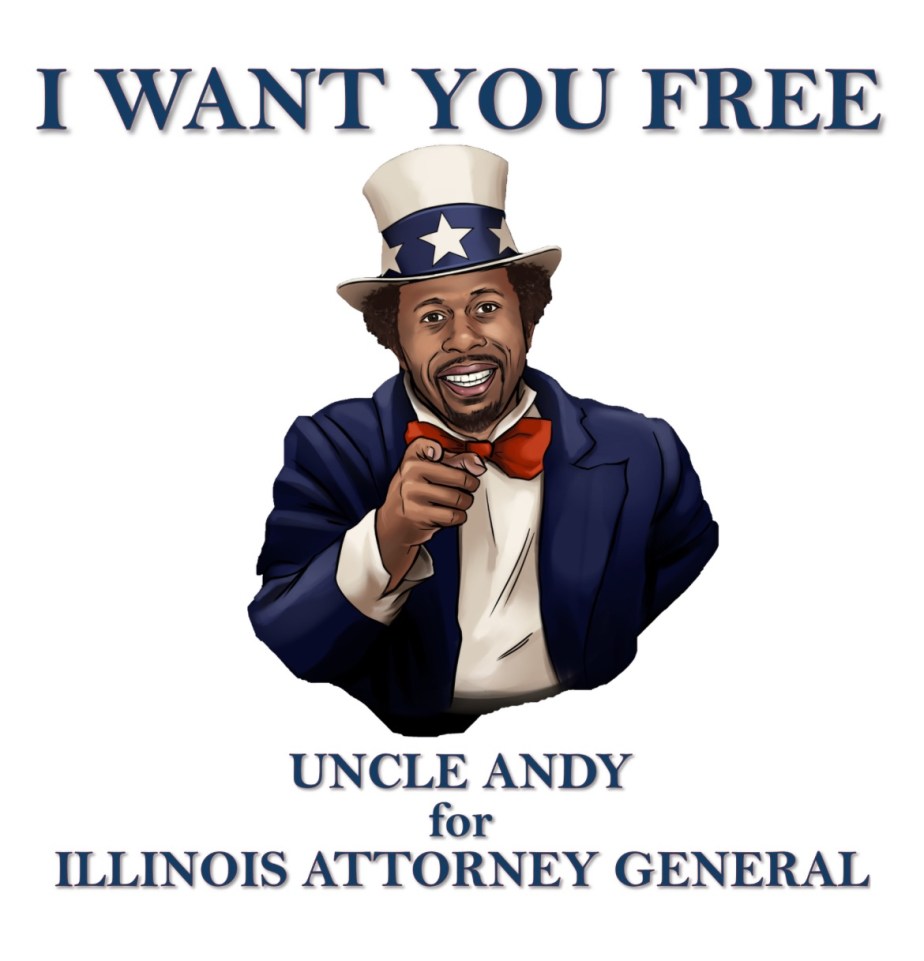
Williams served time for a robbery conviction and has remained law abiding since his release in 1991. He is currently running for Illinois attorney general; he’s a member of For The People, LLC, AWJ Ministries , a Painter, and a married family man.

Muhammad, who served time for murder, went on to found ECCSC (Ex-Cons for Community and Social Change) a nonprofit focused on community advocacy. He is now a candidate for the U.S. Senate.

Both men argue that their lived experiences make them uniquely positioned to highlight how existing laws disproportionately affect people who have rebuilt their lives.

Constitutional Questions

On Feb. 7, 2025, former President Donald Trump signed Executive Order 14206, directing the U.S. attorney general to protect the right to bear arms. Trump called the Second Amendment “an indispensable safeguard of security and liberty.”

Williams and Muhammad argue those protections must also apply to people who have served their sentences. They note that many formerly incarcerated people cannot afford private security and rely on their constitutional rights for protection.

Courts have also ruled that police have no constitutional duty to protect individuals:

In DeShaney v. Winnebago County Department of Social Services, 489 U.S. 189 (1989), the U.S. Supreme Court held that the state was not required to protect a child from an abusive father despite prior warnings. Read the case.

In Town of Castle Rock v. Gonzales, 545 U.S. 748 (2005), the Court found that police could not be sued for failing to enforce a restraining order that may have prevented the deaths of three children. Read the case.

“These rulings show that the government cannot guarantee personal safety,” the candidates said. “If police don’t have to protect us, then we must have the right to protect ourselves.”

The Legal Challenge

The lawsuit contests 18 U.S.C. § 922(g)(1) and Illinois statute 720 ILCS 5/24-1.1(a)(e), which bar people with felony convictions from possessing firearms.

Williams and Muhammad contend the laws are unconstitutional, overly broad and discriminatory. They are calling for legislative changes or constitutional amendments that would replace categorical bans with standards based on individual circumstances.

Call to Action

“I’m calling on others to join this fight,” Williams said. “Support the lawsuit by filing a motion to intervene. Watch for upcoming town halls where we’ll talk about your rights. I’m running for attorney general. I’ll protect the rights of the people, including the formerly and currently incarcerated people and their families.”

🗣️ Did Trump Free Larry Hoover? Here’s What You Need to Know For Real

The short answer? No. But he did commute Larry Hoover’s federal life sentence, which is a big deal, but not the same as a full pardon.

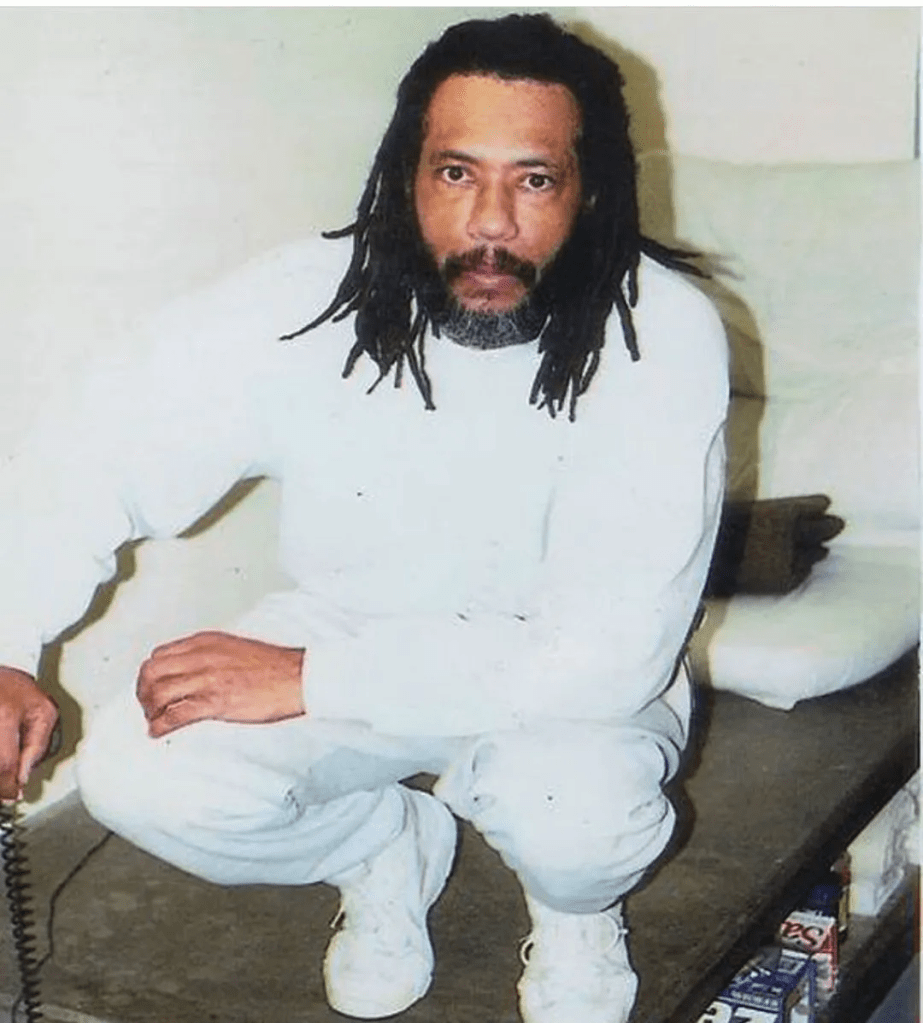
On May 28, 2025, President Donald Trump used his executive powers to commute the federal sentence of Larry Hoover, the co-founder of Chicago’s Gangster Disciples (GDs). That means his federal time was reduced, but his state sentence in Illinois remains in full effect.

🚫 A pardon erases a conviction.
✅ A commutation shortens the sentence but leaves the conviction intact.

👉🏽 Hoover is still incarcerated, just no longer serving time under his federal sentence.

⚖️ Federal vs. State: Why Hoover Isn’t Free Yet

While the federal government no longer requires Hoover to serve life in a supermax prison, the State of Illinois still holds a separate life sentence against him. That stems from a 1973 murder conviction.

Credit: Larry Hoover Jr./Instagram

So even though Trump intervened federally, Hoover remains in prison under state custody.

🔗 Read ABC7’s breakdown of the current legal status

🌐 Why This Matters

Larry Hoover’s name carries legacy and controversy in Chicago. For decades, he’s been labeled a criminal mastermind. But in recent years, there’s been a push by his legal team and public figures to recognize the transformative work he’s done behind bars, including efforts to promote peace and redirect youth from gang life.

Even Kanye West and Drake brought global attention to Hoover’s case during their 2021 Free Larry Hoover Benefit Concert, adding cultural weight to the conversation about his potential release.

🔗 See the coverage from Baller Alert

🏛️ Why Did Trump Commute His Sentence?

Let’s be real: Trump’s use of presidential clemency powers has always been controversial. Many of his commutations and pardons have benefited high profile or politically connected individuals. Which is still publicity for him and his administration. Still, for communities dealing with over policing and mass incarceration, among other violations of civil and human rights, any shift in how justice is served becomes a moment of reflection and dialogue. So I claim this as a win for us in the hood.

🔗 Check out The Guardian’s analysis of Trump’s pardon strategy

💬 Thoughts

This decision is layered. Larry Hoover’s sentence was reduced because of his pardon of federal charges but he’s not free. Still, it opens the door to wider conversations about:

  • Sentencing reform
  • Community rehabilitation
  • The politics of who gets clemency
  • And the ongoing impact of legacy gang leaders in modern movements

Whether you’re from Englewood, the West Side, Auburn-Gresham like me or just someone trying to understand what’s real vs. what’s headlines; stay sharp, stay informed, and keep asking deeper questions because as a solid and native representation of urban culture, in the words of the Honorable Fred Hampton, Leader of the Illinois Chapter of the Black Panthers and a Chicago Native:

I Am A Revolutionary; Free Em All !

📌 Original Report Seen by: Kollege Kid

The Prodigy Sacrifice, Hegelian Dialect, The Bavarian Illuminati, and the True Enlightened Ones

The Prodigy Sacrifice

The ancestor and late Hip-Hop artist Prodigy, one half of Mobb Deep, spoke up consistently about his experience and knowledge of the forces running society. He was critically autonomous and dropped seeds at a consistent yet subtle rate to build up a space for ones to have an open conversation about things we don’t question or seem to think about. It is in insult to make us think he died from choking on a boiled egg.

We like to think that conspiracies are just theories but ones must be mindful of the base word without the second term added to it because you can possibly make an ass out of yourself when you are being guided by governmental agencies and agents who do not care about you being well and prosperous but you being in poverty because it gives them the space to provide solutions to problems they’ve caused members in society to react to. Then seemingly at a later date you find out that those conspiracies were true like who killed Martin Luther King Jr., Malcolm X, and Fred Hampton or even that “blacks” are being conspired against to be exterminated through eugenics. At one point all these subjects were labeled as conspiracy theories.

It’s important in this new age to be informed (and not ill informed) because information is readily available to us at the drop of a finger if we seek and ask the right questions. You have to be open mined and not bias when doing the research and reviewing artifacts because you may not understand, comprehend, like, or believe the information you discover because some of the things you may find may seem unreal or not possible by a group of people or an individual; or aligns with what you have already been programmed with. As humans we are super beings in this reality and we can so anything.


The Bavarian Illuminati and Founder

The Hegelian Dialect , according to Real News Australia, is a philosophy that means all reality is capable of being expressed synthetically, creating a false sense of unity within a system.

Edward Snowden has opened our eyes on one of those categories that reveals what this looks like in modern time, exposing us to the “higher ups” invading our privacy.

“How your cell phone spies on you”

The Golden Age of Civilization relies on Indigenous ones in America and beyond.

The Future of Race, Finance, and the Future of Digital Slavery: Every Entrepreneur, Business Owner, and Active Citizen (or Un-active) Should Watch and Share

I appreciate Zakiya and her work as a press person and educator, using her space to inform ones who may not be aware of what is happening around them. This presentation is just about 3 hours long but it’s worth the watch. If you can watch a movie that’s just as long or participate in any other media activity, you can watch this shit because your life depends on it. I’ll be back to update this post later and add another supporting piece of research to add to your collection of knowledge.

Feel free to drop a comment, contact me, or hit me up on one of my accounts to share your thoughts on this information. Critical autonomy is key.

Other Supporting Videos

This artifact speaks about Block-chain & Cryptocurrencies, and what that means for you.
Catherine Austin Fitts fills us in on technocracy and their real estate acquisition
Russel Brand shares some commentary and artifacts of us possibly being transitioned to a surveillance state of being and living.