CSJ Legal Brief | United States v. Lil Durk: The Witnesses, the Million-Dollar Allegation and the Evidence Behind the Acquittal

Chicago Street Journal | Urban Culture & Affairs | Courts & Criminal Justice

Case: United States v. Durk Banks, et al.
Court: U.S. District Court for the Central District of California
Case No.: 2:24-cr-00621-MWF
Presiding Judge: U.S. District Judge Michael W. Fitzgerald
Verdict: September 11, 2026

Question Presented

How did federal prosecutors build a murder-for-hire prosecution around cooperating insiders, travel, money, electronic communications and other evidence and still fail to prove beyond a reasonable doubt that Chicago rapper Durk “Lil Durk” Banks participated in the charged murder-for-hire conspiracy?

And underneath that question is another:

What did the government’s evidence actually prove, as opposed to what witnesses and prosecutors said that evidence meant?

That distinction is at the center of this case.


Short Answer

On September 11, 2026, a federal jury acquitted Durk Banks on all charges arising from the government’s prosecution of an alleged 2022 murder-for-hire plot targeting rapper Tyquian “Quando Rondo” Bowman.

Banks’s co-defendants Deandre “DeDe” Wilson and David “Browneyez” Lindsey were also acquitted of the murder-for-hire allegations, but the jury convicted Wilson and Lindsey of conspiracy to commit stalking, stalking with a dangerous weapon and stalking resulting in death. The jury deliberated for three days. (AP News)

That split verdict is significant.

The jury was willing to find criminal responsibility for portions of the underlying conduct while declining to find Banks guilty of the offenses charged against him.

The verdict does not establish that every government witness lied. It does not tell us that jurors accepted every defense argument. Nor does it establish that Banks knew nothing about the events surrounding the shooting.

It establishes something narrower and legally critical:

Federal prosecutors did not prove Banks guilty of the charged offenses beyond a reasonable doubt.

Understanding why requires looking past the headline and examining the structure of the government’s case.


I. STATEMENT OF FACTS

From King Von’s Death to the Los Angeles Shooting

The government’s case originated in the aftermath of the November 2020 killing of Chicago rapper Dayvon “King Von” Bennett.

Federal prosecutors alleged that Banks sought retaliation against Quando Rondo, whose associate was involved in the Atlanta confrontation that resulted in Bennett’s death.

Nearly two years later, on August 19, 2022, gunmen attacked Bowman’s group near the Beverly Center in Los Angeles.

Bowman survived.

His cousin, Saviay’a “Lul Pab” Robinson, was killed.

Prosecutors alleged that Banks orchestrated a murder-for-hire plot targeting Bowman and that people associated with his Only The Family organization traveled to California and participated in the operation.

Banks pleaded not guilty.

His defense maintained that Banks did not order the killing and sought instead to place responsibility for organizing the attack on his former assistant, Kavon “Vonnie” Grant.

After approximately two weeks of testimony and three days of deliberations, the jury acquitted Banks. (AP News)

That chronology establishes the background.

It does not, by itself, establish who ordered the attack.

That was the disputed question the government had to prove.


II. WHAT THE GOVERNMENT HAD TO PROVE

Understanding the verdict requires understanding the actual law.

Federal murder-for-hire is governed principally by 18 U.S.C. § 1958.

The Ninth Circuit’s model criminal jury instruction identifies three fundamental elements the government must prove beyond a reasonable doubt.

First, the defendant must use, cause another person to use, or conspire to use a facility in interstate or foreign commerce or engage in the corresponding interstate travel covered by the statute.

Second, the defendant must act with the intent that murder be committed.

Third, the defendant must intend that the murder occur in exchange for something of pecuniary value. (Ninth Circuit Court)

That third requirement deserves attention.

“Murder-for-hire” doesn’t necessarily require completed payment.

Under federal law, “pecuniary value” can encompass money, commercial interests or other things whose primary significance is economic advantage. Ninth Circuit authority also recognizes that a promise of economic advantage can qualify even when the promise isn’t legally enforceable. (Ninth Circuit Court)

Therefore, the simplistic argument:

“Nobody got paid, so there couldn’t have been murder-for-hire”

……is legally incomplete.

But the opposite shortcut is equally problematic.

The government still had to establish the required connection between the murder and the alleged economic bargain.

As the Ninth Circuit instruction explains, the defendant must clearly understand that the thing of economic value would be given or received in exchange for the murderous act. (Ninth Circuit Court)

In plain English:

Where was the bargain?

Who offered what?

To whom?

What was promised?

What evidence established the agreement?

And most importantly for Banks:

What evidence proved that Banks knowingly participated in that bargain?

Those questions bring us to the government’s witnesses.


III. THE GOVERNMENT’S THEORY

Prosecutors did not present the alleged conspiracy as one isolated conversation.

They assembled a circumstantial and testimonial case.

The government pointed to relationships among Banks and members or associates of OTF; interstate travel; lodging and transportation; financial resources; electronic communications; the movements of alleged participants; and testimony from people who admitted participating in the events surrounding the attack.

Prosecutors argued that these pieces formed one picture:

Banks wanted retaliation, supplied or enabled resources, and directed people around him toward killing Quando Rondo.

One of the government’s most consequential witnesses was Banks’s former assistant, Kavon Grant.

Grant admitted participating in the August 2022 attack and testified that he did so because:

“Durk told us to.”

That is direct testimonial evidence of the government’s theory, but it still depended on jurors believing Grant. (LA Magazine)

And Grant wasn’t the government’s only insider.


IV. THE DEFENSE THEORY

Banks’s lawyers did not need to prove who actually masterminded the shooting.

The burden remained with the government.

But the defense supplied jurors with an alternative explanation.

It portrayed Grant, not Banks, as the person responsible for organizing the attack and argued that cooperating witnesses had powerful incentives to transfer responsibility upward to Banks.

The defense attacked the credibility of witnesses who admitted criminal participation and subsequently cooperated with federal prosecutors.

That created a recurring evidentiary question:

When does insider testimony become proof, and when does it remain an accusation requiring stronger independent corroboration?

The prosecution could establish that an associate traveled.

It could establish that someone rented a vehicle.

It could establish that money changed hands.

It could establish that a cellphone traveled from one location to another.

But those facts still had to be connected to Banks’s intent and agreement to commit the particular crimes charged.

The government’s case therefore depended not simply upon proving events.

It depended upon proving what those events meant.


V. THREE INSIDERS

Three cooperating witnesses became especially important to understanding the prosecution:

  • Kavon “Vonnie” Grant
  • Kacey “OTF Jam” Hester
  • Keith “Flacka” Jones

Their importance creates both strength and vulnerability for the government’s case.

An insider can provide information an outside witness could never know.

But cooperating witnesses may also face their own criminal exposure and potential sentencing consequences.

That doesn’t make their testimony inherently false.

It makes credibility, motive and corroboration especially important.

The jury ultimately heard the insiders’ accounts alongside the government’s independent evidence and the defense’s challenges to their credibility.

And then it acquitted Banks.


VI. THE FLACKA QUESTION: WHO IS KEITH JONES?

Keith Jones is particularly important because his position in the prosecution changed.

Jones, also known as “Flacka,” was not originally merely a witness against Banks.

He was a defendant.

He was charged in connection with the same alleged murder-for-hire scheme before later pleading guilty and becoming a government witness.

By the time of Banks’s trial, Jones was testifying for the prosecution about an operation in which he acknowledged participating. Courtroom reporting confirms that Jones testified immediately before Grant. (LA Magazine)

That history explains something that can look suspicious when documents from different stages of the prosecution are compared.

Jones can appear prominently among defendants in earlier case materials but not alongside Banks among the defendants whose guilt the September 2026 jury was deciding.

Based on the public evidence reviewed for this brief, that does not establish that Jones was secretly erased or “wiped” from the federal case.

His procedural status changed.

Defendant → guilty pleader → cooperating government witness.

That distinction is important enough that Chicago Street Journal is treating Jones’s plea and cooperation history as a separate reporting question rather than assuming what happened from changing document captions alone.


VII. THE $1 MILLION ALLEGATION

One allegation has traveled particularly far outside the courtroom:

Lil Durk allegedly placed a $1 million bounty on Quando Rondo.

But journalism requires us to ask:

Who actually heard what?

Jones’s testimony, as reported from the courtroom, was not simply that Banks personally approached Jones and offered him $1 million.

Reporting on the testimony describes Jones saying that Deandre “DeDe” Wilson told him Banks was offering $1 million for Quando Rondo’s killing. (XXL Mag)

The evidentiary chain being described is not simply:

Banks → Jones

It is:

Banks allegedly → Wilson allegedly → Jones.

Therefore, saying:

“Flacka testified that Durk personally offered him $1 million”

would overstate what Jones reportedly testified to.

The more precise formulation is:

Jones testified that Wilson told him Banks had offered a $1 million bounty.

Precision isn’t semantics here.

It’s evidence.


VIII. THE PAYMENT PROBLEM

Jones also testified about what happened after the attack.

According to courtroom reporting, Jones said he repeatedly sought compensation but Banks never paid him for his participation in the attempted attack. (XXL Mag)

Again, that does not automatically defeat a § 1958 prosecution.

Federal murder-for-hire law can encompass a promise or agreement involving economic value even if the promised benefit isn’t ultimately delivered. (Ninth Circuit Court)

But it creates an obvious evidentiary question:

If this was murder-for-hire, what evidence establishes the hire?

The prosecution didn’t necessarily need a canceled check marked “Quando hit.”

Criminal conspiracies rarely arrive gift-wrapped.

But prosecutors still needed evidence from which jurors could find the required economic agreement beyond a reasonable doubt, and Banks’s participation in it.

That makes the absence of a completed payment only part of the story.

The larger issue is whether the testimony, communications, money and other evidence sufficiently established the bargain itself.


IX. WHAT WAS CORROBORATED?

This may be the most important question in the entire case.

Strip away conclusions for a moment.

The government had evidence capable of establishing significant surrounding events and relationships.

It also had participants willing to tell jurors what they said those events meant.

But those are two different categories of evidence.

Suppose independent records establish that Person A flew from Chicago to Los Angeles.

That proves travel.

Suppose financial records establish that Person B paid for a hotel.

That proves a financial transaction.

Suppose cellphone data places Person C near a particular location.

That can establish location.

But none of those facts automatically answers:

Who ordered a murder?

The prosecution’s cooperators supplied crucial connective tissue.

Grant supplied perhaps the most direct version when he testified:

“Durk told us to.” (LA Magazine)

The defense consequently had an obvious strategic target:

the credibility of the people supplying the connection between Banks and the crime.

That’s why this case cannot be understood merely by counting how many pieces of evidence prosecutors introduced.

The better question is:

Which pieces independently established Banks’s criminal intent, and which pieces acquired their incriminating meaning primarily through a cooperating witness’s interpretation?

That question deserves a document-by-document examination.


X. THE VERDICT

On September 11, the jury returned its answer to the charges.

Banks was acquitted on all counts.

Wilson and Lindsey were acquitted of the murder-for-hire-related charges but convicted of conspiracy to commit stalking, stalking with a dangerous weapon and stalking resulting in death. (AP News)

The split verdict is worth studying.

Jurors were plainly capable of convicting defendants before them.

They did.

But they did not convict Banks.

That does not permit us to reverse-engineer the jury room and declare exactly which witness jurors believed or disbelieved.

A general verdict doesn’t provide that information.

What we can say is:

After hearing the government’s evidence and the defense’s challenges, the jury concluded that prosecutors had not proven Banks guilty of the charged offenses beyond a reasonable doubt.

Anything more specific requires evidence of the jurors’ reasoning that we presently do not have.


XI. WHAT THE VERDICT DOES NOT MEAN

This matters because criminal verdicts routinely get flattened on social media.

Not guilty does not mean “the jury proved he was innocent.”

The defendant doesn’t carry the burden of proving innocence.

The government carries the burden of proving guilt.

Likewise, the acquittal does not establish:

that every cooperator lied;

that every government allegation was fabricated;

that nothing criminal happened;

or

that everyone surrounding Banks was innocent.

In fact, the same jury convicted Wilson and Lindsey on stalking-related offenses. (AP News)

The legally accurate conclusion is considerably simpler:

The government did not prove its charges against Banks beyond a reasonable doubt.


XII. THE QUESTION AFTER THE ACQUITTAL

The verdict leaves us with a better journalistic question than:

“Did Durk do it?”

The question is:

Where did the government’s evidentiary bridge fail?

Was it cooperating-witness credibility?

Was it insufficient independent evidence establishing who gave the alleged order?

Was the million-dollar allegation too dependent upon communications passed through other people?

Did the financial evidence establish spending without sufficiently establishing a murder-for-hire bargain?

Could prosecutors establish the actions of the participants without proving Banks knowingly joined their criminal agreement?

Did jurors accept some government evidence but reject the inference prosecutors wanted them to draw from it?

Or did several of these problems converge?

The verdict itself doesn’t tell us.

The record might.


XIII. HIP-HOP ON TRIAL

There is another story underneath United States v. Banks.

It concerns what happens when hip-hop culture enters a federal courtroom.

Relationships become evidence.

Lyrics can become evidence.

Slang becomes something lawyers ask jurors to interpret.

Record-label and entourage finances can become potential evidence.

Travel becomes evidence.

Social-media posts become evidence.

The actions of employees, friends and associates can become evidence offered against an artist alleged to occupy a leadership position.

None of those categories is automatically legitimate or illegitimate evidence.

The journalistic responsibility is to distinguish between:

what the evidence objectively establishes

and

the interpretation prosecutors or defense attorneys ask a jury to place upon it.

That’s particularly important when jurors may not share the cultural vocabulary of the people whose communications they’re evaluating.

A lyric can have meaning.

A slang term can have meaning.

An artist paying an associate’s expenses can have meaning.

But determining what those things prove in a criminal prosecution requires considerably more than recognizing that they sound suspicious.

There is a difference between cultural interpretation and legal proof.

This case sits directly at that intersection.


XIV. LEGAL TERMS IN PLAIN ENGLISH

Indictment

A formal criminal accusation returned by a grand jury. An indictment states what prosecutors allege. It is not evidence that the allegations are true.

Superseding Indictment

A replacement indictment. Prosecutors may use one to add, remove or modify defendants, charges or factual allegations.

Defendant

A person formally accused of a crime in the case.

Co-defendant

Another person charged in the same prosecution or related proceeding.

Cooperating Witness / Cooperator

Someone who provides information or testimony to prosecutors. Cooperators are sometimes themselves charged with crimes and may hope their assistance will be considered when they’re sentenced.

Cooperation does not automatically make testimony true or false.

Plea Agreement

An agreement under which a defendant agrees to plead guilty under specified terms. Some plea agreements also contain cooperation obligations.

Conspiracy

In general terms, an agreement between people to commit a criminal offense.

A defendant doesn’t necessarily have to personally perform every act of the underlying crime to face conspiracy liability. But mere friendship or association with someone who commits a crime isn’t itself enough to establish participation in a conspiracy.

Murder-for-Hire | 18 U.S.C. § 1958

The federal offense at the center of this prosecution.

Under the Ninth Circuit model instruction, prosecutors must establish the required interstate-commerce component, intent that murder be committed, and intent that the murder occur in exchange for something of pecuniary value. (Ninth Circuit Court)

Pecuniary Value

Something primarily carrying economic value or advantage.

That can include money, commercial interests and other economically valuable benefits. (Ninth Circuit Court)

Quid Pro Quo

Literally, “something for something.”

In the murder-for-hire context, the important concept is an exchange: the economic benefit is connected to the requested murder rather than being unrelated generosity or ordinary financial activity.

Direct Evidence

Evidence that directly addresses a fact if believed.

Grant’s testimony that “Durk told us to,” for example, directly alleges an instruction. (LA Magazine)

Whether a jury believes the witness is a separate question.

Circumstantial Evidence

Evidence from which another fact can reasonably be inferred.

Travel records, location data and financial transactions can all be circumstantial evidence.

Circumstantial evidence is not automatically inferior to direct evidence.

Corroboration

Independent evidence supporting another piece of evidence or a witness’s account.

If a cooperator says a defendant gave an order, an independently authenticated message expressing that same order could potentially corroborate the testimony.

Hearsay

Generally, an out-of-court statement offered to prove the truth of what it asserts.

But “hearsay” does not automatically mean inadmissible. Federal evidence law contains numerous exclusions and exceptions, including rules that can apply to statements made during and in furtherance of a conspiracy.

Impeachment

Evidence or questioning used to challenge a witness’s credibility.

Prior inconsistent statements, certain biases, motives and other credibility issues can become subjects of impeachment.

Cross-Examination

Questioning of a witness by the opposing side.

Cross-examination allows lawyers to challenge what the witness remembers, whether accounts have changed and whether the witness has motives affecting credibility.

Beyond a Reasonable Doubt

The government’s burden of proof in a criminal prosecution.

The government must establish every required element of an offense beyond a reasonable doubt.

The defendant does not have to prove innocence.

Acquittal / Not Guilty

A verdict finding that the government did not prove the defendant guilty beyond a reasonable doubt.

It is therefore incorrect to automatically translate an acquittal into a factual finding about everything that did or did not happen.

Split Verdict

A verdict in which jurors reach different conclusions on different defendants or charges.

That’s what happened here: Banks was acquitted, while Wilson and Lindsey were acquitted of murder-for-hire-related allegations but convicted of stalking-related offenses. (AP News)

Severance

The separation of defendants or charges into different trials.

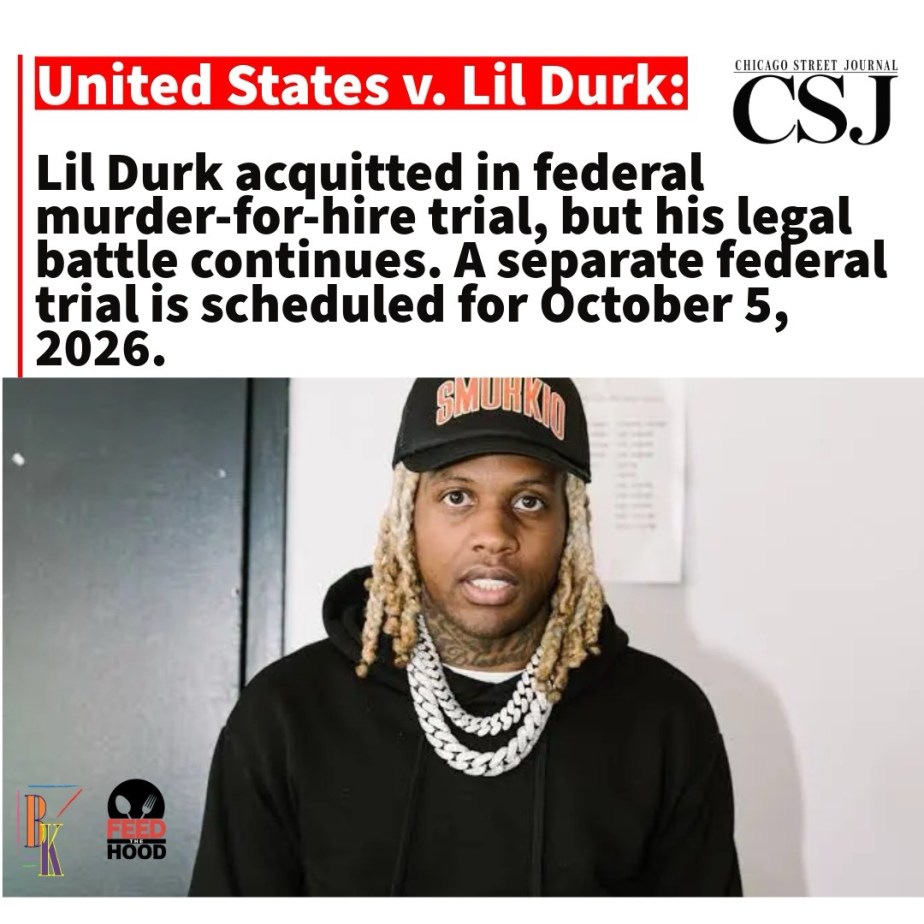
Banks remains in federal custody following this acquittal because he faces a separate trial currently scheduled for October 5 involving murder-related racketeering and weapons allegations. Those remain allegations, and Banks remains presumed innocent of them unless proven guilty. (MarketScreener)


XV. WHAT COMES NEXT

The September 11 acquittal closes one chapter of Banks’s federal prosecution.

It does not end the broader federal case.

Banks remains in custody and, according to the U.S. Attorney’s Office information reported following the verdict, faces another trial scheduled for October 5 on separate murder-related racketeering and weapons charges. (MarketScreener)

For Chicago Street Journal, however, the work on this first trial isn’t finished.

The next phase is the record.

We are examining:

the indictments;

Keith Jones’s plea and transition from defendant to cooperating witness;

the cooperation agreements;

trial and evidentiary briefs;

jury instructions;

the alleged $1 million bounty;

financial records and alleged payments;

travel and lodging evidence;

cellphone and electronic evidence;

witness testimony and impeachment;

and the evidence that independently corroborated, or failed to corroborate, the government’s cooperators.

The objective isn’t to retry Durk Banks in the press.

It is to understand how one of the most consequential federal prosecutions involving a Chicago hip-hop artist was constructed, and why that prosecution did not produce a conviction against him.

Because an allegation isn’t evidence.

Evidence isn’t automatically proof.

And evidence itself can be undisputed while its meaning remains fiercely contested.

The jury has delivered its verdict.

Now we’re going into the documents.


PRIMARY LAW & SOURCE RECORD

U.S. Court of Appeals for the Ninth Circuit – Model Criminal Jury Instruction 16.7, Murder for Hire (18 U.S.C. § 1958). Defines the elements prosecutors must establish and explains “pecuniary value.” (Ninth Circuit Court)

Associated Press – September 11, 2026. Contemporary verdict reporting confirming Banks’s acquittal, the three-day deliberation and Wilson and Lindsey’s stalking convictions. (AP News)

Reuters – September 11, 2026. Independent verdict reporting and confirmation that Banks remains detained pending the separately scheduled October prosecution. (MarketScreener)

Los Angeles Times – September 11, 2026. Courtroom reporting describing the competing prosecution and defense theories and the verdict. (Los Angeles Times)

Los Angeles Magazine – August 31, 2026. Courtroom reporting documenting Kavon Grant’s testimony concerning his participation and his allegation that Banks directed the group. (LA Magazine)

XXL – August 31, 2026. Courtroom reporting concerning Keith Jones’s testimony about the alleged bounty and his claimed attempts to obtain payment. Because these details presently rely on secondary courtroom reporting rather than a certified transcript in this brief, they are attributed accordingly. (XXL Mag)

Editorial Note

This brief distinguishes allegations, witness testimony, attorney arguments and established outcomes. Statements attributed to cooperating witnesses are their testimony, not independent findings by Chicago Street Journal. The September 11 verdict establishes that Banks was acquitted of the charges tried before this jury; it does not independently resolve every disputed factual question raised during the prosecution.

Banks remains in federal custody pending a separate federal trial currently scheduled for October 5, 2026, involving severed murder-related racketeering and weapons charges. Those allegations were not decided by the September jury, and Banks remains presumed innocent of them unless and until the government proves them beyond a reasonable doubt.

Chicago Street Journal will continue reviewing the court record and following developments in the upcoming prosecution.
Chicago’s Own: Ta’Rhonda Jones Brings Music, Storytelling & Soul to City Winery Chicago

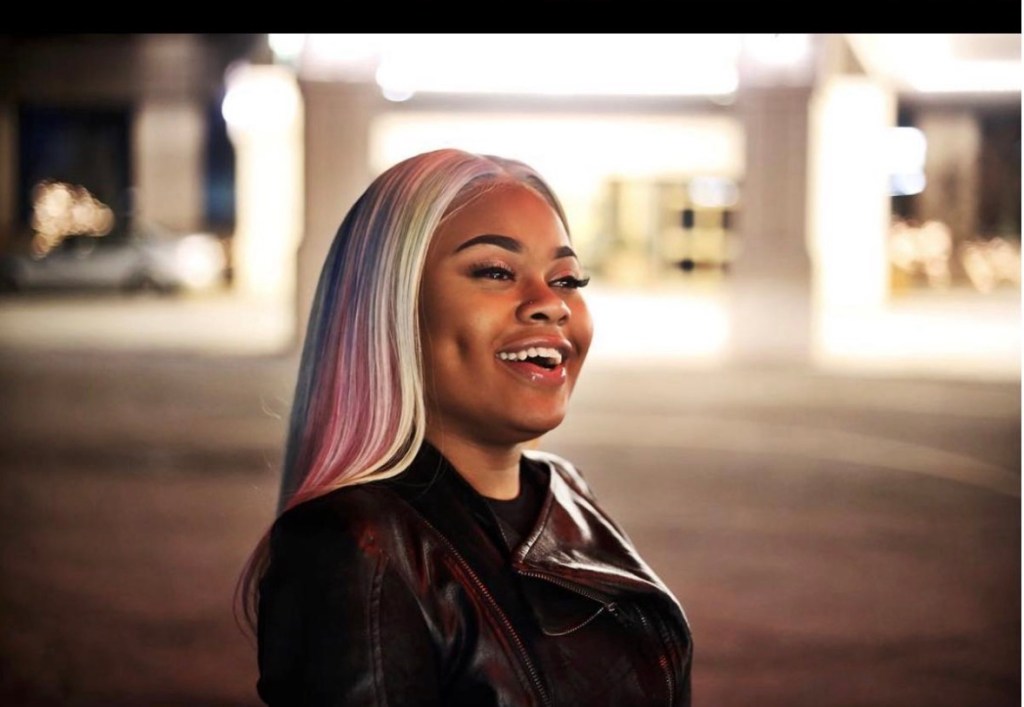
Chicago native and Empire star Ta’Rhonda Jones is set to take the stage at City Winery Chicago on Monday, July 20th at 7:30 PM for a one-night-only evening blending music, storytelling, comedy and candid conversation. Best known for her breakout role as Porsha Taylor on FOX’s hit drama Empire, Jones brings her signature charisma and authentic South Side energy to an intimate live setting that showcases the many sides of her artistry beyond the screen.

Since stepping away from scripted television, Jones has built a second on-screen life as a host, most notably fronting Oprah’s OWN Network reality dating series The Never Ever Mets. The show follows couples who fell for each other online meeting in person for the first time, and Jones, known for her blunt honesty and warmth, guides them through cohabitation and relationship tests with the same grounded, relatable energy that made Porsha a fan favorite. She returned for Season 2, which premiered in spring 2025, cementing her place as one of OWN’s go-to hosts for unscripted storytelling. I’m looking forward to seeing her return to the screen.

The date holds extra meaning: it falls right around Jones’s birthday, and it’s a great gift to give someone who never asks for anything but shares everything. The show is a shared celebration with her fans not just for her Solar Return but for all of her recent milestones. Below is a recent Instagram post announcing the event, she wrote:

“It’s my B(earth)Day! 💫 If you’ve ever wanted to support me, this is the perfect way. Grab your ticket to my @citywinerychi show, celebrate with me, and you’ll automatically be entered into raffles for FREE artist resources… When you pour into me, I get to pour right back into our creative community. Let’s celebrate together. ❤️“

Ticket buyers are entered into a raffle for artist development prizes, including a Billboard placement, a music video, and a Hype Magazine feature and more, tying the night directly to her broader mission of resourcing Chicago’s creative community.

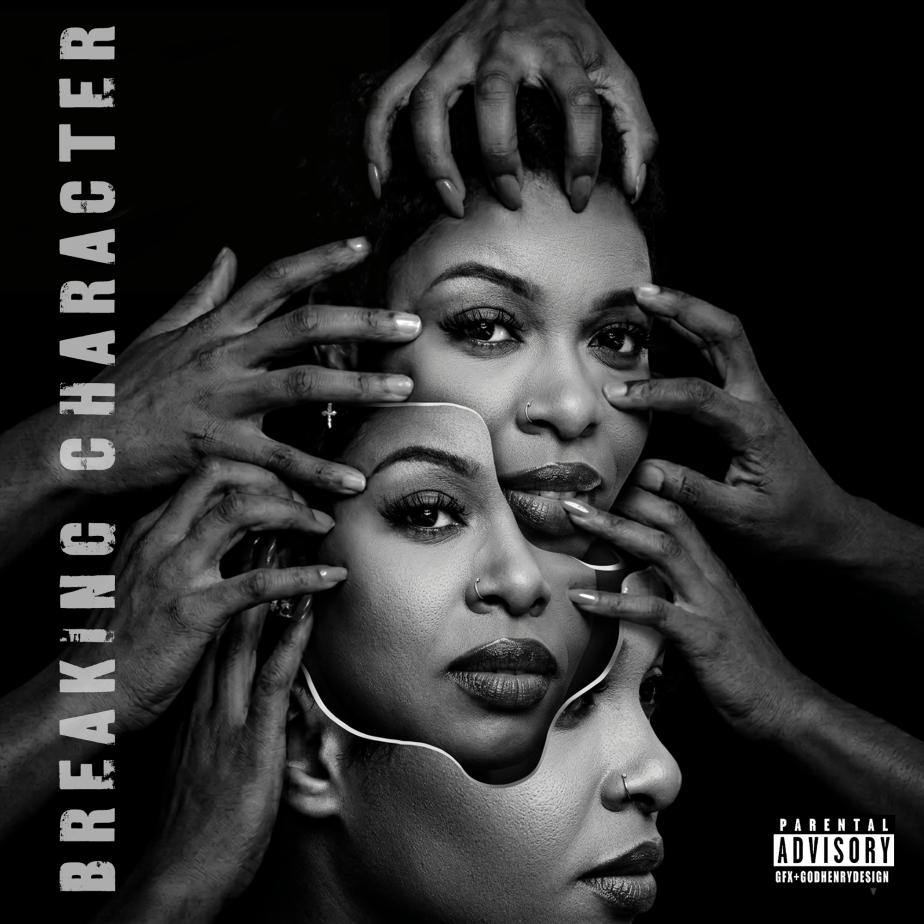
The show comes on the heels of her latest album, Breaking Character, released June 6th. The 13-track project features collaborations with Teefa, SandyRedd, Joel Q, GLC, VAADI, Nathan Palmer, Mg Marz, and Philmore Greene, and has already drawn praise for its intentionality and cohesion, critics note the album’s replay value and the way its sequencing carries listeners through themes of identity and self-presentation. Fan-favorite tracks include “Villian” and “Feeling Good, Feeling Great.”

My favorites are “ Villain” , “Menace”, “Let Me Talk to Myself”, and “Favor on My Soul”.

Ta’Rhonda performing “Let Me Talk To Myself”

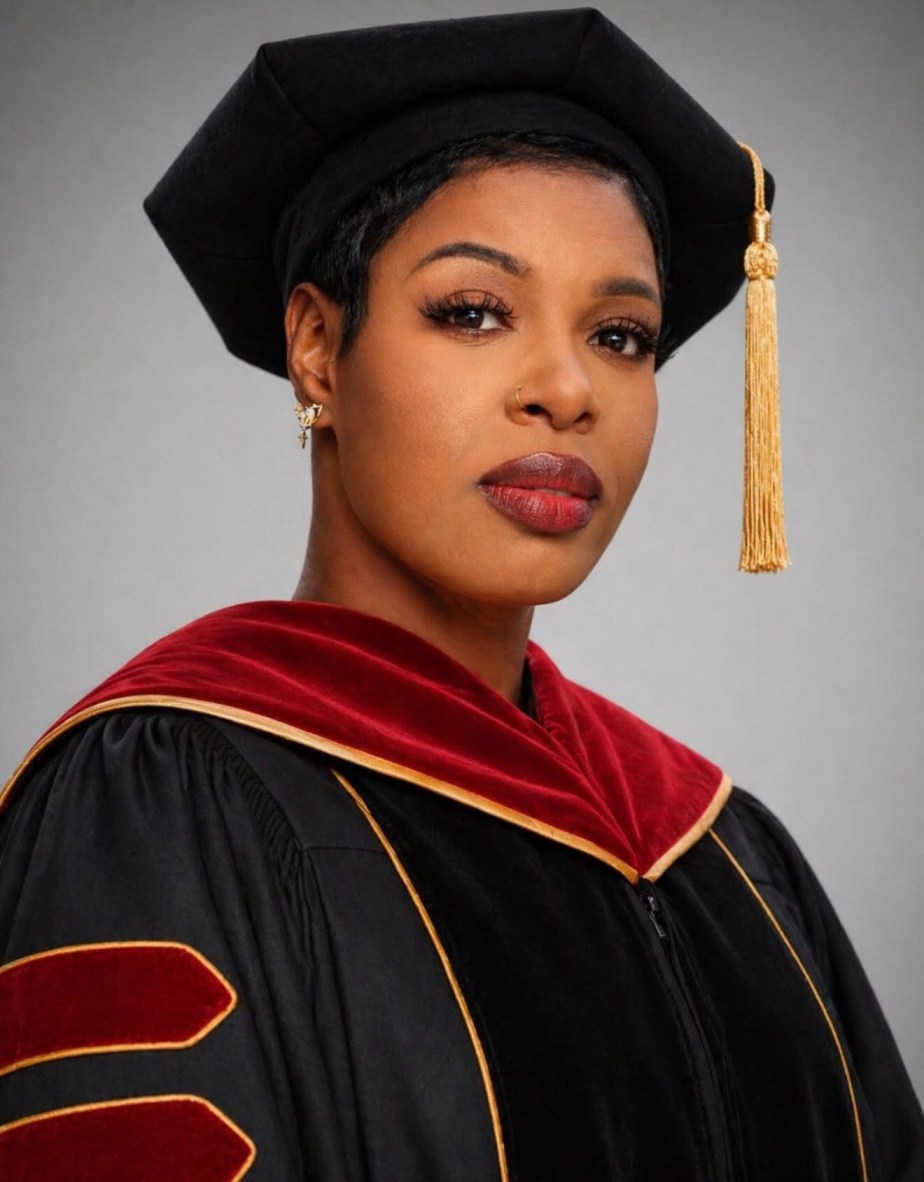
Jones’s Chicago roots run deep. Beyond acting and music, she’s the founder of the S.E.E.D. Foundation, a nonprofit dedicated to funding, mentoring, and resourcing emerging Chicago creatives through grants, studio access, and hands-on programming. Her impact will be formally recognized this year when she receives an Honorary Doctorate Degree in Humanity from Leaders Esteem Christian Bible University at its Fall Graduation Ceremony on August 23, 2026, in Atlanta. Announcing the honor, Jones reflected: “This isn’t just a title. It’s a testament… Y(our) FLYNESS… Dr. Ta’Rhonda Jones.”

Doors open at 6:00 PM at City Winery Chicago, 1200 W. Randolph St. Tickets are available now via City Winery’s box office.


Fat Money a “Wolf” in These Streets: A Review of CincoDeMoney Wolf, Part 1

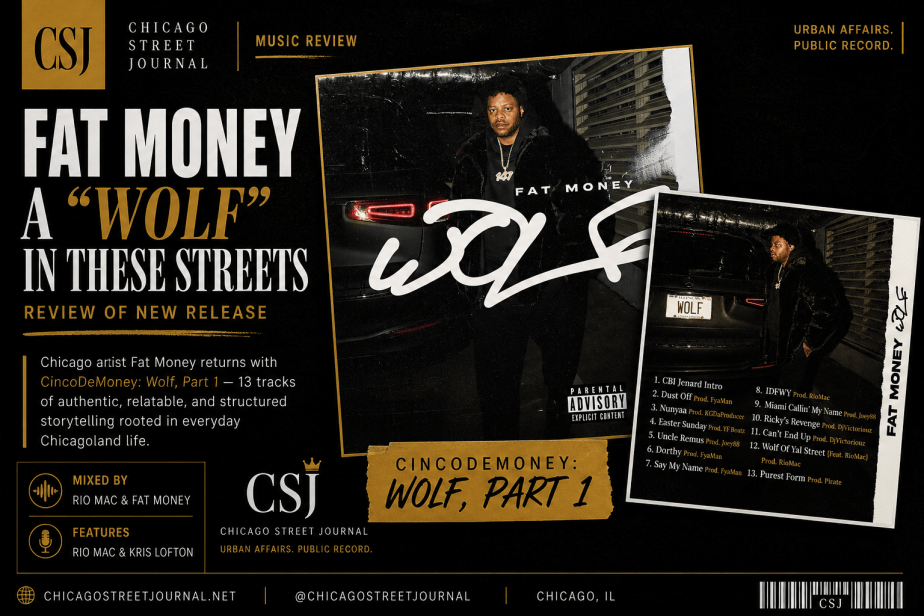
Chicago-Ty Money, better known as Fat Money, returns with new music: 13 tracks in his signature style for this year’s CincoDeMoney installment, Wolf, Part 1.

This project is one I anticipate annually. Not just out of loyalty , but because the series consistently reflects authenticity and growth. Each year feels like a continuation, not a repetition.

Money still slaps the same way he did the first time I pressed play years ago. And I still spin the older records too. That consistency matters.

Beyond affiliation, because yes, this is family, the work stands on its own. The quality is there. The storytelling is structured. The themes are grounded in everyday Chicagoland life. There’s intention in the sequencing and delivery that many artists today struggle to maintain.

It’s narrative and a vibe.

The project was mixed by Rio Mac and Fat Money, with features from Rio Mac and Kris Lofton, adding texture without disrupting the tone.

Favorite Tracks

In no particular order:

  • Nunyaa
  • Dust Off
  • Easter Sunday
  • Purest Form
  • Dorthy
  • Miami Calling My Name
  • IDFWY
  • Honorable Mention:
    Wolf of Y’all Street

A personal highlight for me is the recurring nod to my family’s restaurant legacy.

My uncle, Chuck “Woo Woo’s” Higgins, built something lasting from Washington Heights (99th & Halsted) to Lynwood, Calumet City, Dolton, Chicago Heights, and now:

1721 E. Sauk Trail in Sauk Village.

When artistry intersects with legacy, it hits different.

Wolf, Part 1 feels like a reminder: evolution doesn’t mean abandoning your roots. It means sharpening them.

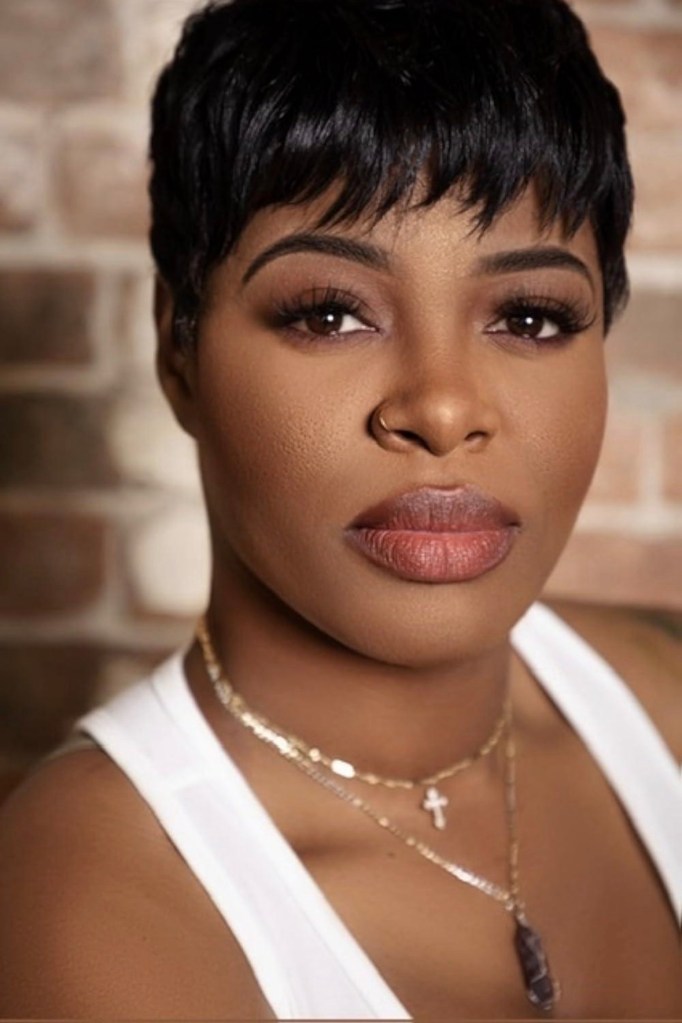
Ta’Rhonda Jones explores identity and transformation in the upcoming project “Breaking Character.”

CHICAGO — Actress and recording artist Ta’Rhonda Jones is expanding her creative work into music with Breaking Character, a project centered on identity, perception and personal transformation.

The project includes tracks such as “Favor on My Soul” and “Villain,” which explore contrasting emotional perspectives, one rooted in alignment and affirmation, the other in perception and misunderstanding.

“Breaking character is really about stepping outside of what people expect from you,” Jones said. “It’s personal.”

Jones, known for her role as Porsha Taylor on the television series Empire, is using music to expand her storytelling beyond the screen.

“I choose to be present. I choose to be 100% me,” she said. “No more performing. No more people pleasing. I’m no longer who society wants me to be.”

The duality presented in “Favor on My Soul” and “Villain” reflects a broader theme of balance within the project.

“I wanted to show that balance is necessary,” Jones said. “I can be both soft and firm. Soft says I understand you, and firm says I still choose what’s best for me.”

Production for “Favor on My Soul” is underway, with visuals emphasizing tone, reflection and transformation. The project’s visual direction aligns with its themes, focusing on mood-driven storytelling and emotional depth.

“There are moments where you’re misunderstood for growing,” Jones said. “That’s where ‘Villain’ comes from.”

Jones also described the creative process as liberating, noting that each phase of development has expanded her perspective.

“Every time I create, I discover new freedom,” she said. “It feels like a phoenix rising, like I’ve unlocked a new level of consciousness.”

A release date for Breaking Character has been confirmed for June 6. The project marks Jones’ continued expansion into music and visual storytelling, positioning it as a personal and creative evolution.


Follow her on IG!
Ta’Rhonda Jones | IMDb
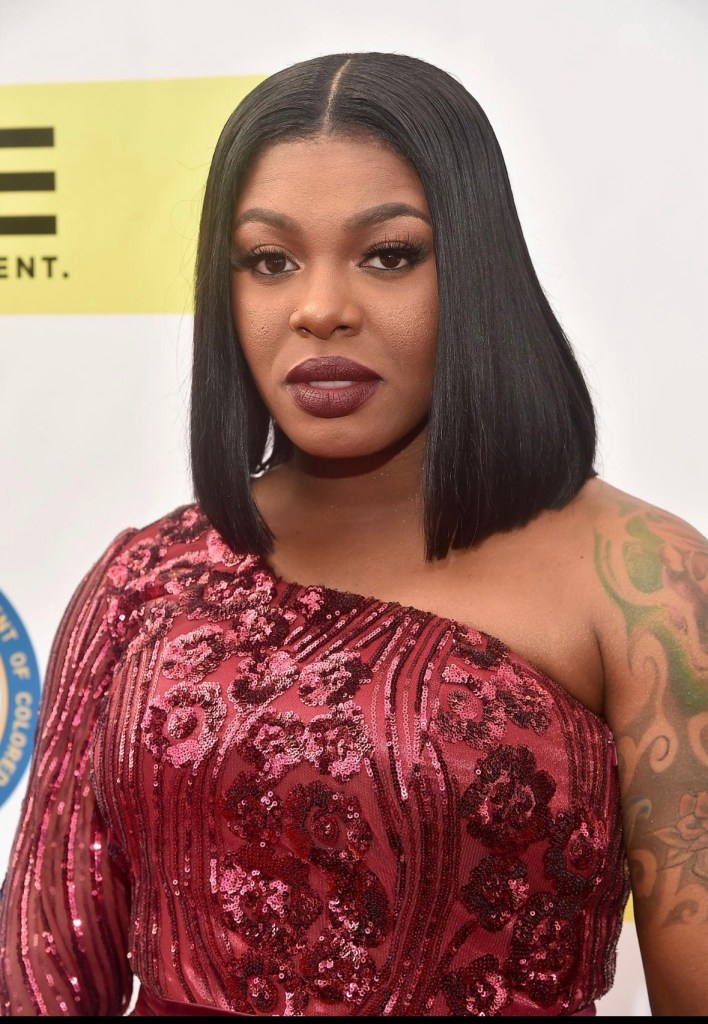
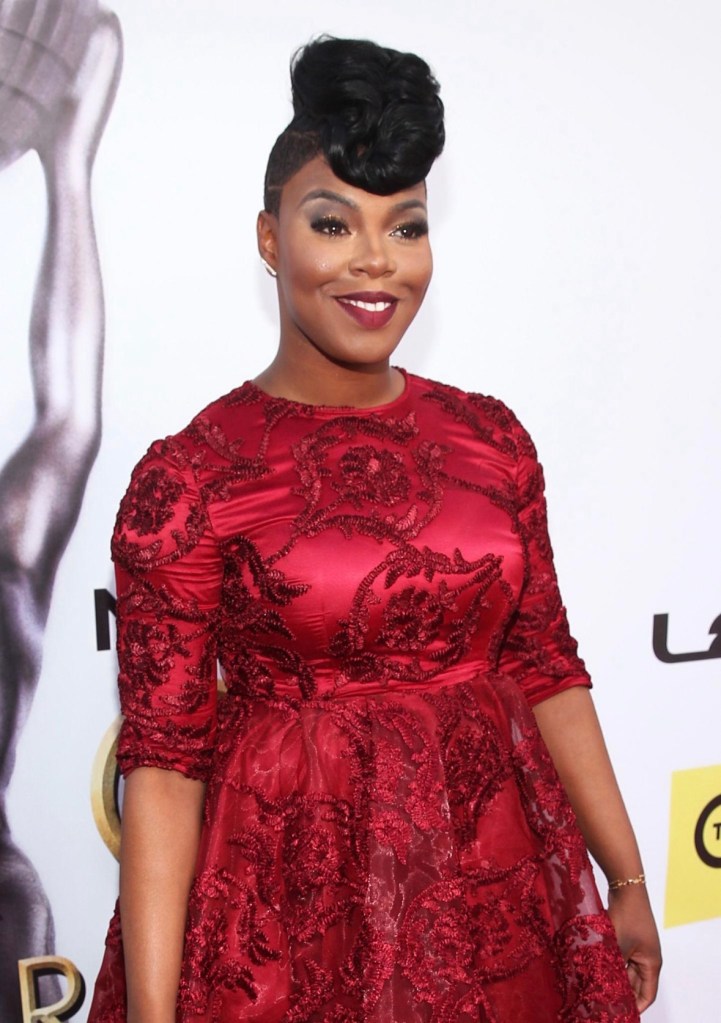
Ta’Rhonda at 48th NAACP Image Awards Red Carpet
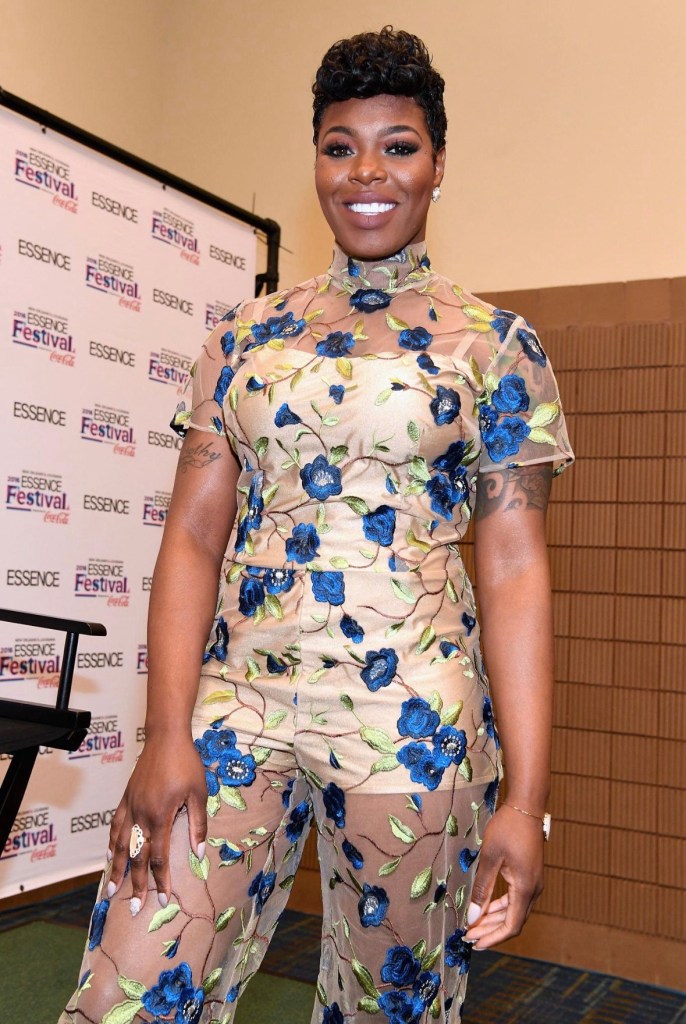
Ta’Rhonda at the 2016 Essence Festival Presented by Coca-Cola
Ta’Rhonda at The 47th NAACP Image Awards Presented by TV One, Red Carpet
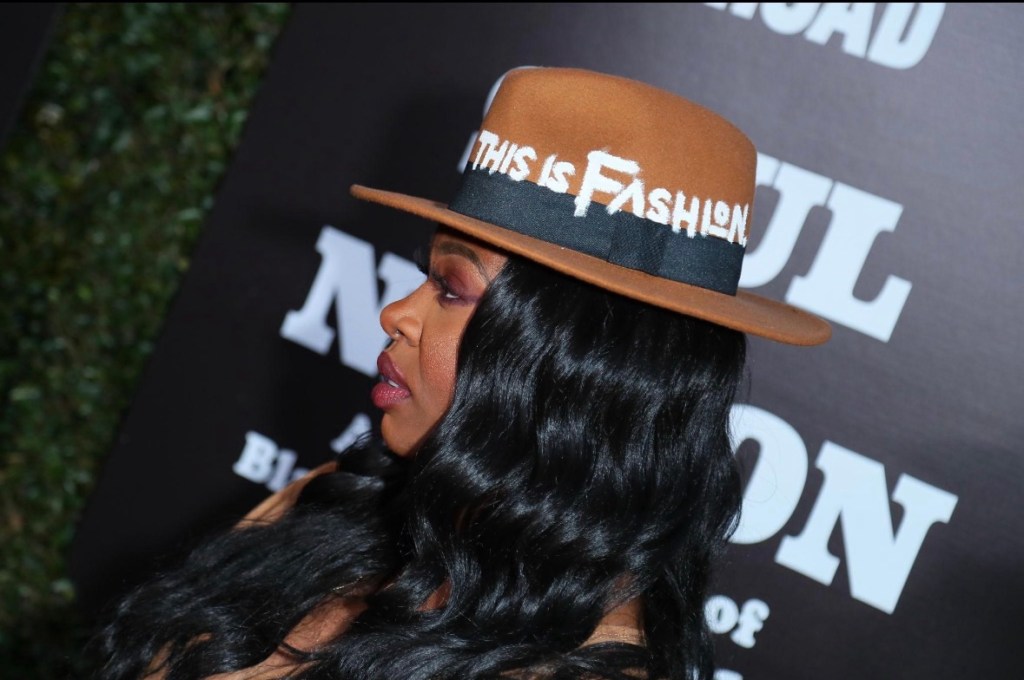
Ta’Rhonda | The Broad Host West Coast Debut of “Soul of a Nation”

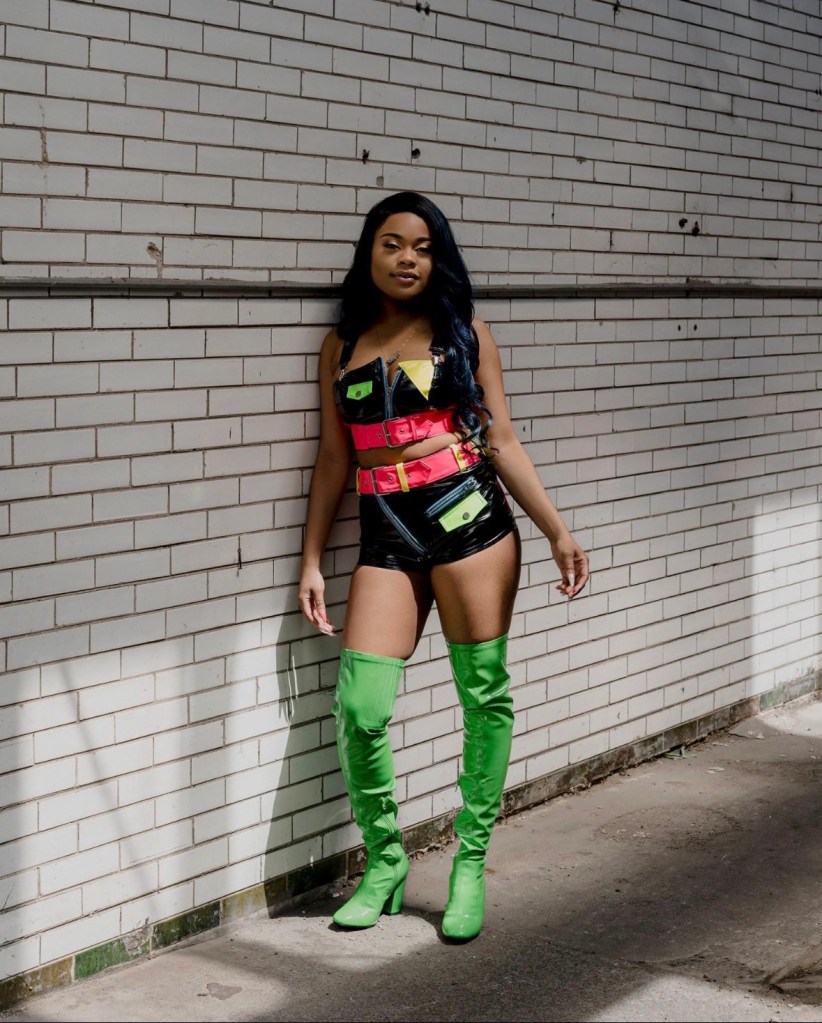
Queen Key Expands Her Empire with Kolors Boutique Grand Opening in Chicago

There comes a point in every artist’s journey where the brand outgrows the medium. For Queen Key, that moment is now.

Queen Key | Spotify

Known for her unapologetic voice, bold personality, and cultural influence rooted in Chicago, Queen Key is stepping beyond music and into something more tangible; retail, ownership, and curated lifestyle. Just like a big stepper should.

With the announcement of her boutique, Kolors, grand opening, Sunday, April 19, at 2144 W. 95th Street from 5 PM-9 PM, she’s not just inviting people to an event…she’s inviting them to her next chapter of evolution and introducing them to a special space in her life.


From Music to Market: A Strategic Evolution

Queen Key, born Ke’Asha McClure, has never followed a traditional blueprint, at all. I love 🥰 that for those of us looking 👀 to be inspired by originality.

From viral tracks to building a loyal audience, her career has been defined by authenticity and independence. But this latest move signals something deeper:

Ownership of experience.

A boutique isn’t just a store.

It’s:

  • A reflection of personal style
  • A direct-to-consumer brand channel
  • A physical extension of {brand} identity

And for an artist like Queen Key, whose image and presence have always been just as impactful as her music, this move feels less like a pivot and more like a natural progression.

Queen Key | Global Grind

More Than a Grand Opening

This isn’t just about racks of clothing or a new address on a flyer.

Her Grand Opening represents:

  • A new level of entrepreneurship
  • A claim to a bigger physical space in the culture
  • A deeper connection between artist and audience, in marketing and advertising.

This is where supporters become customers.
Where followers become community.

And where brand becomes infrastructure.


The Power of Physical Space in Communications

In a digital-first world, creating a physical location is a power move.

It says:
“I’m not just visible, I’m established.”

For Chicago especially spaces like this matter because we’re an international city and market.

We are a hub for:

  • Local fashion influence
  • Cultural expression
  • Community engagement

And when someone like Queen Key opens that door, it doesn’t just create opportunity for herself, it creates a ripple effect and opportunities for others.


What to Expect

While details are still unfolding, one thing is clear:

This won’t be a passive shopping experience.

Expect:

  • Energy
  • Personality
  • A crowd that reflects her audience
  • And a space that feels like an extension of her brand, and for the fly & danty ladies.

Because if there’s one thing Queen Key understands, it’s how to make people feel something.


Why This Moment Matters

Her boutique launch 🚀 is a signal.

A signal that artists, especially women in hip-hop, are continuing to expand beyond industry limitations and step fully into ownership, business, and legacy-building.

Queen Key | The Fader

And Queen Key is doing it her way.

Unfiltered.
Unapologetic.
Intentional.


A Word For The Birds 🦅

Not every artist makes this transition successfully.

But the ones who do?

They understand that influence isn’t just about attention, it’s about what you build with it.


Denver Movement Law Firm Takes on High Profile Case of Jeff Fort, Seeks Federal Post-Conviction Relief

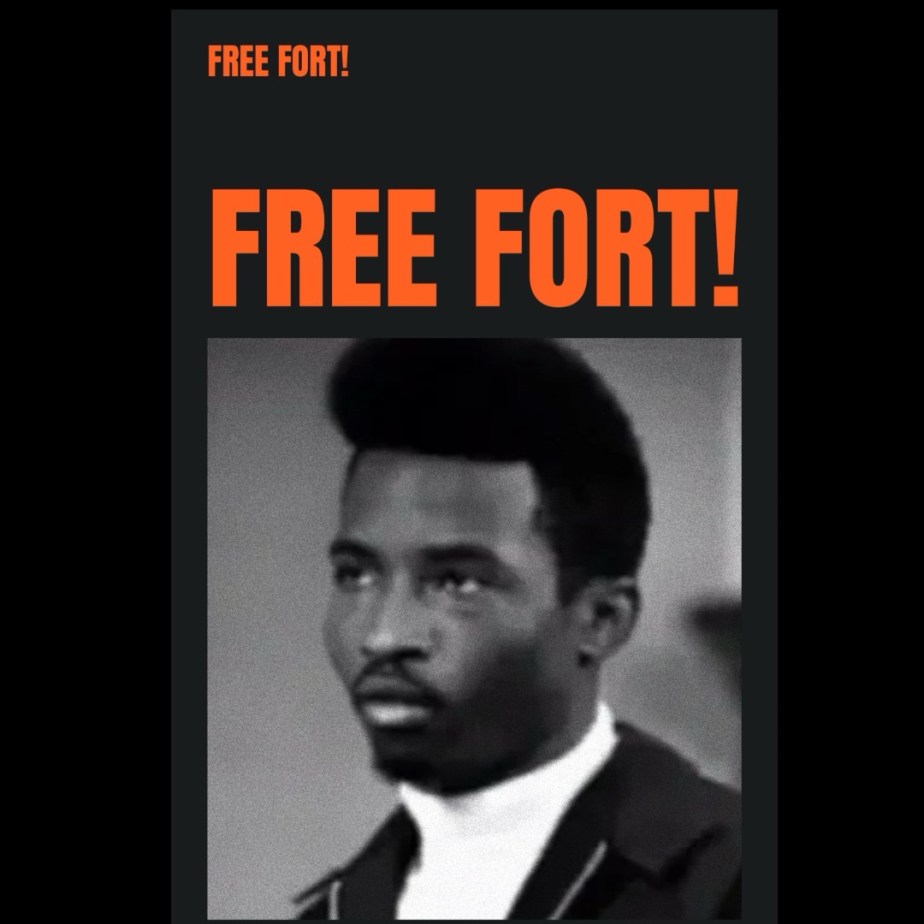
DENVER / CHICAGO, Sept. 30, 2025 — A Denver based law firm known for blending legal advocacy with movement organizing has announced it will represent Jeff Fort, also known as Imam Malik, in a sweeping post conviction relief effort. Fort, one of the most controversial figures in Chicago’s modern history, has been held under solitary confinement conditions at the United States Penitentiary Administrative Maximum Facility (ADX Florence) in Colorado for nearly two decades.

For the People, LLC, a movement law firm with offices in Denver and Sioux Falls, is stepping into the case with a multidisciplinary strategy. Attorney Jenipher R. Jones, Esq. will lead the team as they challenge both the conditions of Fort’s confinement and the longevity of his sentence under “old law” federal prisoner statutes.

“Mr. Fort’s case presents significant constitutional and legal issues that require immediate attention,” said Jones. “As a federal ‘old law’ prisoner, he faces unique challenges that demand focused advocacy and a comprehensive legal strategy. We look forward to working alongside all those who are currently pushing for his freedom.”

From Chicago Streets to Federal Supermax

Jeff Fort’s story is a complex one. Born in 1947, he rose to prominence in Chicago as co-founder of the Blackstone Rangers, later the Black P Stones, a gang that became one of the most influential and notorious in the city. Over the years, Fort’s leadership evolved into the creation of the El Rukn organization, which combined street influence with religious identity after his conversion to Islam.

By the mid 1980s, Fort was at the center of a federal indictment alleging conspiracy with representatives of Libya to commit terrorist acts in the United States. Convicted in 1987 on multiple counts, he received an 80 year sentence stacked on top of earlier convictions. His notoriety made him both a symbol of gang influence and government crackdowns during an era of “tough on crime” policies.

Since 2006, Fort has been housed at ADX Florence, the federal government’s most secure prison, where inmates spend up to 23 hours a day in solitary confinement. At 78 years old, his ongoing incarceration raises urgent questions about age, health, human rights, and the constitutional limits of isolation.

A Movement Law Firm with a Different Approach

For the People, LLC describes itself as a wholistic movement law firm. Unlike traditional firms that limit themselves to courtroom battles, For the People’s model integrates litigation with community advocacy, trauma informed practices, and interdisciplinary support.

The firm states plainly: “We are unapologetically Black, queer, disabled, Southern, formerly incarcerated, survivor, artist, abolitionist led.” This identity first approach signals that its work is not just about winning cases but challenging the systemic injustices that shape them.

Under Jones’ leadership, the firm has represented high-profile clients including Leonard Peltier and Eric King, both of whom were released from Bureau of Prisons custody during its representation. The firm’s track record has made it a growing force in the niche space of post conviction relief, civil rights advocacy, and political prisoner representation.

Supporting Fort’s case will be:

Andy Williams, Jr., Director of Litigation, Advocacy, and Strategy, a natural rights advocate with deep ties to Chicago’s activist landscape. Kalonji Jama Changa, Chief of Public Relations and Movement Engagement, responsible for movement communication and narrative strategy. A multidisciplinary team of attorneys, medical professionals, social workers, and advocacy specialists.

“This case exemplifies our commitment to challenging systemic injustices within the federal prison system,” said Changa. “Mr. Fort’s prolonged confinement under harsh conditions raises serious constitutional concerns that demand vigorous legal challenge.”

Why “Old Law” Status Matters

One of the central complexities of Fort’s case is his designation as an “old law” prisoner. This term applies to individuals sentenced before 1987, when sweeping federal sentencing reforms eliminated parole for most federal crimes. As a result, Fort remains subject to a parole board system that operates differently from the sentencing rules that govern most federal prisoners today.

His most recent parole hearing ended in denial, with the next statutory review scheduled for April 2027. Advocates argue that given his age, medical conditions, and record, his continued confinement, particularly under supermax isolation, constitutes cruel and unusual punishment.

Earlier this year, Fort sought relief under the First Step Act, a reform designed to expand compassionate release for elderly and sick inmates. That petition was denied, underscoring the uphill nature of his legal battle and the urgency of new representation.

The Legal and Human Stakes

For the People, LLC’s representation of Fort goes beyond technical appeals. The firm’s strategy includes:

  • Challenging the constitutionality of prolonged solitary confinement at ADX Florence.
  • Seeking improved medical care and age appropriate placement.
  • Exploring avenues for executive clemency and commutation.
  • Raising international human rights claims to draw attention to the broader issue of elderly prisoners held in extreme isolation.

In many ways, Fort’s case serves as a litmus test for how the U.S. justice system treats its most vilified inmates. Can constitutional protections extend even to those with notorious reputations? At what point does punishment become excessive, especially for aging prisoners?

Looking Ahead

With parole off the table until 2027, Fort’s new legal team faces an uphill battle. But For the People, LLC has signaled that it is prepared to exhaust every available legal remedy.

“We look forward to advocating for Mr. Fort’s transfer to an institution that is appropriate and conducive to his age, medical needs, and disciplinary record, never losing sight of his freedom as the ultimate objective,” Jones said.

For supporters, the launch of FreeFort.org serves as a central hub for updates and advocacy efforts. The site chronicles Fort’s legal history and provides avenues for public engagement in the campaign for his release.

A Case Larger Than One Man

Ultimately, the representation of Jeff Fort is not just about a single prisoner. It is about what kind of justice system the United States wants to uphold in the 21st century. For the People, LLC’s involvement underscores that legal battles are not fought in isolation, they are entangled with questions of race, politics, history, and humanity itself.

As Fort enters his late seventies behind supermax walls, his case forces the public to confront uncomfortable questions: How long is long enough? And at what point does justice demand mercy?

To read official press release from For The People, LLC’s Changa, Chief of Public Relations and Movement Engagement, click here.

Leave a comment and share your thoughts 💭

OTF Update: Boona’s Revenge, Boonie Moe Sentencing & What’s Next After Lil Durk’s Arrest

CHICAGO — OTF (Only the Family) is back in the headlines, and not for music. From courtrooms to federal indictments, the crew faces some of its biggest challenges yet.

Here’s what we know.

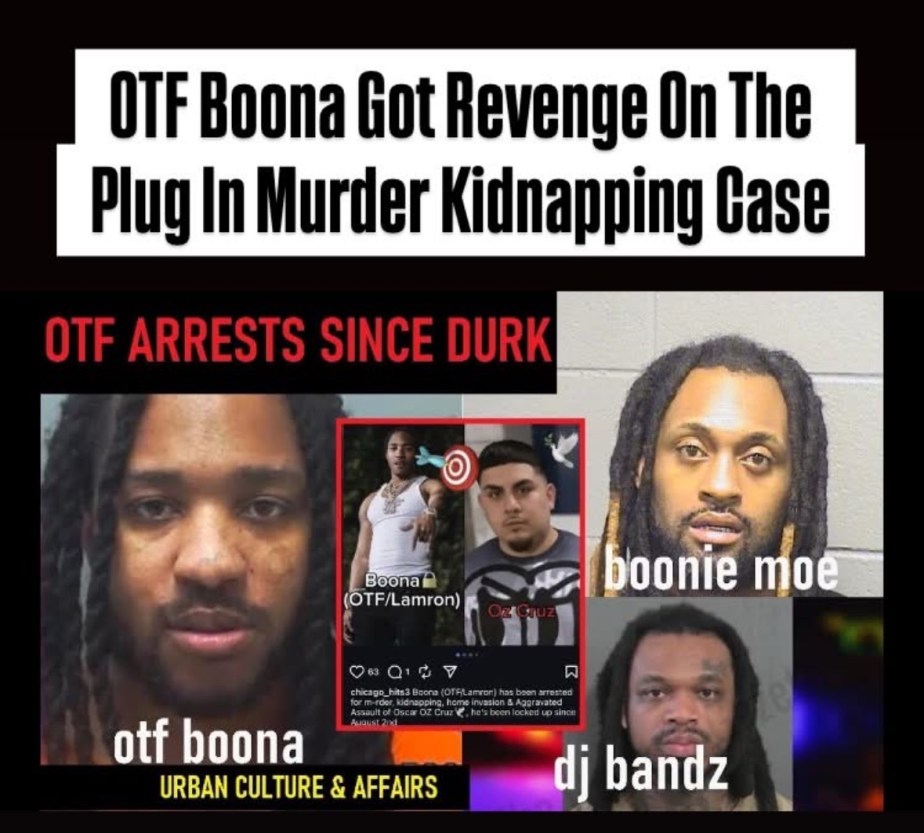
Boona’s Alleged Role in Revenge Case

Rumors are circulating online that OTF affiliate Boona may have been involved in a revenge shooting. Posts on Reddit and Instagram claim the charges include kidnapping, home invasion and murder. Authorities have not publicly confirmed those details. (Facebook, Reddit, Instagram)

Whether the reports are true or not, the speculation alone shows how quickly OTF news spreads, and how hard it is for the crew to escape its street image and their own demons.

Boonie Moe in Court

In a confirmed case, Boonie Moe was sentenced to seven (7) to fifteen (15) years in prison in Douglas County on drug charges. He was convicted of possession with intent to distribute cocaine. (Facebook, YouTube, X/Twitter)

The sentencing sparked mixed reactions. Some say it’s another example of the system swallowing young Black men, while others point to personal responsibility. Either way, it’s another loss for OTF’s roster.

Lil Durk Facing Federal Charges

The biggest blow came last October when Lil Durk (Durk Banks) was arrested on federal murder for hire charges tied to the ambush of rapper Quando Rondo in Los Angeles. Federal prosecutors allege Durk arranged travel, vehicles and weapons for the attack, which killed Rondo’s cousin, Saviay’a Robinson. Rondo survived. (AP, Vulture, DOJ)

Durk remains in federal custody while legal experts warn the case could carry decades behind bars if he is convicted.

What’s Next for OTF

With Durk in jail, Boonie Moe sentenced and Boona facing rumors of a revenge hit, OTF stands at a crossroads. Crews in hip hop history have either folded when their leader was locked up or reinvented themselves to survive.

For Chicago’s rap scene, OTF has been more than a music group. It’s been a cultural force. The question now is whether the brand can push past the weight of court cases and controversy or if we’re witnessing the slow fade of one of drill’s most influential collectives, as drill is slowing down.

💭 My take:

OTF can’t move forward off just Durk’s name anymore. Either they evolve or they fade. Simple as that.

Check out my latest video with Street Certified News 📰 touching in detail about the subject.

Ju Jilla’s “Reach Higher” Sets the Bar for Summer Hip Hop

Ju Jilla’s Reach Higher stands out as one of the best hip hop projects to drop this summer. From start to finish, the body of work is carefully arranged, creating a seamless listening experience that feels intentional and elevated. Each track flows into the next without losing momentum, showcasing Ju Jilla’s skill in curating not just songs, but a complete story.

Listen to the project here and let me know in the comments what you think 🤔

The features are thoughtfully chosen, adding depth and variety without overshadowing Ju Jilla’s presence. His lyricism is sharp yet effortless, with true to life storytelling delivered in a way that feels both authentic and aspirational, almost like high fashion for the ears. The project blends grit with elegance, reminding us that hip hop can be both raw and refined at the same time; that it’s ok as a man to need a therapist to elevate.

Reach Higher isn’t just music; it’s a statement. It’s the kind of project you replay, not only for the beats and bars, but for the craft that went into making it a cohesive, memorable piece of art.

Ju also dropped another project.

Goalden Chyld and Bo Deal Unite Chicago for “In the Trenches” Music Video Shoot to Push Peace

CHICAGO (July 15, 2025) — Chicago based artists Goalden Chyld and Bo Deal united for a high energy music video shoot Tuesday evening, drawing a crowd to the city’s Westside with members from the South, North, West and East Side under the banner of unity and community empowerment.

The video shoot, “In the Trenches,” kicked off at 5 p.m. at a private location. Promoted heavily through social media & word of mouth, the event called on members to “come out” in support of the city’s music scene and collaborative spirit to bring peace.

BTS Vlog with Street Certified News 🗞️

Sporting hoodies emblazoned with “UNITY” and “Tyrant,” Goalden Chyld and Bo Deal delivered performances that reflected not only lyrical grit of the city but also a message of resilience and togetherness. Organizers emphasized the importance of civic pride and representation in local artistry to push for peace ☮️ and love ❤️ through their art.

“This was about more than a video,” a member of the collective said. “It was about bringing the city together and reminding people that Chicago’s got each other’s back. We’re going to get it together”

The location, kept under wraps until the day of the shoot, added an underground feel to the event highlighting the grassroots nature of the project also granting protection for all involved. Despite the impromptu setting, the scene was electric with energy, with many attendees capturing behind the scenes footage and sharing it across platforms.

I was able to reconnect with some community family and meet new people who I look forward to building with.

Here’s some of the people I connected 😊 with:

We’re expecting the release the final video later this summer if not sooner, continuing their message of solidarity and street level storytelling GC said it’s 50 more videos coming, and to stay tune.

I’m going to keep following this beat overall archiving the ones pushing p, hoping that they are true to their word and forever ♾️ solid.

In the name of Ma’at ,

—BK

Easy O’Hare Brings Nightmare O’Hare to Life on Friday the 13th 😈

Chicago – On the notoriously eerie date of Friday the 13th, Easy O’Hare fused horror and hip-hop in a way only he could, with the release of his latest album, Nightmare O’Hare. Held at The New Jo’s Bar and Grill in Merrillville, Indiana, the release event transported fans and peers into an immersive experience where sound collided with storytelling in a night full of adrenaline, ambiance, and authenticity.

But what’s the big deal with Friday the 13th?

For centuries, the number 13 has carried a reputation for bad luck, and when it lands on a Friday, that superstitious energy hits different. The fear is so widespread it has its own name: paraskevidekatriaphobia. Pop culture took it even further in 1980 with the horror classic Friday the 13th, introducing Jason Voorhees; the silent, masked killer who haunted Camp Crystal Lake and slashed his way into horror history. Since then, the date has come to symbolize fear, suspense, and rebellion; making it the perfect backdrop for Easy O’Hare’s latest creative strike.

His statement? It’s giving serial killer energy.

And he’s killing these other rappers especially when it comes to the way he curates his musical projects.

Nightmare O’Hare captures that chaotic yet calculated vibe. It’s raw, cinematic, and deeply unsettling in the best way. The album rides moody production and vivid lyricism, exploring the gritty realities of urban life, survival, and the kind of darkness you face when you’re moving a certain way.

When I rap it gets scary for the competition and we chose a beat selection that fit the mood of how scary it can actually get. With this project I was showing I can pop up outta nowhere with new music at any given time after my listeners hear Nightmare O’Hare they’ll definitely go download the past projects to get all the way tapped in with me.


The theme originated from a past rap beef where I had to switch forms from Easy O’Hare to nightmare

-Easy O’Hare

The Performance

Easy’s stage presence brought the music to life with gritty emotion and undeniable power. And the supporting acts? Just as heavy. The room was charged with energy, filled with people who came to show love and stayed to be moved. It was a whole vibe and yes, the chicken was fire too.

The Artist

  • Rico Moneyy
  • Kdoug Jr
  • Aboog
  • D’kno Mr.KNOITALL
  • ESC Deez
  • Fly cool club
  • Big Nastee
  • Easy O’Hare
  • Coldhard

The Bigger Picture

With Nightmare O’Hare, Easy doesn’t just drop music, he curates experiences and releases projects with precision. He proves that there’s room for 40-year-old rappers who trap 🏚️🪤 with strategy, successfully. This isn’t a moment; it’s a method.

Nightmare O’Hare is now streaming on all major platforms.

Stay tuned for visuals, BTS moments, and more drops by following him on Instagram: @easyohare_