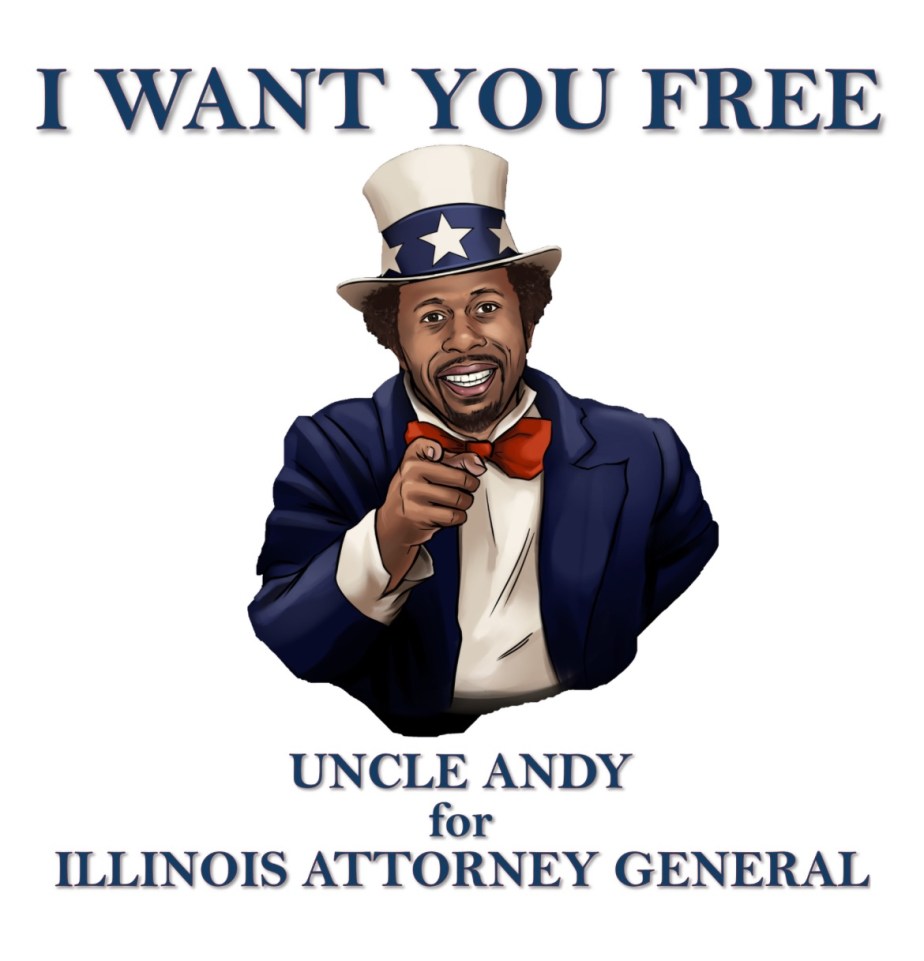
Formerly Incarcerated Candidates Challenge Felon in Possession Laws

CHICAGO — Two Illinois political candidates are challenging federal and state laws that ban people with felony records from owning firearms, arguing the policies are unconstitutional and deny due process.

Andy Williams Jr. and Tyrone Muhammad filed suit in the U.S. District Court for the Northern District of Illinois, with an amended complaint submitted March 7, 2024. In a Sept. 11, 2025, press release, the candidates reaffirmed their stance that blanket firearm bans for people with felony convictions violate fundamental rights.

Official Press Release

The men say the laws treat all people with felony records as permanent threats to public safety, regardless of their rehabilitation or time since release.

Background

Williams served time for a robbery conviction and has remained law abiding since his release in 1991. He is currently running for Illinois attorney general; he’s a member of For The People, LLC, AWJ Ministries , a Painter, and a married family man.

Muhammad, who served time for murder, went on to found ECCSC (Ex-Cons for Community and Social Change) a nonprofit focused on community advocacy. He is now a candidate for the U.S. Senate.

Both men argue that their lived experiences make them uniquely positioned to highlight how existing laws disproportionately affect people who have rebuilt their lives.

Constitutional Questions

On Feb. 7, 2025, former President Donald Trump signed Executive Order 14206, directing the U.S. attorney general to protect the right to bear arms. Trump called the Second Amendment “an indispensable safeguard of security and liberty.”

Williams and Muhammad argue those protections must also apply to people who have served their sentences. They note that many formerly incarcerated people cannot afford private security and rely on their constitutional rights for protection.

Courts have also ruled that police have no constitutional duty to protect individuals:

In DeShaney v. Winnebago County Department of Social Services, 489 U.S. 189 (1989), the U.S. Supreme Court held that the state was not required to protect a child from an abusive father despite prior warnings. Read the case.

In Town of Castle Rock v. Gonzales, 545 U.S. 748 (2005), the Court found that police could not be sued for failing to enforce a restraining order that may have prevented the deaths of three children. Read the case.

“These rulings show that the government cannot guarantee personal safety,” the candidates said. “If police don’t have to protect us, then we must have the right to protect ourselves.”

The Legal Challenge

The lawsuit contests 18 U.S.C. § 922(g)(1) and Illinois statute 720 ILCS 5/24-1.1(a)(e), which bar people with felony convictions from possessing firearms.

Williams and Muhammad contend the laws are unconstitutional, overly broad and discriminatory. They are calling for legislative changes or constitutional amendments that would replace categorical bans with standards based on individual circumstances.

Call to Action

“I’m calling on others to join this fight,” Williams said. “Support the lawsuit by filing a motion to intervene. Watch for upcoming town halls where we’ll talk about your rights. I’m running for attorney general. I’ll protect the rights of the people, including the formerly and currently incarcerated people and their families.”

Ju Jilla’s “Reach Higher” Sets the Bar for Summer Hip Hop

Ju Jilla’s Reach Higher stands out as one of the best hip hop projects to drop this summer. From start to finish, the body of work is carefully arranged, creating a seamless listening experience that feels intentional and elevated. Each track flows into the next without losing momentum, showcasing Ju Jilla’s skill in curating not just songs, but a complete story.

Listen to the project here and let me know in the comments what you think 🤔

The features are thoughtfully chosen, adding depth and variety without overshadowing Ju Jilla’s presence. His lyricism is sharp yet effortless, with true to life storytelling delivered in a way that feels both authentic and aspirational, almost like high fashion for the ears. The project blends grit with elegance, reminding us that hip hop can be both raw and refined at the same time; that it’s ok as a man to need a therapist to elevate.

Reach Higher isn’t just music; it’s a statement. It’s the kind of project you replay, not only for the beats and bars, but for the craft that went into making it a cohesive, memorable piece of art.

Ju also dropped another project.

Goalden Chyld and Bo Deal Unite Chicago for “In the Trenches” Music Video Shoot to Push Peace

CHICAGO (July 15, 2025) — Chicago based artists Goalden Chyld and Bo Deal united for a high energy music video shoot Tuesday evening, drawing a crowd to the city’s Westside with members from the South, North, West and East Side under the banner of unity and community empowerment.

The video shoot, “In the Trenches,” kicked off at 5 p.m. at a private location. Promoted heavily through social media & word of mouth, the event called on members to “come out” in support of the city’s music scene and collaborative spirit to bring peace.

BTS Vlog with Street Certified News 🗞️

Sporting hoodies emblazoned with “UNITY” and “Tyrant,” Goalden Chyld and Bo Deal delivered performances that reflected not only lyrical grit of the city but also a message of resilience and togetherness. Organizers emphasized the importance of civic pride and representation in local artistry to push for peace ☮️ and love ❤️ through their art.

“This was about more than a video,” a member of the collective said. “It was about bringing the city together and reminding people that Chicago’s got each other’s back. We’re going to get it together”

The location, kept under wraps until the day of the shoot, added an underground feel to the event highlighting the grassroots nature of the project also granting protection for all involved. Despite the impromptu setting, the scene was electric with energy, with many attendees capturing behind the scenes footage and sharing it across platforms.

I was able to reconnect with some community family and meet new people who I look forward to building with.

Here’s some of the people I connected 😊 with:

We’re expecting the release the final video later this summer if not sooner, continuing their message of solidarity and street level storytelling GC said it’s 50 more videos coming, and to stay tune.

I’m going to keep following this beat overall archiving the ones pushing p, hoping that they are true to their word and forever ♾️ solid.

In the name of Ma’at ,

—BK

The Culture is the Curriculum: How Hip Hop Became a Social Political Force

Hip Hop was never just a soundtrack, it was a survival guide, a protest language, and a cultural archive passed through boom bap beats and breath. Today, as the world watches the Hip Hop generation step into political arenas, from local elections to the United Nations, we are forced to ask: Who controls the culture now? And what does it mean to be Black, American, and powerful in a world that still tries to erase the blueprint?

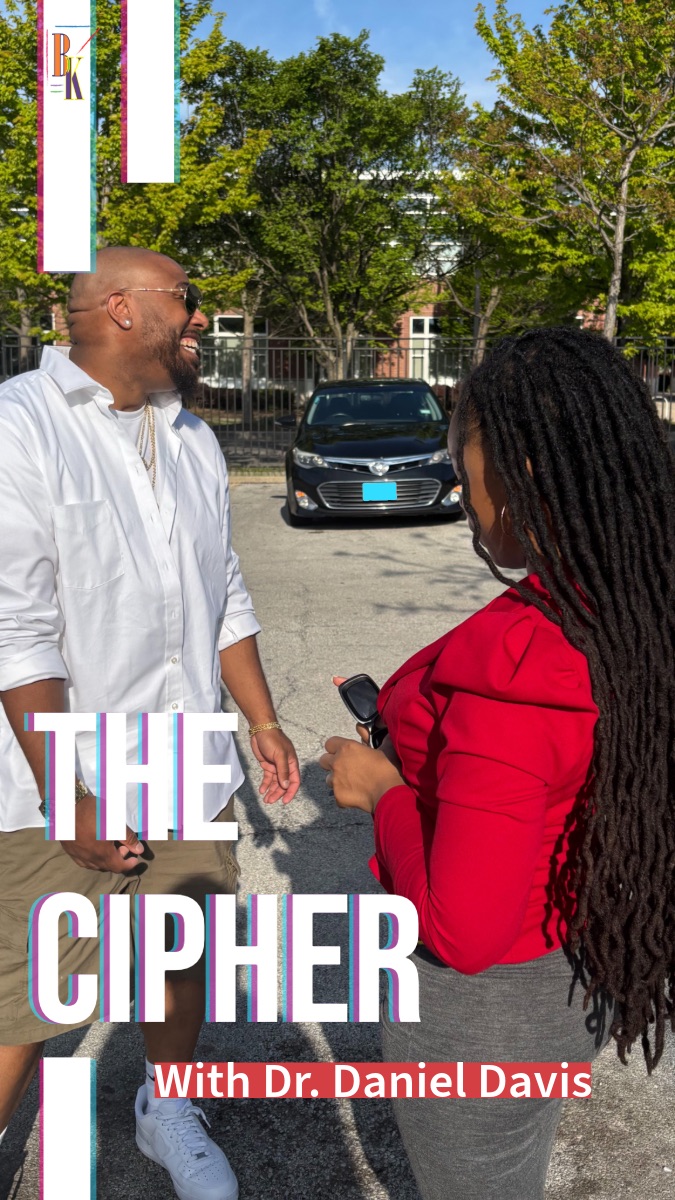
In my new interview series The Cipher & The System I’m going to discussing the state of the culture, the importance of solving our identity crisis and setting a standard for the stewards, creatives, and other associates of Hip Hop that benefit from our Black American culture.

Full video is going through post production, bare with me.

It’s time to set the bar, revolutionize the voice of the culture and if not me then who? Seriously 😒 tho.

From Party to Power: The Political Birth of Hip Hop

What began in the Bronx as a celebration of rhythm, rhyme, and resistance has evolved into a global political force. Hip hop was never just about beats and bars, it was a cry from the margins, a cultural blueprint for survival in the face of systemic neglect.

As pioneers like Afrika Bambaataa and Grandmaster Flash turned block parties into platforms for protest, the culture began to birth its own consciousness. From the raw social critiques of Public Enemy to the electoral mobilizations led by artists and organizers today, hip hop continues to shift and our goal is to go back to our roots to use it as a tool to party for power, reminding the world that the mic is mightier than many know.

The Crisis of Identity in the Age of Influence

In a time where virality is often mistaken for value, the Black identity is being reshaped by algorithms and aesthetics more than lived experience and ancestral knowledge.

Hip hop, once a vehicle for self-definition, is now caught between commercialization and cultural reclamation. Who are we beyond the brand deals, trending sounds, and curated lifestyles? This crisis of identity isn’t just a cultural issue, it’s political. It determines who tells our stories, who profits from our pain, and how we define ourselves in the face of erasure and exploitation.

Dr. Daniel Davis on Education, Legacy & Liberation

Dr. Daniel Davis doesn’t just teach African American history, he embodies its living legacy. A leading voice on culturally relevant pedagogy, Dr. Davis believes education is the first site of liberation. In this exclusive interview, he shares why hip hop is not only a genre but a pedagogy, and how understanding our past is key to shaping our political and cultural future. His work centers the value of legacy, not as nostalgia, but as fuel for the fight for equity, self determination, and generational power.

Can We Build Cultural Institutions That Don’t Exploit Us?

Too many institutions built on Black creativity have failed Black communities. Whether in academia, music, media, or the nonprofit sector, the pattern is familiar: our genius is extracted, repackaged, and sold back to us, often without ownership, authorship, or autonomy.

It’s time to ask the hard questions: Can we build spaces where cultural integrity outweighs commercial interest? Where our narratives are protected, not commodified? Where cultural stewards are supported, not silenced? The answer requires both imagination and infrastructure, and a refusal to trade authenticity for access.

The Next Generation Needs Standards, Not Gatekeepers

There’s a difference between preserving culture and policing it. As hip hop enters its fifth decade, we owe the next generation more than nostalgia or elitism.

We owe them standards anchored in ethics, excellence, and historical context. These standards aren’t meant to stifle creativity but to safeguard legacy. Instead of gatekeepers, we need mentors, archivists, and architects, those who understand that true cultural preservation happens not by exclusion, but by elevation.

The youth are watching. Let’s give them more than permission, we must give them principles.

If we don’t teach the history of Hip Hop, we leave its future in the hands of people who never lived it.

Dr. Daniel Davis

Chicago: The Blueprint of Urban Culture

There’s something undeniable about Chicago. The rhythm of our streets, the depth of our history, and the influence we hold in shaping urban culture across the nation and internationally, it runs deep. From house music and footwork to conscious rap and drill, Chicago has been a cultural cornerstone, birthing movements and voices that echo far beyond city limits.

That’s why moments like GloRilla giving Queen Key her flowers 💐 hit different. It’s more than just a viral moment, it’s recognition of legacy, talent, and the resilience of a city that has long been under credited and over influential.

Queen Key has always represented raw, unapologetic energy, the essence of what it means to be from the Chi and its surrounding communities. For another artist to publicly uplift her on tour is a powerful testament to sisterhood and respect in hip hop, especially amongst women at that young women, in an era where the city’s women are claiming space louder than ever.

Chicago isn’t just on the map, we are the map. The artists, the culture, the style, the stories, we influence the world, and it’s about time that legacy is consistently honored.

Flowers 💐 today. Crowns 👑 tomorrow.

Fat Money Levels Up: From Donda 2 Collaborator to CincoDeToven with Zaytoven

ChicagoFat Money (formerly Ty Money), a prominent Harvey-Chicago rapper and lyricist, continues to make significant strides in the hip hop scene. Renowned for his sharp lyricism and deep rooted Chicago influences, Fat Money has been a consistent presence in the industry since 2014, releasing multiple studio albums and mixtapes.

In 2022, Fat Money collaborated with Kanye West on the Donda 2 album, contributing as a co-writer and recording several reference tracks for both released and unreleased songs. This collaboration not only showcased his versatility but also solidified his position among hip-hop’s elite with a sought after swag & sound. He’s also worked with Snoop Dogg & Dr. Dre.

Building on this momentum, Fat Money has unveiled his latest project, CincoDeToven, a collaborative effort with legendary producer Zaytoven. This release is part of his annual CincoDeMoney series, traditionally launched on Cinco de Mayo. CincoDeToven blends Fat Money’s incisive storytelling with Zaytoven’s signature trap symphonies, offering a fresh yet familiar soundscape for fans.

Meanwhile, Kanye West’s Donda 2 has been at the center of several legal disputes. The album, initially released exclusively through West’s $200 Stem Player device, faced challenges due to its unconventional distribution method. Producers like ATL Jacob, who worked on tracks such as “Pablo,” “Keep It Burning,” and “Louie Bags,” have reported not receiving payment for their contributions, citing confusion over royalty distributions stemming from the album’s release strategy. 

Additionally, West faces multiple lawsuits over unauthorized samples used in Donda 2. Notably, Ultra International Music Publishing sued him for allegedly sampling Marshall Jefferson’s 1986 track “Move Your Body” without permission in the song “Flowers.”  Another lawsuit by Artist Revenue Advocates LLC claims that West misused music created by several artists in his songs “Hurricane” and “Moon” without proper authorization. 

Despite these controversies, Fat Money’s trajectory remains upward. His collaboration with Zaytoven on CincoDeToven and his involvement in high-profile projects like Donda 2 underscore his growing influence and commitment to pushing creative boundaries in hip-hop. Listen, purchase, and save the project here.

The Prodigy Sacrifice, Hegelian Dialect, The Bavarian Illuminati, and the True Enlightened Ones

The Prodigy Sacrifice

The ancestor and late Hip-Hop artist Prodigy, one half of Mobb Deep, spoke up consistently about his experience and knowledge of the forces running society. He was critically autonomous and dropped seeds at a consistent yet subtle rate to build up a space for ones to have an open conversation about things we don’t question or seem to think about. It is in insult to make us think he died from choking on a boiled egg.

We like to think that conspiracies are just theories but ones must be mindful of the base word without the second term added to it because you can possibly make an ass out of yourself when you are being guided by governmental agencies and agents who do not care about you being well and prosperous but you being in poverty because it gives them the space to provide solutions to problems they’ve caused members in society to react to. Then seemingly at a later date you find out that those conspiracies were true like who killed Martin Luther King Jr., Malcolm X, and Fred Hampton or even that “blacks” are being conspired against to be exterminated through eugenics. At one point all these subjects were labeled as conspiracy theories.

It’s important in this new age to be informed (and not ill informed) because information is readily available to us at the drop of a finger if we seek and ask the right questions. You have to be open mined and not bias when doing the research and reviewing artifacts because you may not understand, comprehend, like, or believe the information you discover because some of the things you may find may seem unreal or not possible by a group of people or an individual; or aligns with what you have already been programmed with. As humans we are super beings in this reality and we can so anything.


The Bavarian Illuminati and Founder

The Hegelian Dialect , according to Real News Australia, is a philosophy that means all reality is capable of being expressed synthetically, creating a false sense of unity within a system.

Edward Snowden has opened our eyes on one of those categories that reveals what this looks like in modern time, exposing us to the “higher ups” invading our privacy.

“How your cell phone spies on you”

The Golden Age of Civilization relies on Indigenous ones in America and beyond.

FIGHT NIGHT 🥊 IN THE CITY

⚖️ 𝗧𝗔𝗟𝗘 𝗢𝗙 𝗧𝗛𝗘 𝗧𝗔𝗣𝗘

Hi Family and friends, we’re inviting you for a Father’s Day celebration 🎉 join us, Mić & BK, for the fight where Gervonta Davis versus 🆚 Frank Martin presented by Premier Boxing Champions 🥊. We will have wings and tequila for tastings. You can bring your drinks and smoke 💨 if you would like to. If you smoke 💨 cigarettes or cigars, we have a deck and patio area available.

← Back

Thank you for your response. ✨

Warning
Warning
Attending?(required)

Warning
Warning
Warning.

#TankMartin & #BenavidezGvozdyk
Tonight on PBC PPV on Prime Video

Pathway to Building a Healthy Community & Sustaining It

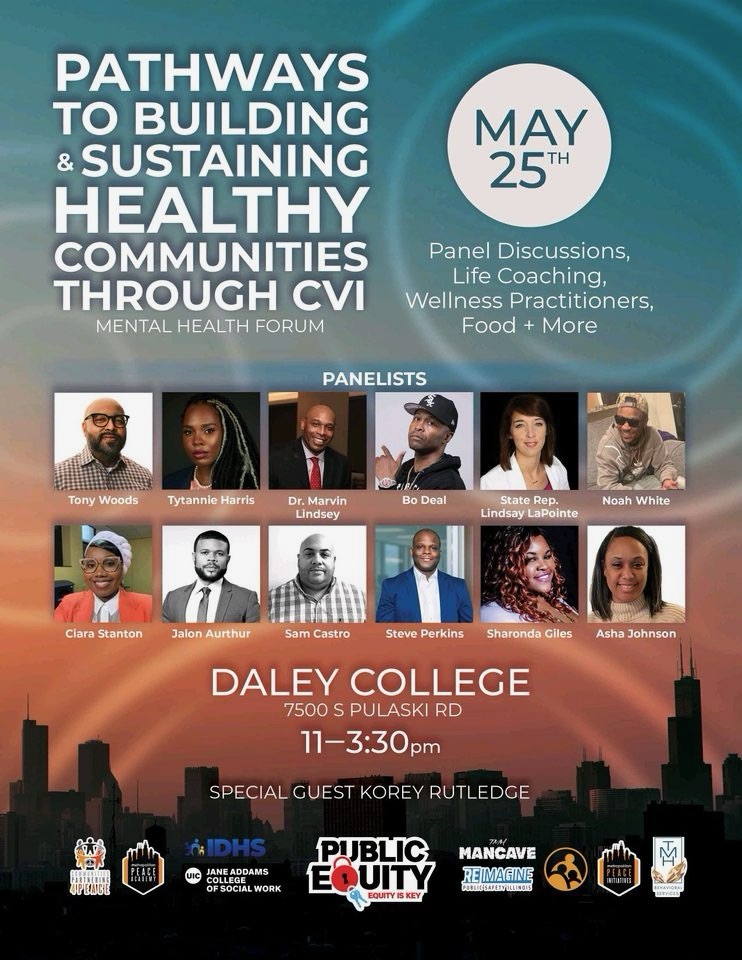
Chicago, IL-The three-day weekend was informational and rewarding spent supporting violence prevention, interruption, and peace efforts. I attended events where I learned about the importance of a new approach to violence and other social conflicts that is creating a new industry for social entrepreneurship.

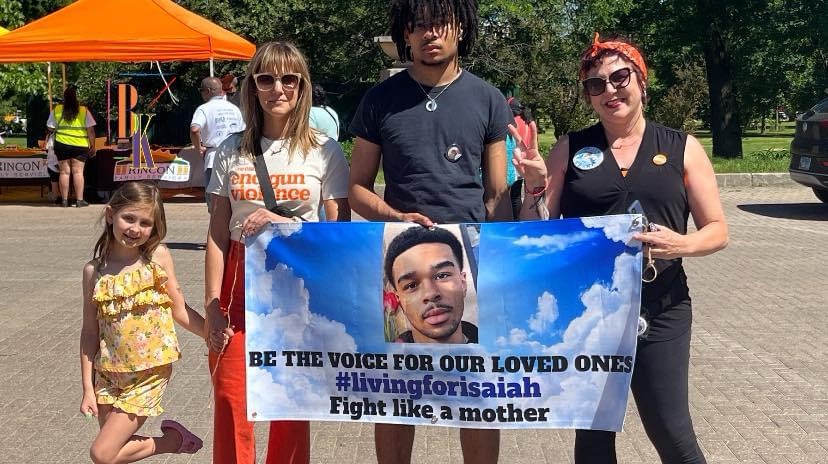
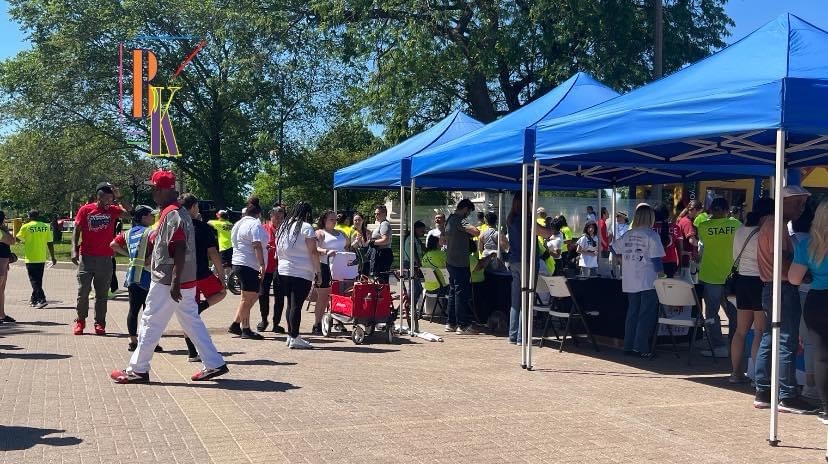
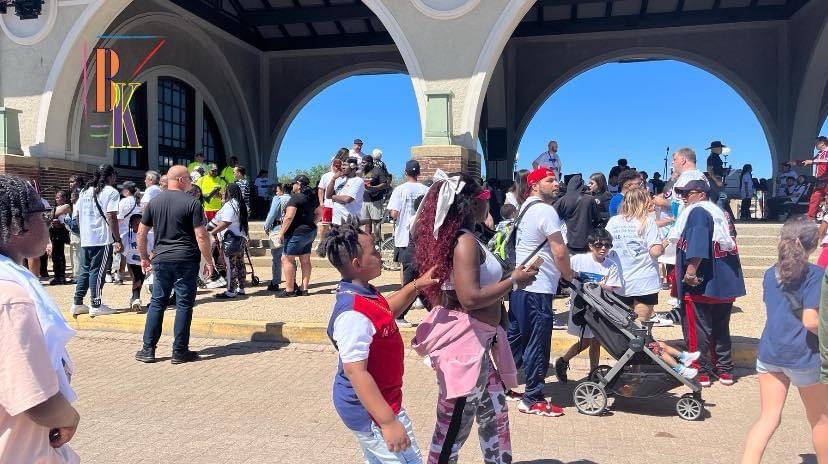
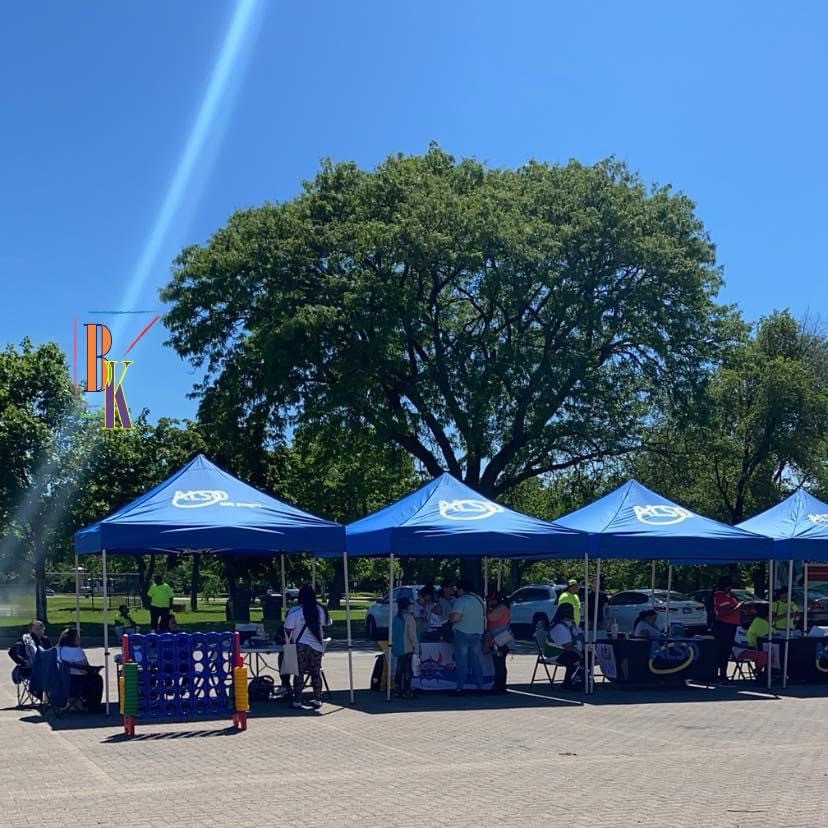
First, I attended a symposium about the pathways to building and sustaining healthy communities through community violence intervention work. Afterward, I walked for peace with ALSO and their community partners.

Flyer for symposium on mental health

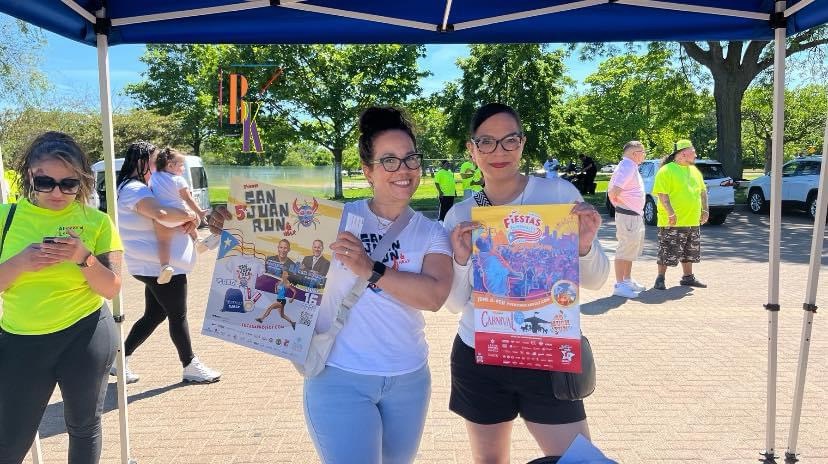
Walk For Peace in Humboldt Park

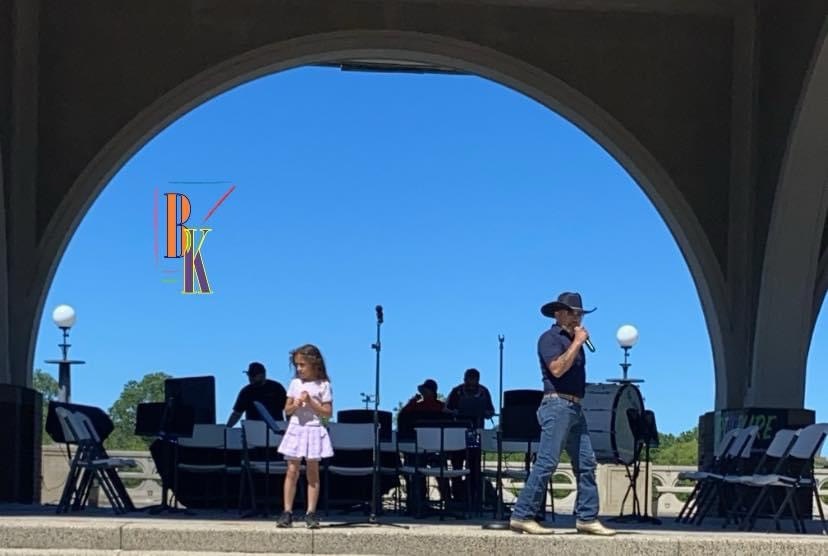
I went to shop and stumbled across live music in the park and so I decided to walk through the park to observe the entertainment. There were people getting sun, doing tai chi, playing soccer and enjoying family time.

Culturally Connecting with the Puerto Rican Cultural Center on Art Therapy

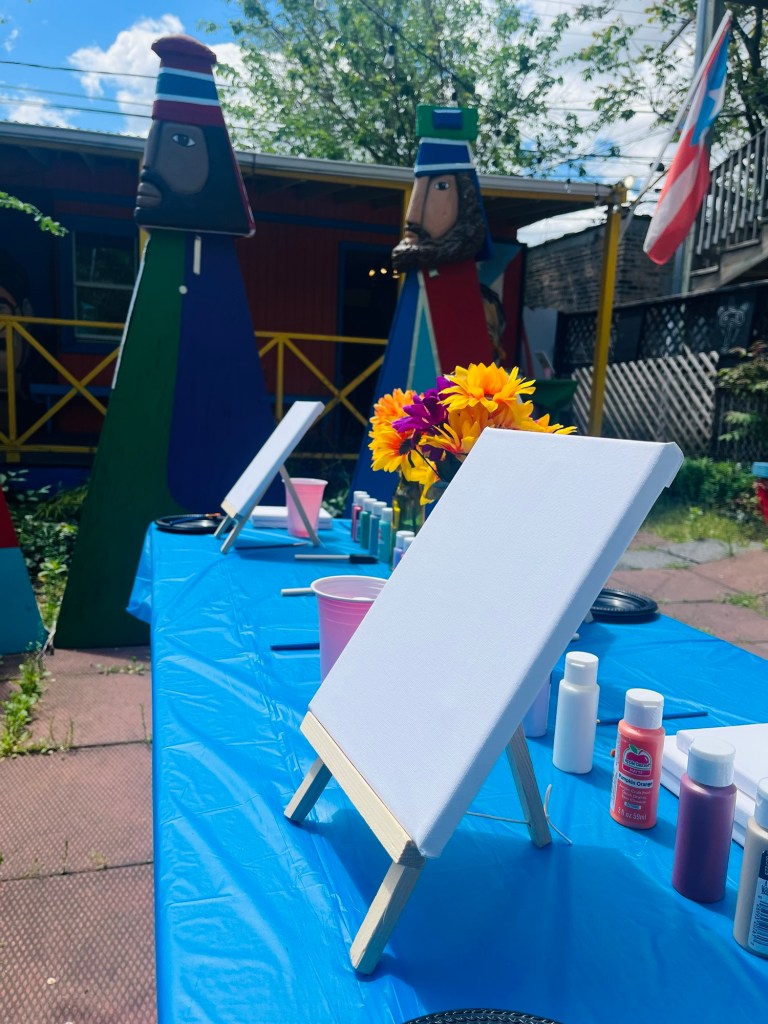
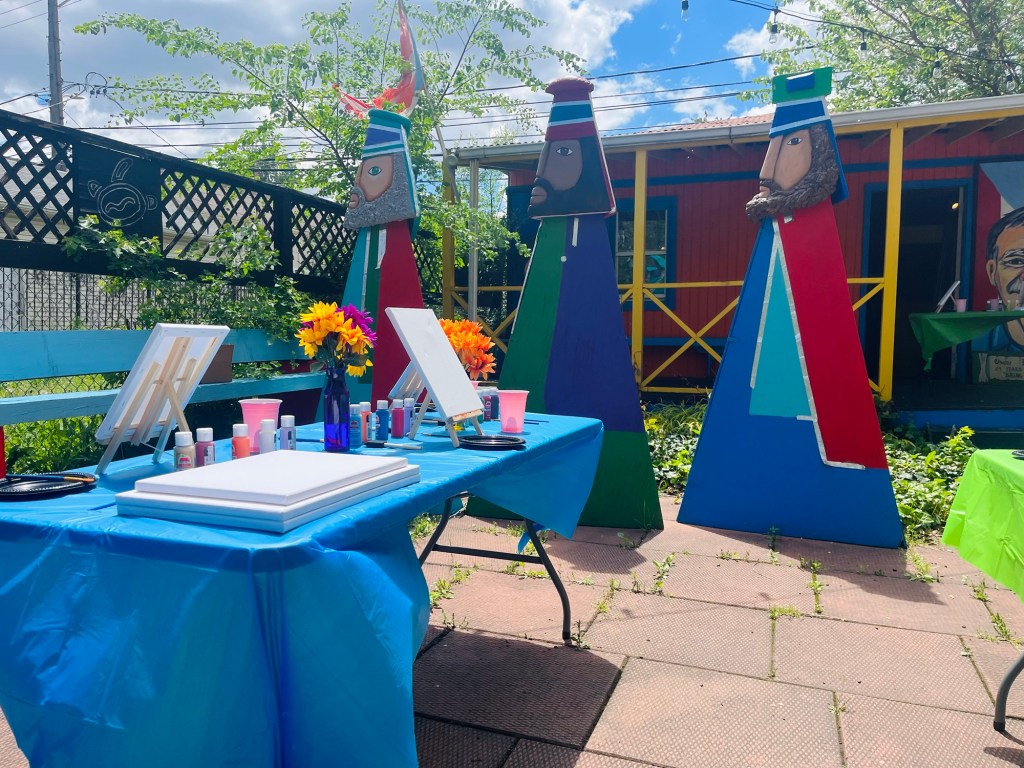
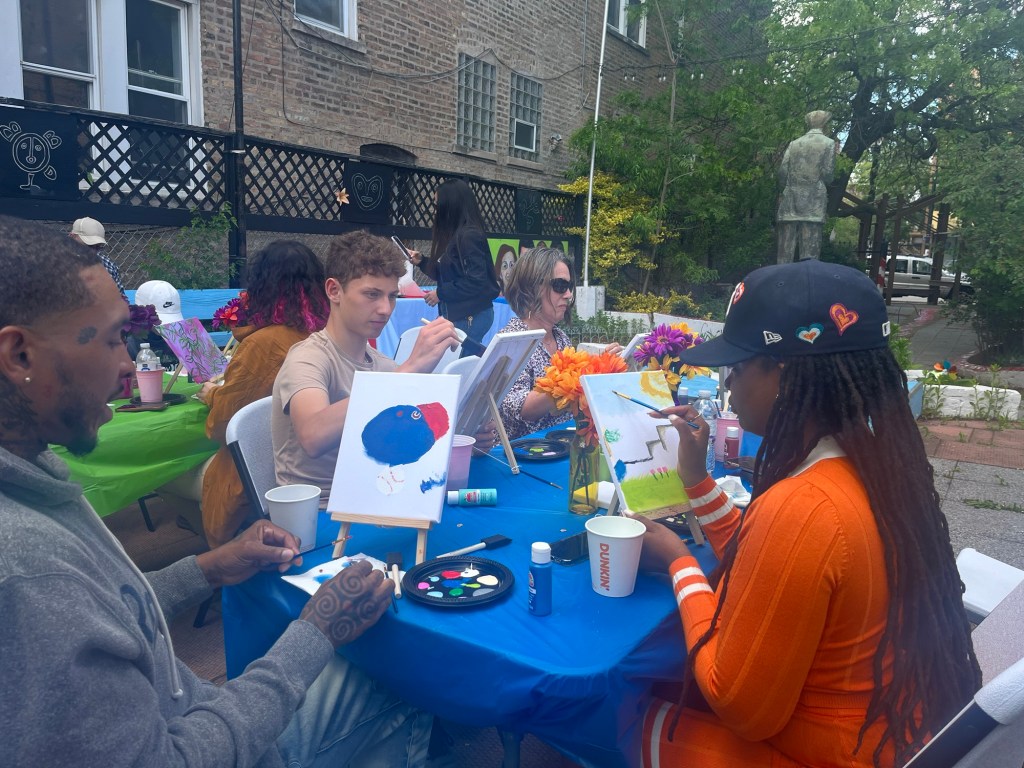
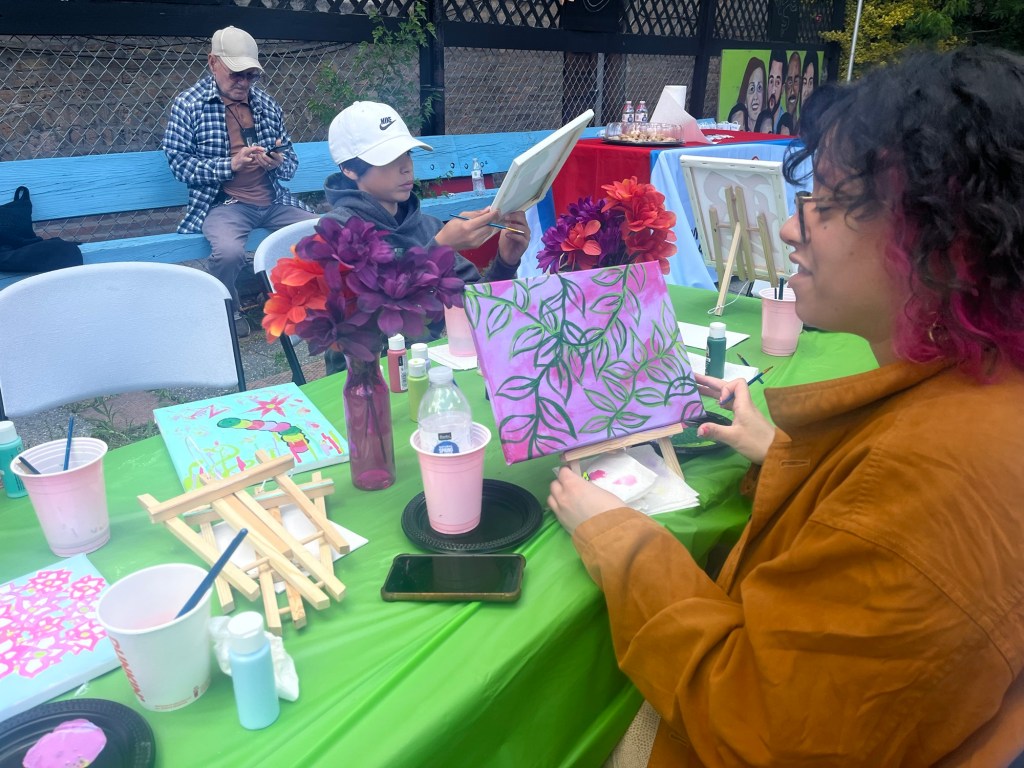
Chicago, IL-In a Garden across the street from the Puerto Rican Cultural Center, hosted by Zaire, we gathered in the name of love, culture, and therapy. As modern-day social workers, we must have our work-life balance because we’re out here during the year combating crisis in our communities’ culture and helping to shape the new world into a better place.

I received an invite from an associate who also happens to be a close friend of mine earlier this week, and I was happy to attend and network even though it was a brief session. That’s really all you need for painting or any form of therapy.

Art Therapy

Art therapy is significant for several reasons. It provides a creative outlet for individuals to express themselves, explore their emotions, and process trauma or stress in a non-verbal way. It can help improve mental health by fostering self-awareness, reducing anxiety, and enhancing overall well-being. Additionally, it can aid in communication, especially for those who find it challenging to express their feelings verbally. Overall, art therapy offers a unique approach to healing and self-discovery.

Healing Creativity and Working Through Emotions of Grief

Art therapy can be particularly beneficial for individuals who are grieving because it provides a safe space to express complex emotions that may be difficult to articulate verbally. Through various artistic mediums such as painting, drawing, or sculpture, individuals can externalize their feelings of loss, sadness, anger, or confusion.

Engaging in the creative process allows them to explore and make sense of their grief journey at their own pace. Creating art can also serve as a distraction from overwhelming emotions and provide a sense of control during a time of upheaval.

Furthermore, art therapy encourages reflection and introspection, helping individuals gain insight into their grief experiences and find meaning in their loss. Group art therapy sessions can also offer a supportive environment where participants can connect with others who are going through similar experiences, fostering a sense of community and validation.

Overall, art therapy can facilitate the grieving process by promoting emotional expression, coping skills, and a sense of healing and renewal.