Easy O’Hare Brings Nightmare O’Hare to Life on Friday the 13th 😈

Chicago – On the notoriously eerie date of Friday the 13th, Easy O’Hare fused horror and hip-hop in a way only he could, with the release of his latest album, Nightmare O’Hare. Held at The New Jo’s Bar and Grill in Merrillville, Indiana, the release event transported fans and peers into an immersive experience where sound collided with storytelling in a night full of adrenaline, ambiance, and authenticity.

But what’s the big deal with Friday the 13th?

For centuries, the number 13 has carried a reputation for bad luck, and when it lands on a Friday, that superstitious energy hits different. The fear is so widespread it has its own name: paraskevidekatriaphobia. Pop culture took it even further in 1980 with the horror classic Friday the 13th, introducing Jason Voorhees; the silent, masked killer who haunted Camp Crystal Lake and slashed his way into horror history. Since then, the date has come to symbolize fear, suspense, and rebellion; making it the perfect backdrop for Easy O’Hare’s latest creative strike.

His statement? It’s giving serial killer energy.

And he’s killing these other rappers especially when it comes to the way he curates his musical projects.

Nightmare O’Hare captures that chaotic yet calculated vibe. It’s raw, cinematic, and deeply unsettling in the best way. The album rides moody production and vivid lyricism, exploring the gritty realities of urban life, survival, and the kind of darkness you face when you’re moving a certain way.

When I rap it gets scary for the competition and we chose a beat selection that fit the mood of how scary it can actually get. With this project I was showing I can pop up outta nowhere with new music at any given time after my listeners hear Nightmare O’Hare they’ll definitely go download the past projects to get all the way tapped in with me.


The theme originated from a past rap beef where I had to switch forms from Easy O’Hare to nightmare

-Easy O’Hare

The Performance

Easy’s stage presence brought the music to life with gritty emotion and undeniable power. And the supporting acts? Just as heavy. The room was charged with energy, filled with people who came to show love and stayed to be moved. It was a whole vibe and yes, the chicken was fire too.

The Artist

  • Rico Moneyy
  • Kdoug Jr
  • Aboog
  • D’kno Mr.KNOITALL
  • ESC Deez
  • Fly cool club
  • Big Nastee
  • Easy O’Hare
  • Coldhard

The Bigger Picture

With Nightmare O’Hare, Easy doesn’t just drop music, he curates experiences and releases projects with precision. He proves that there’s room for 40-year-old rappers who trap 🏚️🪤 with strategy, successfully. This isn’t a moment; it’s a method.

Nightmare O’Hare is now streaming on all major platforms.

Stay tuned for visuals, BTS moments, and more drops by following him on Instagram: @easyohare_


The Culture is the Curriculum: How Hip Hop Became a Social Political Force

Hip Hop was never just a soundtrack, it was a survival guide, a protest language, and a cultural archive passed through boom bap beats and breath. Today, as the world watches the Hip Hop generation step into political arenas, from local elections to the United Nations, we are forced to ask: Who controls the culture now? And what does it mean to be Black, American, and powerful in a world that still tries to erase the blueprint?

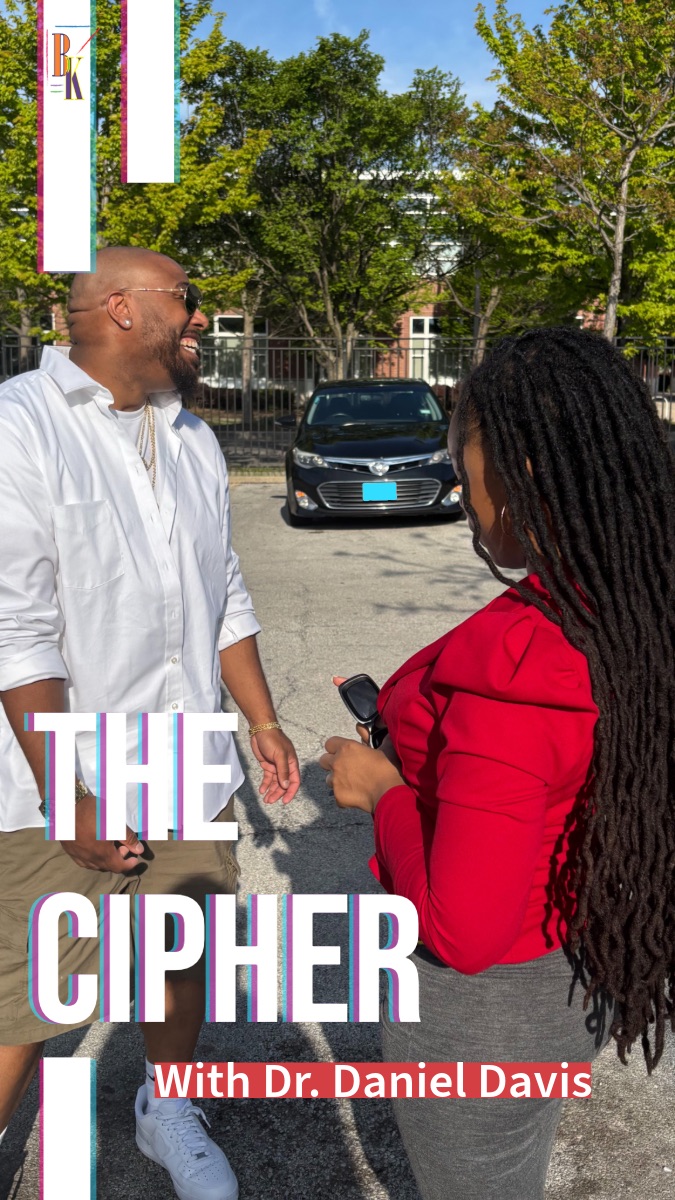
In my new interview series The Cipher & The System I’m going to discussing the state of the culture, the importance of solving our identity crisis and setting a standard for the stewards, creatives, and other associates of Hip Hop that benefit from our Black American culture.

Full video is going through post production, bare with me.

It’s time to set the bar, revolutionize the voice of the culture and if not me then who? Seriously 😒 tho.

From Party to Power: The Political Birth of Hip Hop

What began in the Bronx as a celebration of rhythm, rhyme, and resistance has evolved into a global political force. Hip hop was never just about beats and bars, it was a cry from the margins, a cultural blueprint for survival in the face of systemic neglect.

As pioneers like Afrika Bambaataa and Grandmaster Flash turned block parties into platforms for protest, the culture began to birth its own consciousness. From the raw social critiques of Public Enemy to the electoral mobilizations led by artists and organizers today, hip hop continues to shift and our goal is to go back to our roots to use it as a tool to party for power, reminding the world that the mic is mightier than many know.

The Crisis of Identity in the Age of Influence

In a time where virality is often mistaken for value, the Black identity is being reshaped by algorithms and aesthetics more than lived experience and ancestral knowledge.

Hip hop, once a vehicle for self-definition, is now caught between commercialization and cultural reclamation. Who are we beyond the brand deals, trending sounds, and curated lifestyles? This crisis of identity isn’t just a cultural issue, it’s political. It determines who tells our stories, who profits from our pain, and how we define ourselves in the face of erasure and exploitation.

Dr. Daniel Davis on Education, Legacy & Liberation

Dr. Daniel Davis doesn’t just teach African American history, he embodies its living legacy. A leading voice on culturally relevant pedagogy, Dr. Davis believes education is the first site of liberation. In this exclusive interview, he shares why hip hop is not only a genre but a pedagogy, and how understanding our past is key to shaping our political and cultural future. His work centers the value of legacy, not as nostalgia, but as fuel for the fight for equity, self determination, and generational power.

Can We Build Cultural Institutions That Don’t Exploit Us?

Too many institutions built on Black creativity have failed Black communities. Whether in academia, music, media, or the nonprofit sector, the pattern is familiar: our genius is extracted, repackaged, and sold back to us, often without ownership, authorship, or autonomy.

It’s time to ask the hard questions: Can we build spaces where cultural integrity outweighs commercial interest? Where our narratives are protected, not commodified? Where cultural stewards are supported, not silenced? The answer requires both imagination and infrastructure, and a refusal to trade authenticity for access.

The Next Generation Needs Standards, Not Gatekeepers

There’s a difference between preserving culture and policing it. As hip hop enters its fifth decade, we owe the next generation more than nostalgia or elitism.

We owe them standards anchored in ethics, excellence, and historical context. These standards aren’t meant to stifle creativity but to safeguard legacy. Instead of gatekeepers, we need mentors, archivists, and architects, those who understand that true cultural preservation happens not by exclusion, but by elevation.

The youth are watching. Let’s give them more than permission, we must give them principles.

If we don’t teach the history of Hip Hop, we leave its future in the hands of people who never lived it.

Dr. Daniel Davis

Chicago: The Blueprint of Urban Culture

There’s something undeniable about Chicago. The rhythm of our streets, the depth of our history, and the influence we hold in shaping urban culture across the nation and internationally, it runs deep. From house music and footwork to conscious rap and drill, Chicago has been a cultural cornerstone, birthing movements and voices that echo far beyond city limits.

That’s why moments like GloRilla giving Queen Key her flowers 💐 hit different. It’s more than just a viral moment, it’s recognition of legacy, talent, and the resilience of a city that has long been under credited and over influential.

Queen Key has always represented raw, unapologetic energy, the essence of what it means to be from the Chi and its surrounding communities. For another artist to publicly uplift her on tour is a powerful testament to sisterhood and respect in hip hop, especially amongst women at that young women, in an era where the city’s women are claiming space louder than ever.

Chicago isn’t just on the map, we are the map. The artists, the culture, the style, the stories, we influence the world, and it’s about time that legacy is consistently honored.

Flowers 💐 today. Crowns 👑 tomorrow.

Easy O’Hare Is Still Taking Flight ✈️ : From Cabin Pressure to Young Bulls

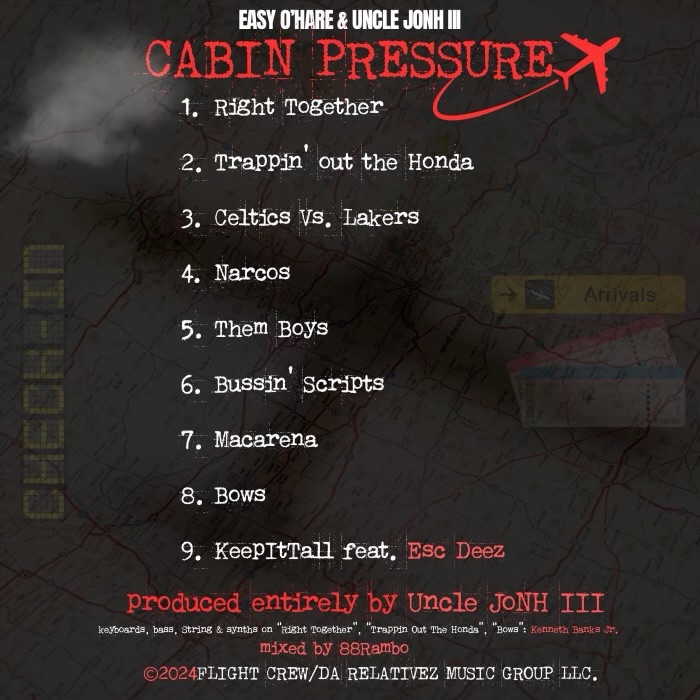
Chicago-Easy O’Hare, a standout voice in Chicago’s hip hop scene, teamed up with producer Uncle JoNH III to release Cabin Pressure, a tightly crafted 9 track album that dropped in 2024. Known for its gritty sound, sharp lyricism, and unapologetically Chicago feel, the project showcased Easy’s ability to turn personal stories and city life into immersive music. From soulful samples to streetwise bars, Cabin Pressure solidified his rep as an artist with staying power.

Single from Cabin Pressure

One of the album’s highlights, “KeepItTall,” featuring ESC Deez, has received new attention with a freshly released visual that captures the raw chemistry between the two. Watch the new video below 👇🏽. It’s a reminder that real art doesn’t fade, it grows with the artist.

Adding to the momentum, Easy O’Hare and ESC Deez recently joined forces again for “Bs,” the official theme song for the upcoming TV series Young Bulls. Promoted globally by Milwaukee’s own KB The Playmaker, and executive produced by industry veterans Stan Sheppard and Glasses Malone, Young Bulls shines a spotlight on Midwest talent, and Easy’s voice leads the charge. Check out the “Bs” video here, and you’ll see why this duo continues to demand attention.

From the Cabin Pressure cockpit to television soundtracks, Easy O’Hare is flying on his own frequency and the culture is catching up.

Listen to Cabin Pressure on all platforms and click here to listen.

Stay tune for Cabin Pressure Reloaded & catch him performing this summer.

Fat Money Levels Up: From Donda 2 Collaborator to CincoDeToven with Zaytoven

ChicagoFat Money (formerly Ty Money), a prominent Harvey-Chicago rapper and lyricist, continues to make significant strides in the hip hop scene. Renowned for his sharp lyricism and deep rooted Chicago influences, Fat Money has been a consistent presence in the industry since 2014, releasing multiple studio albums and mixtapes.

In 2022, Fat Money collaborated with Kanye West on the Donda 2 album, contributing as a co-writer and recording several reference tracks for both released and unreleased songs. This collaboration not only showcased his versatility but also solidified his position among hip-hop’s elite with a sought after swag & sound. He’s also worked with Snoop Dogg & Dr. Dre.

Building on this momentum, Fat Money has unveiled his latest project, CincoDeToven, a collaborative effort with legendary producer Zaytoven. This release is part of his annual CincoDeMoney series, traditionally launched on Cinco de Mayo. CincoDeToven blends Fat Money’s incisive storytelling with Zaytoven’s signature trap symphonies, offering a fresh yet familiar soundscape for fans.

Meanwhile, Kanye West’s Donda 2 has been at the center of several legal disputes. The album, initially released exclusively through West’s $200 Stem Player device, faced challenges due to its unconventional distribution method. Producers like ATL Jacob, who worked on tracks such as “Pablo,” “Keep It Burning,” and “Louie Bags,” have reported not receiving payment for their contributions, citing confusion over royalty distributions stemming from the album’s release strategy. 

Additionally, West faces multiple lawsuits over unauthorized samples used in Donda 2. Notably, Ultra International Music Publishing sued him for allegedly sampling Marshall Jefferson’s 1986 track “Move Your Body” without permission in the song “Flowers.”  Another lawsuit by Artist Revenue Advocates LLC claims that West misused music created by several artists in his songs “Hurricane” and “Moon” without proper authorization. 

Despite these controversies, Fat Money’s trajectory remains upward. His collaboration with Zaytoven on CincoDeToven and his involvement in high-profile projects like Donda 2 underscore his growing influence and commitment to pushing creative boundaries in hip-hop. Listen, purchase, and save the project here.

The Latest in Hip-Hop: Diddy & Jay-Z Faces Explosive New Lawsuit Over Alleged Sexual Assault of a Minor in 2000

In the latest chapter of what’s quickly becoming one of the most shocking scandals in entertainment, Sean “Diddy” Combs & Jay-Z is facing new legal trouble. A civil lawsuit filed under New York’s Adult Survivors Act alleges that Diddy & Jay-S raped a 13-year-old girl during a post-MTV Video Music Awards party in 2000.

The anonymous plaintiff, now 37, claims she was drugged at the party and later assaulted by Combs and another unidentified male celebrity. According to the suit, a well-known female celebrity allegedly stood by and watched the attack happen. These are serious allegations that have cast an even darker shadow over Diddy, who’s already been accused of sexual abuse in multiple other lawsuits over the past

The Accusations in Context

This latest case isn’t an isolated incident, it’s one of several lawsuits filed against Diddy under New York’s Adult Survivors Act. The law, which temporarily extended the statute of limitations for survivors to bring forward cases of sexual abuse, has opened the floodgates for long-hidden accusations in the entertainment world.

Diddy is also grappling with federal sex trafficking charges and remains in custody after being denied bail twice. While his legal team continues to deny all allegations, the number of claims stacking up against him paints a troubling picture. The story is still unfolding.

What About Jay-Z?

Reports didn’t mention Jay-Z in connection with earlier filings on October 20, but the latest refiled lawsuit on December 8 naming Jay-Z, does directly implicate him in this case. This leaves questions hanging about whether other figures in the industry will be dragged into the legal drama.

His legal team released a statement via Roc Nation on X:

PR Team’s Communications
Lawyer of Plaintiff ‘s Response via X.

Why This Matters

For years, the hip-hop industry (and many others) have been dogged by rumors of abuse, exploitation, and unchecked power. Now, with lawsuits like this coming to light, the culture and society are being forced to reckon with its darker side. The allegations against Diddy don’t just implicate him but they raise concerns about how power, wealth, and influence have shielded people from accountability for decades.

As this story develops, it’s clear that these accusations are bigger than Diddy & many in power, it’s a human rights issue.It’s about a systemic issue that has harmed too many people for far too long.

We’ll be watching as the court proceedings unfold. Justice, it seems, is finally knocking at the door of the elite but let’s hope it doesn’t just clean out the predators in Hip Hop only.

Sources: NBC News, CrimeOnline, People,

Mama Cecile  Johnson thoughts on Day 8 Women’s Conference Oct 26, 2024 –

Will the legacy of our generation be a series of broken promises?

Nelson Mandela

Mama’s  talk today  highlighted a number of ways African women had become to their detriment. From their relationship with each other to the role mothers and mothers-in-law now played, which is usually seen as negative. I was surprised to learn how negative mother-in- laws were seen as that had not been my expectation as we in the West see African families in a more positive way.

When she spoke of the challenge of the “feminine, that up to now, we have never had women solving the problems of women or humanity.” And how this disconnection came about it was a sad awakening for many.  

The lack of a female messiah was another observation raised, as well as a call for women who could help to address the needs of women to the Kings, Queens and First Ladies of Africa. A continent where few women seemed to rule. She asked why? Why did we think we should not and why were we not capable? She correctly highlighted that men have been making the decisions for the continent and it was clear that the outcomes were poor. She saw this as women becoming cowards, because here they were blaming men for everything but not standing up and demanding their right to do something about it. Taking control of their destiny required their action not someone’s approval. And failure to take action would mean that eventually women’s lives would get worse not better.

She tied this to the lack of women identified as Messiahs and the need for women to become messiahs. Why did we accept that only men could be a messiah? Why did we mimic other races in everything  except success, and look at the outcomes. As she cataloged our bad behavior as women she asked the question,  “With the beginning of a Renaissance: Was it our  choice to make new history or repeat history.”

I want to thank Mama for her message today on the courage lacking in our women today. It’s an observation I have also made in my years as an activist. When I would go before the School Board or community groups to speak about our failing schools and children I would tell community members that being a woman, a mother, someone who carried a child 9 months in the belly, suckled and raised that child, who else should speak on behalf of our children? Who else should be upset when a police officer who did not know your child, abused or killed them? I found it very frustrating how Black women in the USA were the only women who were expected to not feel for their children, themselves or their communities. So I spoke up.


When I hear you speak on the observations I myself have made as to the state of our affairs it makes my blood boil. And I heard your request and want you to know, sign me up. For you are correct when you say. “who but women should speak on women’s behalf?” Who should call our sisters out, and model the behavior needed while empowering women to be the change they wish to see in their lives? That has always been my motto. I AM the change I wish to see.

In 2013 I did my Master’s Thesis on Maternal Mortality in Africa (“DISCRIMINATION TO DEATH” Exploring the Issue of Maternal Mortality in Africa).  It was part of my research as I looked at so many factors (The MDGs) impacting African life which the world did not seem to care about.

My passion for Africa was born a long time ago my children say, but for me it became crystal clear when I attended a Global Poverty Forum in Denver, Colorado in 2008 and heard one of the speakers proclaim “that in the year 2050, the average income for the US would be $90,000, the average income for China and India would be $45,000 and the average income in Africa would be $1,800. And that Africa had the richest resources in the world.” Immediately I questioned, how could that be, that forty two years from now the world’s expectation for Africa would be so low? How could it be that the richest continents inhabitants could still be so poor?  Who was using the resources and what was causing this delay in Africa’s development?

There began a quest for me to understand more about this continent called Africa, one whose portrayal always links the mind to images of corrupt leaders, strongman dictators, military coups, civil war, HIV/AIDS, malaria, disease, starvation, malnutrition, dying children, lack of infrastructure, foreign debt and genocide. Yet Africa has the richest resources in the world, so why weren’t they being used to benefit her people?

Even as I documented so many challenges I had to focus on one item for my thesis and so I chose Maternal Mortality In Africa, because the numbers were so outrageous (US 11/100,000 live birth- white /33/100,000 Black and in Africa many places over 500 -900/100,000 even as some of the things impacting us now our ancestors had already conquered hundreds of years before. Like C- sections.) It was clear to me no one cared about Black women dying in Africa, similar to the response in the US, where the death rate was minuscule compared to Africa, but still disproportionate.

And it broke my heart that Nelson Mandela  in 2002 asked “will the legacy of our generation be a series of broken promises?” and that from then they had already predicted Africa would not meet its Millenium Development Goals by 2015, with 13 years to go. I am here to say YES, that is Africa’s legacy, “A whole series of broken promises” “ organized chaos” and incompetent and disingenuous leadership.  And we should be ashamed to have allowed it to get so bad.

My presentation on why we need an African Development Plan looks at these critical issues, health, education, infrastructure etc. and lays out some of the things needed to unite our people around common causes concerning us. Even designing something we labeled as a Kingdom Project as short term solutions to restoring Kingdom relevance on the continent.

I know your frustration for I have created and sent my work to fools claiming they were interested in development of our people and most of them were men, happy with their big titles and positions who were accomplishing nothing.  It has been a frustrating journey, so I am happy to meet you and Baba. Your passion is my own and your effort is similar to mine except yours is spiritual and I had not included that in my calculations even as I would say “this is a spiritual war we are fighting.” It took this last year training under Rev Kwame to understand what that truly meant.  Its as if my mouth would speak hoping my ears would hear.  Thank God it’s hearing now.

I am here to sign up for your classes and efforts and help create the plan of action. I agree we need to say and do more and I don’t lack courage.  It is a joy to finally meet some people of true courage and big hearts. Who have lived experience, not just book knowledge.  

Your summary of the situation was very sad. The mechanization of sex, children, lovers, lack of desire for each other, replacement of humanity with toys and robots.  How far we have sunk these last few decades as others have risen and our population of consumers are enamored with all of this foolishness, to our detriment.

So thank you Mama for once again being a breath of fresh air. Do not cry anymore for some of us are here to help you.  We heard your cry and we do plan to do something about it.

Love you Mama, I hear your heart.

Your daughter,


Cecile

Visit Mama Cecile’s website, here’s the original version.

Celebrating the Heart of Education: National Teachers Day & Week

Chicago, IL– National Teachers Day and National Teachers Week are dedicated to honoring and appreciating the contributions of educators in the United States. The history of these observances’ dates back to the 1940s.

  • Early Advocacy: The idea for a day to honor teachers was first proposed by Eleanor Roosevelt in 1953. She persuaded Congress to set aside a day to recognize educators.
  • National Teachers Day: In 1980, the National Education Association (NEA) and its affiliates began discussions with Congress about creating a day to honor teachers. The NEA and its affiliates continued to observe Teacher Day on the first Tuesday in March.
  • Presidential Proclamation: In 1985, the NEA Representative Assembly passed a resolution declaring the first whole week of May as National Teacher Appreciation Week. In 1984, the National Parent Teacher Association (PTA) established Teacher Appreciation Week as the first entire week of May.
  • Official Recognition: In 1980, Congress passed legislation officially designating National Teacher Day as the Tuesday of the first week of May. This became a national day to honor teachers.
  • Continued Recognition: National Teachers Day and National Teachers Week have been celebrated annually since then. Schools, communities, and organizations nationwide use this time to thank teachers for their dedication and hard work.
  • Global Observance: While the specific dates and names may vary, many countries worldwide have similar observances to recognize the contributions of teachers.

These observances allow students, parents, administrators, and communities to express their appreciation for teachers’ vital role in shaping the future.

Embracing a New Chapter: My Journey with Illinois School District 163 as a Communications Specialist

Photojournalist: TSA Media @ Tim Streetz Winter Solstice Release Party

Dear School District 163 Community,

I am thrilled to embark on a new chapter of my professional journey as the Communications Specialist for School District 163 handling all your public relations & communications needs. From the moment I stepped foot into our vibrant community, I knew that I was stepping into a world of boundless possibilities, where every interaction, every conversation, and every connection has the power to make a difference.

Joining School District 163 fills me with an overwhelming sense of excitement and purpose. As someone deeply passionate about effective communication and community engagement as a social scientist, engineer, and entrepreneur, I am eager to leverage my skills and experience to serve our district and support its mission of academic excellence and student success.

Communication is at the heart of everything we do, and I am committed to ensuring that our voices are heard, our stories are shared, and our community is united. Whether it’s through crafting engaging content, managing our digital platforms, or collaborating with stakeholders, I am dedicated to fostering open, transparent, and meaningful communication across all levels of our organization.

But beyond the day-to-day tasks and responsibilities, what truly excites me is the opportunity to be of service to each and every member of our district. Whether you’re a teacher, a parent, a student, or a community member, know that my door is always open, and my ears are always ready to listen. Your ideas, your feedback, and your concerns matter, and I am here to support you in any way I can.

As we embark on this journey together, I am filled with hope, optimism, and a deep sense of gratitude for the opportunity to serve such a dynamic and diverse community. Together, let us embrace the challenges, celebrate the successes, and continue to build a brighter future for School District 163.

I look forward to getting to know each of you, learning from your experiences, and working together to make our district the best it can be. Together, we are stronger, together, we can achieve greatness.

Below is some general information on my system and ways that we can collaborate.

Thank you for welcoming me with open arms, and I am honored to be a part of this incredible community.

Gratitude,

BK
Communications Specialist

Sagacity: The Sacred Practice of Sage Burning

It is wise to know where your practices come from and to have deep insight into how they not only impact you, but the world. Sage comes in more than 900 species, according to Southern Living. It is a medicinal plant used in culinary and spiritual practices. It was once considered a medicinal cure-all, and can still be used to cure many dis-eases. The plant and the uses of it has become a trendy wellness practice. It is very important to know where this trend derived from and to protect the tradition by having a clear understanding of the practice to work effectively with indigenous peoples and Mother Nature.

The practice of burning sage is culturally sensitive to indigenous peoples but it’s something that we should also consider the agriculture process of and how it effects the environment.

Sage burning also known as smudging, is used for purifying and cleansing the spirit of negative energy in the home, room, or body, helping to maintain a satisfactory aura. The term smudging comes from indigenous tribes, commonly, in North America. A good question is, do they practice this medicine in other cultures, if so, where and what are they called ?

Bustle’s Nyla Burton, said “when non-native people burn sage to “smudge” their homes or other spaces, it can minimize the cultural importance of this ritual, and have a negative impact on how the herbs are grown. Instead, advocates say non-native people can learn to cleanse their spaces in ways that are culturally and ecologically sensitive. There are lots of ways to achieve the benefits of smudging by using more ethical practices, terminology, and materials.”

Definition of Smudging

“Sacred smoke from burning medicinal or sacred plants, a traditional ceremony for purifying and cleansing soul of negative thoughts of a person or place.”

The Four Elements

  • Traditionally, a shell is used as a container representing water the first element
  • Four sacred plants that are gifts from mother earth represent the second element, earth.
    • Cedar
    • Sage
    • Sweetgrass
    • Tobacco
  • Lighting of the sacred plants produces the third element, fire.
  • Smoke from the fire produces the fourth element, air.

To learn more about working effectively with Indigenous Peoples visit Indigenous Corporate Training, Inc. for more.

It is better to light the plant with a match then a gas lighter. You can burn both the leaves and the stems before wavering over the subject by hand or with a feather,traditionally natives use eagle feathers. The person being smudge can pull the smoke towards them to inhale softly. When finished the ashes are then returned to mother earth, for which this is where the gifts came from. It is said and believed that the ashes absorbs the negative thoughts and feelings.


Sources