Tragedy at Mello Buckzz’s Release Party: 4 Killed, 18 Injured, Father Now Faces Federal Gun Charges

CHICAGO— The father of Chicago rapper Mello Buckzz has been charged in a federal gun case, days after a mass shooting outside her mixtape release party left four people dead and 18 others injured in the River North neighborhood, federal prosecutors confirmed Tuesday.

The shooting unfolded around 1:30 a.m. on July 2 outside Artis Restaurant & Lounge, located on the 300 block of West Chicago Avenue, as crowds exited an event hosted by Mello Buckzz. According to Chicago police, a dark-colored vehicle drove past the crowd and opened fire before fleeing the scene (ABC7 Chicago).

Watch full interview to hear my media associate & I discuss the situation.

Four people were fatally shot:

  • Taylor Walker, 26, a hairstylist from the South Side who was attending the event with friends
  • Aviance “Avi” Drexler, 27, a healthcare worker and close friend of the rapper
  • Leon Andrew Henry, 25, of Chicago
  • Devonte Terrell Williamson, 23, a truck driver and young father who was also Mello Buckzz’s boyfriend

At least 14 other individuals sustained injuries and were transported to area hospitals including Northwestern Memorial, Stroger, Mount Sinai, and Illinois Masonic. Three remained in critical condition as of Wednesday morning.

Chicago Police Superintendent Larry Snelling condemned the incident, calling it “senseless and devastating,” adding that the shooters “fired into a crowd without any regard for human life” (CBS Chicago). The venue, Artis Lounge, has since been temporarily closed by city officials. The same location previously operated as Hush Chicago, which was also shuttered following a 2022 fatal shooting.

As the community grapples with the violence, new legal developments have further complicated the narrative.

According to CWB Chicago, Melvin Doyle, the father of Mello Buckzz, was arrested and charged with being a felon in possession of a firearm and ammunition. The federal complaint, filed by the Bureau of Alcohol, Tobacco, Firearms and Explosives (ATF), states that Doyle was found with multiple handguns and over 100 rounds of ammunition during a February search of his home (CWB Chicago). Authorities confirmed the weapons were not used in the July 2 shooting, and no direct connection between Doyle’s charges and the River North attack has been established.

Still, the proximity of these events invites a broader reflection on the roots of violence in our communities.

While music, particularly in Chicago’s drill and rap scenes, offers a creative outlet and a reflection of lived experience, it also holds power to influence, to provoke, and in some cases, to escalate. The intersection of lyrics, online posts, and real world conflict has been well documented. Law enforcement and community advocates alike warn that violent rhetoric, whether artistic or interpersonal, can spill beyond the studio or screen and into the streets.

In honoring the lives of Taylor, Avi, Leon, and Devonte, we are also forced to confront a culture where grief is cyclical and trauma is generational. We must ask: what are we normalizing? What are we amplifying? And who is paying the price?

As federal and local investigations continue, authorities urge anyone with information about the shooting to contact the Chicago Police Department.

Easy O’Hare Brings Nightmare O’Hare to Life on Friday the 13th 😈

Chicago – On the notoriously eerie date of Friday the 13th, Easy O’Hare fused horror and hip-hop in a way only he could, with the release of his latest album, Nightmare O’Hare. Held at The New Jo’s Bar and Grill in Merrillville, Indiana, the release event transported fans and peers into an immersive experience where sound collided with storytelling in a night full of adrenaline, ambiance, and authenticity.

But what’s the big deal with Friday the 13th?

For centuries, the number 13 has carried a reputation for bad luck, and when it lands on a Friday, that superstitious energy hits different. The fear is so widespread it has its own name: paraskevidekatriaphobia. Pop culture took it even further in 1980 with the horror classic Friday the 13th, introducing Jason Voorhees; the silent, masked killer who haunted Camp Crystal Lake and slashed his way into horror history. Since then, the date has come to symbolize fear, suspense, and rebellion; making it the perfect backdrop for Easy O’Hare’s latest creative strike.

His statement? It’s giving serial killer energy.

And he’s killing these other rappers especially when it comes to the way he curates his musical projects.

Nightmare O’Hare captures that chaotic yet calculated vibe. It’s raw, cinematic, and deeply unsettling in the best way. The album rides moody production and vivid lyricism, exploring the gritty realities of urban life, survival, and the kind of darkness you face when you’re moving a certain way.

When I rap it gets scary for the competition and we chose a beat selection that fit the mood of how scary it can actually get. With this project I was showing I can pop up outta nowhere with new music at any given time after my listeners hear Nightmare O’Hare they’ll definitely go download the past projects to get all the way tapped in with me.


The theme originated from a past rap beef where I had to switch forms from Easy O’Hare to nightmare

-Easy O’Hare

The Performance

Easy’s stage presence brought the music to life with gritty emotion and undeniable power. And the supporting acts? Just as heavy. The room was charged with energy, filled with people who came to show love and stayed to be moved. It was a whole vibe and yes, the chicken was fire too.

The Artist

  • Rico Moneyy
  • Kdoug Jr
  • Aboog
  • D’kno Mr.KNOITALL
  • ESC Deez
  • Fly cool club
  • Big Nastee
  • Easy O’Hare
  • Coldhard

The Bigger Picture

With Nightmare O’Hare, Easy doesn’t just drop music, he curates experiences and releases projects with precision. He proves that there’s room for 40-year-old rappers who trap 🏚️🪤 with strategy, successfully. This isn’t a moment; it’s a method.

Nightmare O’Hare is now streaming on all major platforms.

Stay tuned for visuals, BTS moments, and more drops by following him on Instagram: @easyohare_


Chicago: The Blueprint of Urban Culture

There’s something undeniable about Chicago. The rhythm of our streets, the depth of our history, and the influence we hold in shaping urban culture across the nation and internationally, it runs deep. From house music and footwork to conscious rap and drill, Chicago has been a cultural cornerstone, birthing movements and voices that echo far beyond city limits.

That’s why moments like GloRilla giving Queen Key her flowers 💐 hit different. It’s more than just a viral moment, it’s recognition of legacy, talent, and the resilience of a city that has long been under credited and over influential.

Queen Key has always represented raw, unapologetic energy, the essence of what it means to be from the Chi and its surrounding communities. For another artist to publicly uplift her on tour is a powerful testament to sisterhood and respect in hip hop, especially amongst women at that young women, in an era where the city’s women are claiming space louder than ever.

Chicago isn’t just on the map, we are the map. The artists, the culture, the style, the stories, we influence the world, and it’s about time that legacy is consistently honored.

Flowers 💐 today. Crowns 👑 tomorrow.

Easy O’Hare Is Still Taking Flight ✈️ : From Cabin Pressure to Young Bulls

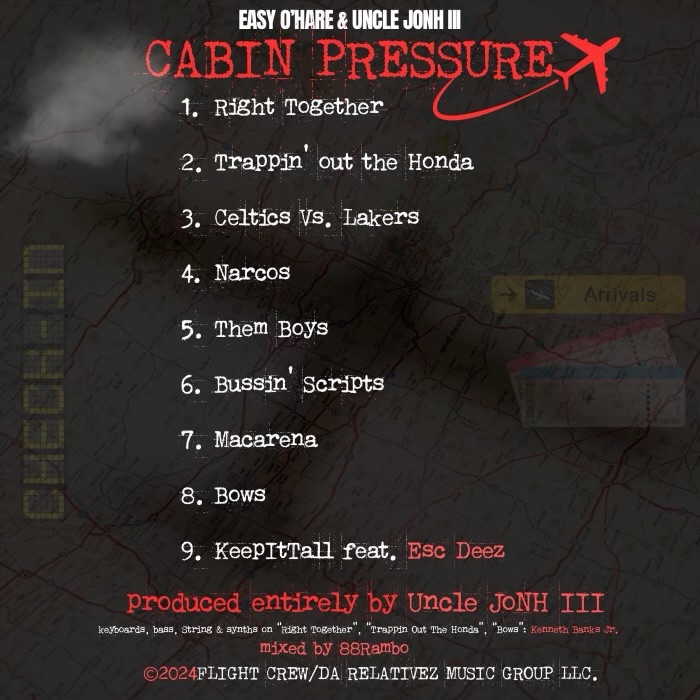
Chicago-Easy O’Hare, a standout voice in Chicago’s hip hop scene, teamed up with producer Uncle JoNH III to release Cabin Pressure, a tightly crafted 9 track album that dropped in 2024. Known for its gritty sound, sharp lyricism, and unapologetically Chicago feel, the project showcased Easy’s ability to turn personal stories and city life into immersive music. From soulful samples to streetwise bars, Cabin Pressure solidified his rep as an artist with staying power.

Single from Cabin Pressure

One of the album’s highlights, “KeepItTall,” featuring ESC Deez, has received new attention with a freshly released visual that captures the raw chemistry between the two. Watch the new video below 👇🏽. It’s a reminder that real art doesn’t fade, it grows with the artist.

Adding to the momentum, Easy O’Hare and ESC Deez recently joined forces again for “Bs,” the official theme song for the upcoming TV series Young Bulls. Promoted globally by Milwaukee’s own KB The Playmaker, and executive produced by industry veterans Stan Sheppard and Glasses Malone, Young Bulls shines a spotlight on Midwest talent, and Easy’s voice leads the charge. Check out the “Bs” video here, and you’ll see why this duo continues to demand attention.

From the Cabin Pressure cockpit to television soundtracks, Easy O’Hare is flying on his own frequency and the culture is catching up.

Listen to Cabin Pressure on all platforms and click here to listen.

Stay tune for Cabin Pressure Reloaded & catch him performing this summer.

The Reality of Pursuing a Rap Career After 40: Strategy, Success, and Longevity

In the hip-hop industry, timing is everything. While some artists establish their careers early and maintain relevance into their 40s, others enter the rap game later in life. Understanding these trajectories provides valuable insight into the realities of success, longevity, and sustainability in hip-hop.

As a communications strategist and brand positioning expert, I’ve worked with artists and brands to help them navigate their careers effectively. The truth is, pivoting at 40 can be a power move, one that allows artists to transition into more sustainable careers rather than chasing an unrealistic dream.

Artists Who Achieved Success Before 40 and Sustained Their Careers

Many renowned hip-hop artists built solid careers before turning 40, allowing them to maintain longevity and evolve over time:

Mainstream Veterans with Decades of Longevity

  • Jay-Z (born 1969) – Released his debut album Reasonable Doubt at 26. By 47, his album 4:44 was critically acclaimed, showcasing his ability to evolve with age.
  • Eminem (born 1972) – Gained fame with The Slim Shady LP at 27 and has continued to release successful projects well into his 40s.
  • Snoop Dogg (born 1971) – Dropped Doggystyle at 22 and remains a cultural icon with a multi-faceted career.
  • Freddie Gibbs (born 1982) – Released his debut ESGN at 31, but had been grinding for over a decade prior, showcasing how sustained effort pays off.

Griselda and the Boom-Bap Resurgence

  • Westside Gunn (born 1982) – Co-founded Griselda Records in 2012 and released Flygod at 34, proving longevity is possible with a solid foundation.
  • Benny the Butcher (born 1984) – Gained prominence with Tana Talk 3 at 34, but had been building his craft long before mainstream recognition.
  • Boldy James (born 1982) – Released his debut at 31, showing that staying consistent and working with strong producers can keep an artist relevant.
  • Armani Caesar (born 1989) – Entered the industry young but gained widespread attention after signing with Griselda in 2020.

These artists had one thing in common: they put in the work before turning 40, building organic fan bases, networking, and proving their worth in the industry long before mainstream success.

Artists Who Started Their Rap Careers After 40

While less common, some artists have attempted to launch rap careers after 40. The challenge is immense, breaking into an industry that thrives on youth-driven content, energy, and cultural trends is not easy.

Artists Who Started Their Rap Careers After 40

While less common, some artists have attempted to launch rap careers after 40. The challenge is immense, breaking into an industry that thrives on youth-driven content, energy, and cultural trends is not easy.

  • MF Doom – While active in the 1990s, his career saw a resurgence in his 40s due to his underground cult following.
  • Money Man (born 1986) – Gained recognition later in his career, but his financial literacy and business acumen helped sustain his relevance.

Why Pivoting at 40 Can Be a Power Move

For artists pushing 40 who have not built a solid foundation, pivoting is not giving up, it’s a strategic transition. Here’s why:

  • Sustainability – If rapping hasn’t become a full-time career by 40, it’s wise to explore other avenues in entertainment such as A&R, production, executive roles, or brand partnerships.
  • Diversification – Many successful artists over 40 expand into businesses, podcasting, film, and other ventures to maintain financial stability.
  • Authenticity – A 40-year-old artist competing with young rappers on trends that don’t match their lifestyle can appear inauthentic. Instead, mature artists can embrace storytelling, mentorship, or niche audiences.

Hip-Hop Career Realism in Conclusion

The hip-hop industry favors those who lay their foundation early. While there are always exceptions, it is rare for someone to start rapping at 40 and achieve financial success. However, this doesn’t mean music must be abandoned, it just means rethinking the approach.

For those truly dedicated to hip-hop, transitioning into executive roles, branding, or a genre shift (e.g., jazz, spoken word, podcasting) can be a power move rather than a loss.

Hip-hop is about evolution, understanding when to pivot can be the difference between chasing a dream and building a lasting legacy.

The Latest in Hip-Hop: Diddy & Jay-Z Faces Explosive New Lawsuit Over Alleged Sexual Assault of a Minor in 2000

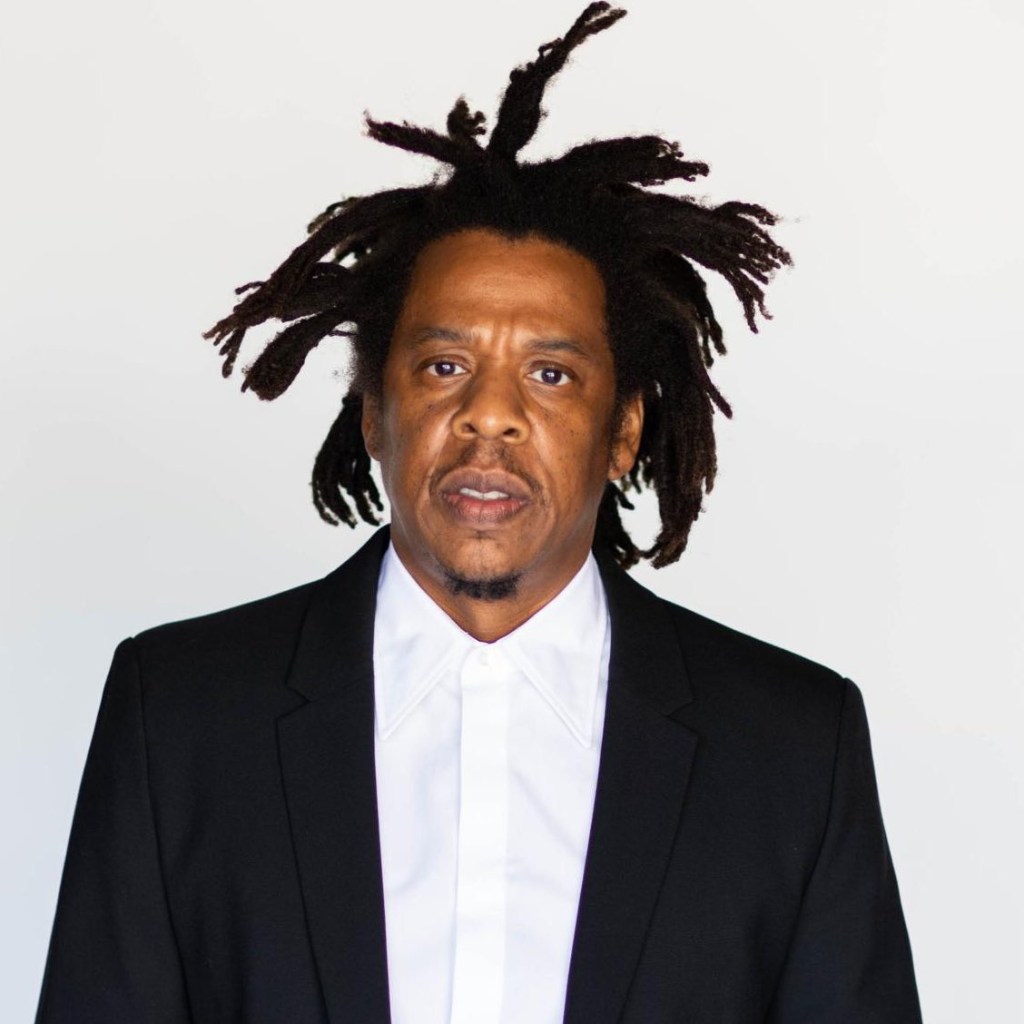
In the latest chapter of what’s quickly becoming one of the most shocking scandals in entertainment, Sean “Diddy” Combs & Jay-Z is facing new legal trouble. A civil lawsuit filed under New York’s Adult Survivors Act alleges that Diddy & Jay-S raped a 13-year-old girl during a post-MTV Video Music Awards party in 2000.

The anonymous plaintiff, now 37, claims she was drugged at the party and later assaulted by Combs and another unidentified male celebrity. According to the suit, a well-known female celebrity allegedly stood by and watched the attack happen. These are serious allegations that have cast an even darker shadow over Diddy, who’s already been accused of sexual abuse in multiple other lawsuits over the past

The Accusations in Context

This latest case isn’t an isolated incident, it’s one of several lawsuits filed against Diddy under New York’s Adult Survivors Act. The law, which temporarily extended the statute of limitations for survivors to bring forward cases of sexual abuse, has opened the floodgates for long-hidden accusations in the entertainment world.

Diddy is also grappling with federal sex trafficking charges and remains in custody after being denied bail twice. While his legal team continues to deny all allegations, the number of claims stacking up against him paints a troubling picture. The story is still unfolding.

What About Jay-Z?

Reports didn’t mention Jay-Z in connection with earlier filings on October 20, but the latest refiled lawsuit on December 8 naming Jay-Z, does directly implicate him in this case. This leaves questions hanging about whether other figures in the industry will be dragged into the legal drama.

His legal team released a statement via Roc Nation on X:

PR Team’s Communications
Lawyer of Plaintiff ‘s Response via X.

Why This Matters

For years, the hip-hop industry (and many others) have been dogged by rumors of abuse, exploitation, and unchecked power. Now, with lawsuits like this coming to light, the culture and society are being forced to reckon with its darker side. The allegations against Diddy don’t just implicate him but they raise concerns about how power, wealth, and influence have shielded people from accountability for decades.

As this story develops, it’s clear that these accusations are bigger than Diddy & many in power, it’s a human rights issue.It’s about a systemic issue that has harmed too many people for far too long.

We’ll be watching as the court proceedings unfold. Justice, it seems, is finally knocking at the door of the elite but let’s hope it doesn’t just clean out the predators in Hip Hop only.

Sources: NBC News, CrimeOnline, People,

Celebrating the Heart of Education: National Teachers Day & Week

Chicago, IL– National Teachers Day and National Teachers Week are dedicated to honoring and appreciating the contributions of educators in the United States. The history of these observances’ dates back to the 1940s.

  • Early Advocacy: The idea for a day to honor teachers was first proposed by Eleanor Roosevelt in 1953. She persuaded Congress to set aside a day to recognize educators.
  • National Teachers Day: In 1980, the National Education Association (NEA) and its affiliates began discussions with Congress about creating a day to honor teachers. The NEA and its affiliates continued to observe Teacher Day on the first Tuesday in March.
  • Presidential Proclamation: In 1985, the NEA Representative Assembly passed a resolution declaring the first whole week of May as National Teacher Appreciation Week. In 1984, the National Parent Teacher Association (PTA) established Teacher Appreciation Week as the first entire week of May.
  • Official Recognition: In 1980, Congress passed legislation officially designating National Teacher Day as the Tuesday of the first week of May. This became a national day to honor teachers.
  • Continued Recognition: National Teachers Day and National Teachers Week have been celebrated annually since then. Schools, communities, and organizations nationwide use this time to thank teachers for their dedication and hard work.
  • Global Observance: While the specific dates and names may vary, many countries worldwide have similar observances to recognize the contributions of teachers.

These observances allow students, parents, administrators, and communities to express their appreciation for teachers’ vital role in shaping the future.

Chicago’s Legend in Making @FBG_DUCK Has Self-Confessed Chicago’s Legends

FBG Duck, a Chicago Musical Illustrator, published a video recorded by Money Strong TV on his channel two days ago on Dec. 7, 2019; and with the apparent loss of legends from the City of Chicago, who are without a doubt gone too soon because of various tragic situations; he proclaims their affects in and on culture. In his illustrated story he mentions Jojo, Pappy, Zack TV, Lil Marc, Dooski, Nuski, Fredo Santana, LA Capone, Lil Mister, and Smylez. With the current loss of another great Chicago Legend Juice Wrld; and Famous Dex being recently hospitalized to recover from seizures, there is no concrete word if he has been released, there is much to be concerned about.

The murder and drug epidemic of Chicago has depreciated the circulation of producers in culture from the city, putting the ideas out there to be mocked by upcoming or lurking seasoned artist to develop from other markets. Every artist mentioned has a different level of success, impact, trade, and skill that contributed to the identity of who Chicago is in the urban culture world. A legend is someone who creates or develops a traditional story, who taps into their genius, and sculps a path for others to follow or to observe only to be influenced by their impact. No matter how well known the legend is globally, it can be very well known in pockets or wide areas to be proclaimed a legend.

Watch FBG Duck Declare Chicago Legends.

Subscribe to FBG Duck’s channel for more content.

This brings attention to the social issues that we need to solve in Chicago, and beyond, that deal ultimately with poverty, civic engagement, health, and the brotherhood of humanity. His piece of art pushes towards conversations that need to be had to better our community and restore unity between the gangs or just those who are conflicted and need to heal in order to let go of past conflicts or traumas. In the words of FBG Duck, “just to show yourself a better you”, is worth the participation in helping leaders like him carry messages like this far and wide in the diaspora to help appreciate the progress made in the culture.

I’d like to send love and light to all of the families of our lost and slain ones, even those we lost to non violent tragic situations because we are all still suffering from a bigger issue. Our health, wealth, and our mind state suffers or take constant hits (Urban Dark Hue Beings) because we are in a constant state of oppression while walking dead. We must prescribe a remedy to our ignorance, discipline ourselves, and love one another because the world is depending on it. We are depending on it. You existence is dependent on it.

We don’t die we multiply, so rest peacefully Juice Wrld , Jojo, Pappy, Zack TV, Lil Marc, Dooski, Nuski, Fredo Santana, LA Capone, Lil Mister, and Smylez . We love and wish you all where still among us but we will continue to push y(our) energy, that will never be destroyed, into the world with love.

Mapping Global Media and Contra-Flow: Discussion

What is the global media landscape? How has it evolved over the past decades? What role has UNESCO played in the shaping of the global media landscape?

The global media landscape is the digital technology and aesthetics of the flow of media. It has evolved over the last decade by allowing the global and contra-flow of media to flow in different directions (export and import). This allows those who didn’t have access to other nations or target audience to expand their base or reach a larger audience. The UNESCO role, which is the mediator, has shaped the global media landscape. It helps to report information to the key players involved providing them with education for a better understanding of culture scientifically. I think that this allows all parties involved to make better decisions when it comes to the trading of communication and media commodities.

Who are the major media players (companies and countries)? What is meant by ‘subaltern’ contra-flows? Are these anti-hegemonic or pro-American? Why?

The major media players in terms of countries is United States, Europe, and Asia. The major media company players are CNN (US), ESPN (US),  Disney (US), Discovery (US), Hollywood (US), Google (US), BBC (Europe), CNBC (US), Wall Street Journal (US), Japanese Animation (Japan), etc.( Thussu, 12).

What is meant by “subaltern Contra-flows”, is an sub-alternate flow that flows culture from one place to another by a constituent from another region (Thussu,11-13) . For example, there are two  types of Contra-Flows: Transnational and Geo Cultural  (Thussu,12) . Transnational is a subaltern flow that consist of multi-vocal, multimedia, and multi-directional flows (Thussu,11-13).

According to the text, Thussu states that global media traffic isn’t just one way, even with the US at core. I think that this shows that the subaltern flows is anti-hegemonic even though they may be hybridized (Thussu,18-21). The goals of these subaltern flows is to create a flow that counters the dominant flows, giving the world audience a different perspective of culture and creativity (Thussu, 10-13).

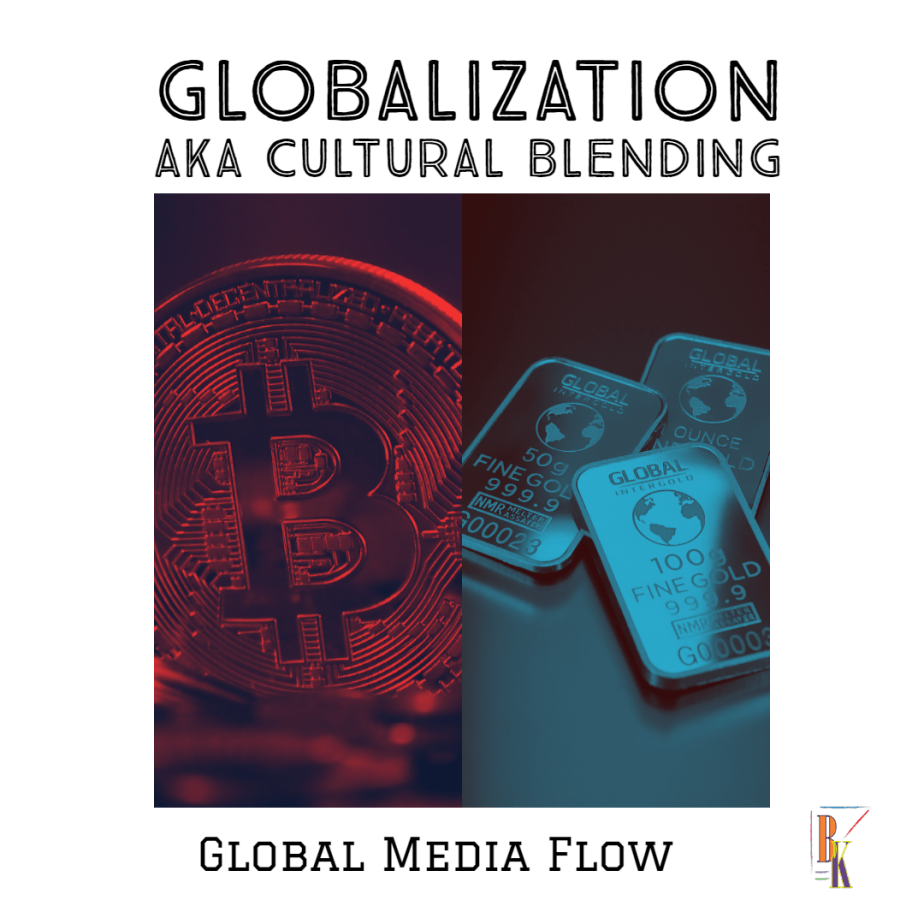
I do not own the copyrights to this image
I do not own the copyrights to the image

The Unbothered Scholar: New and Improved After Spring Break

Welcome to a Traptastic Sunday! I’m back at…. sorry you I missed you these pass three Fridays but I had to take sometime out for self preservation. You know how it go, but nonetheless we are getting better together.

The Unbothered Scholar Pod

I appreciate you for being patient and authentically participating in my media flow.